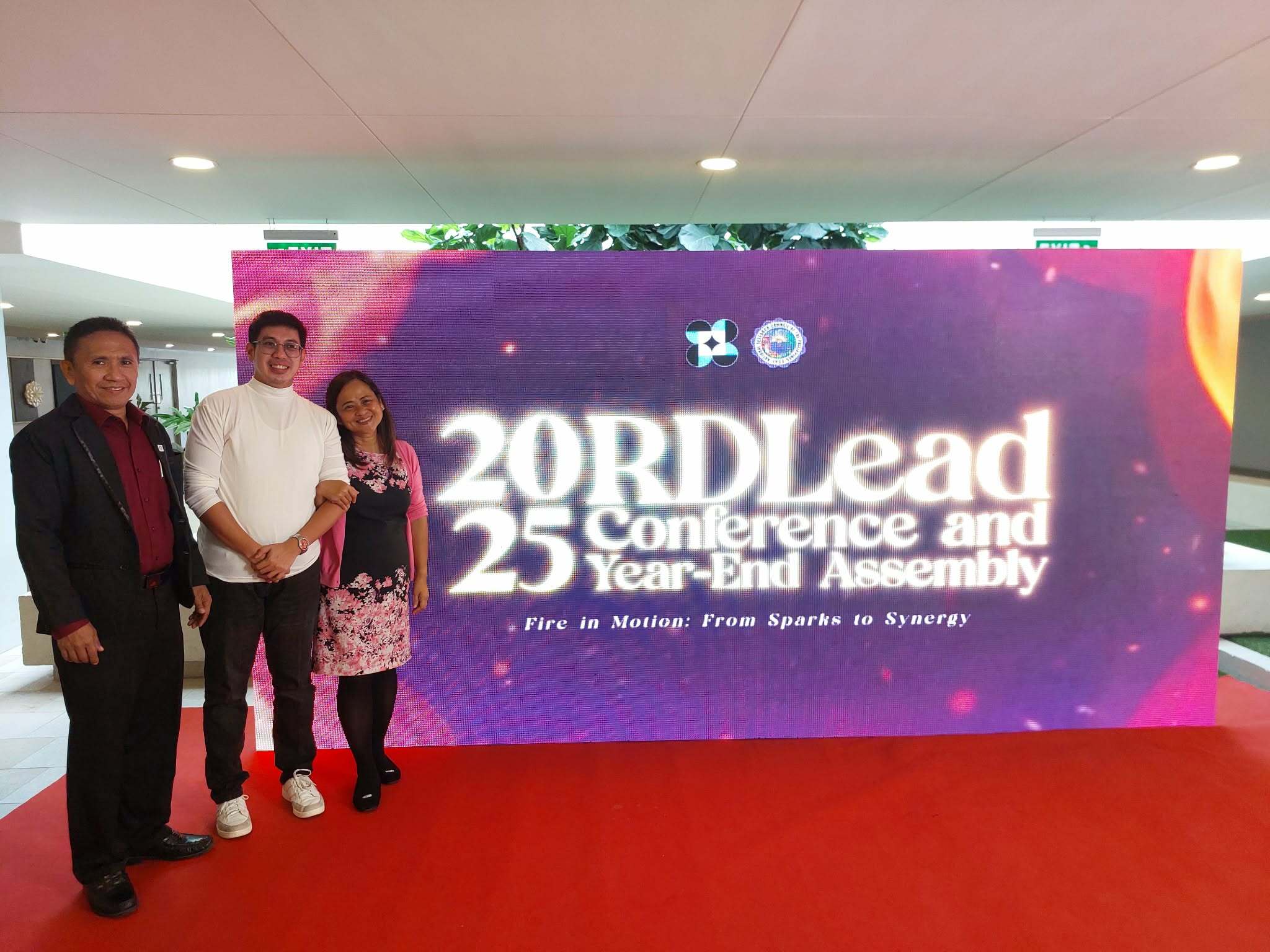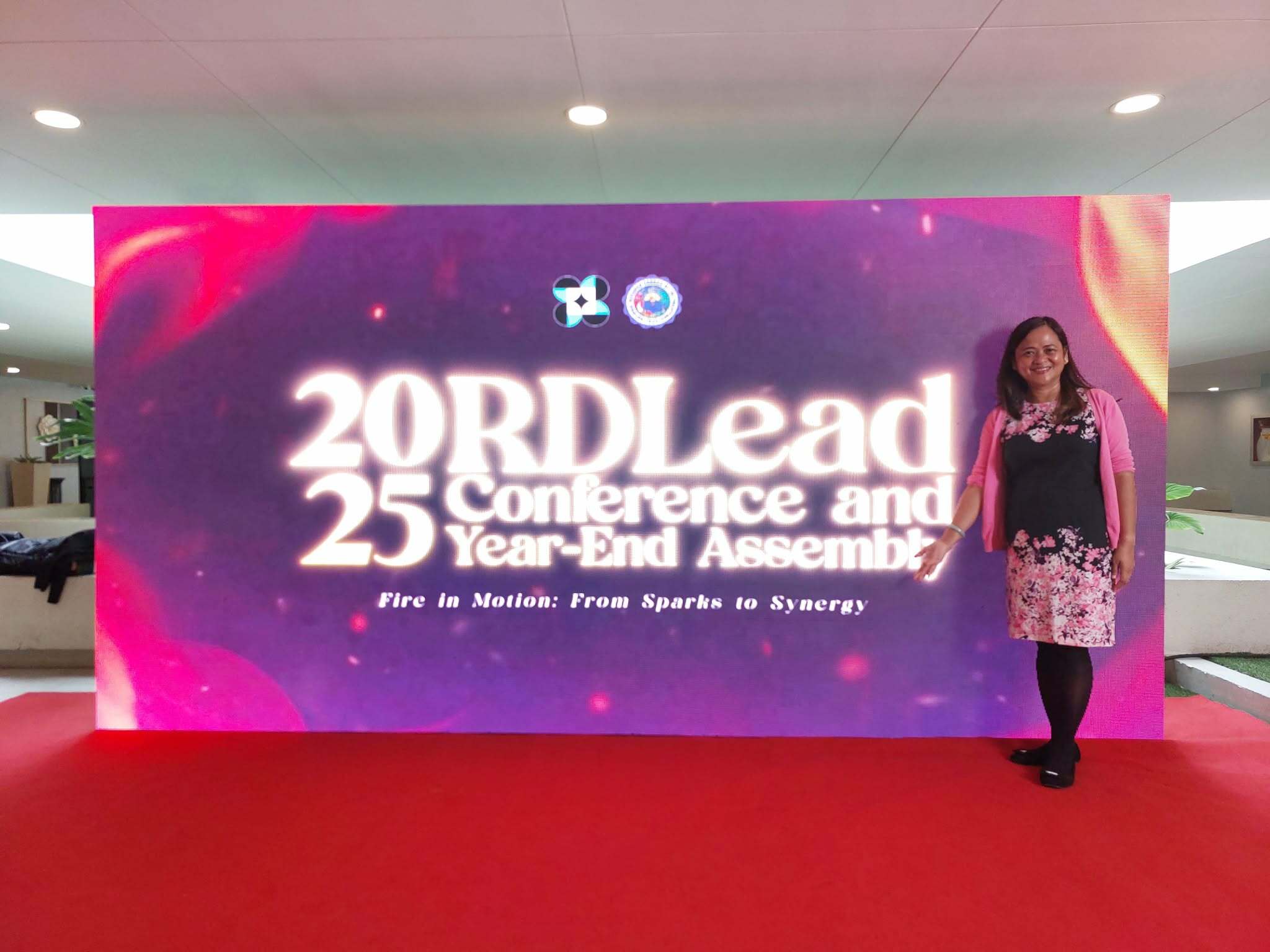
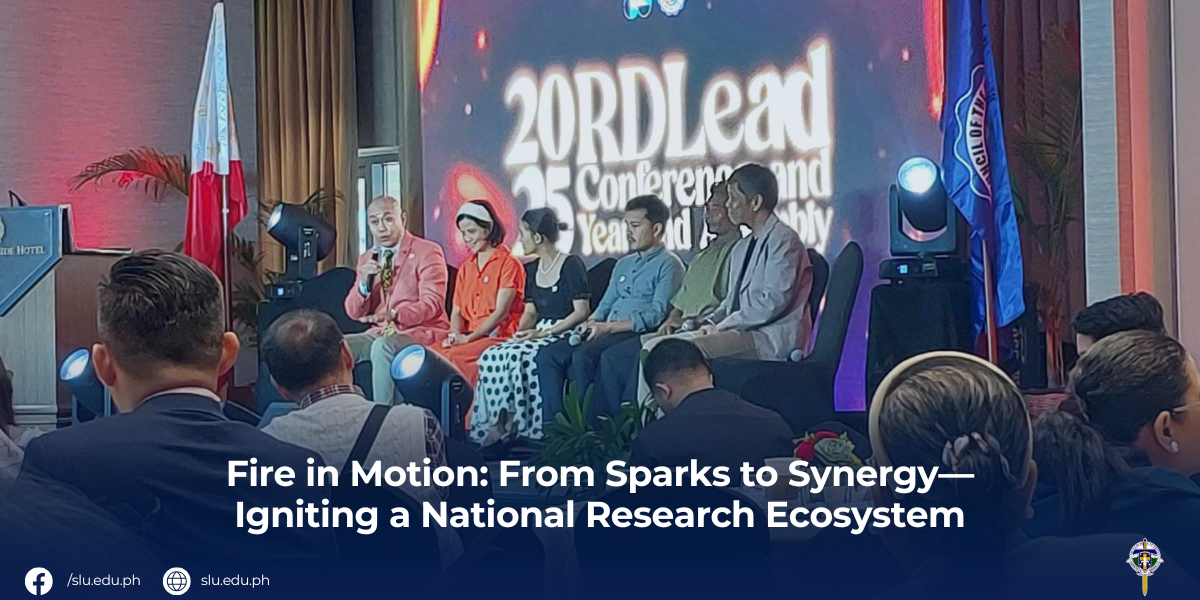
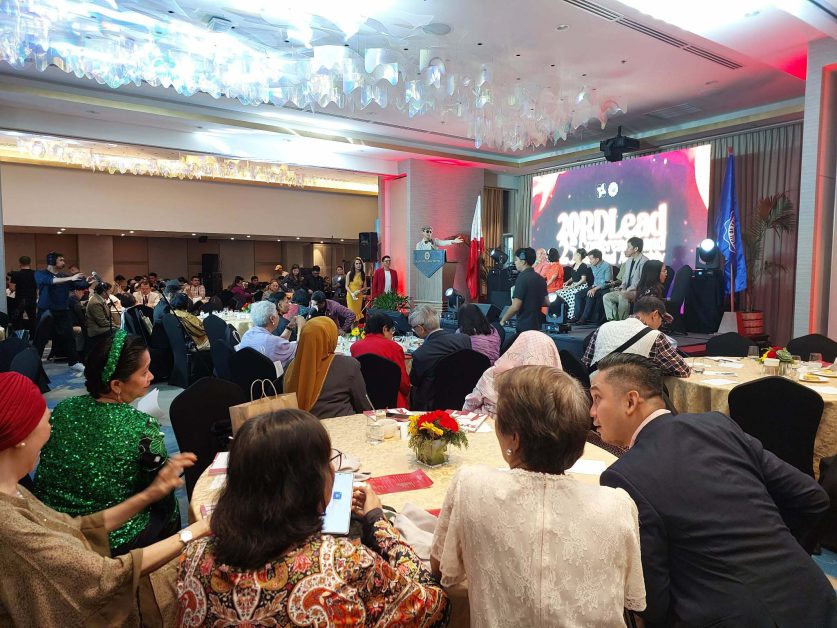
The Grand Westside Hotel in Parañaque City became a crucible of ideas, inspiration, and collaboration as the Research and Development Leadership (RDLead) Conference and Year-end Assembly by DOST convened on 17 December 2025. Carrying the resonant theme, “Fire in Motion: From Sparks to Synergy,” the gathering brought together the DOST RDLead Secretariat, the National Research Council of the Philippines (NRCP), higher education institutions (HEIs) from Luzon, Visayas, and Mindanao, national line agencies, and media partners—an assembly reflecting the breadth and diversity of the country’s research community.
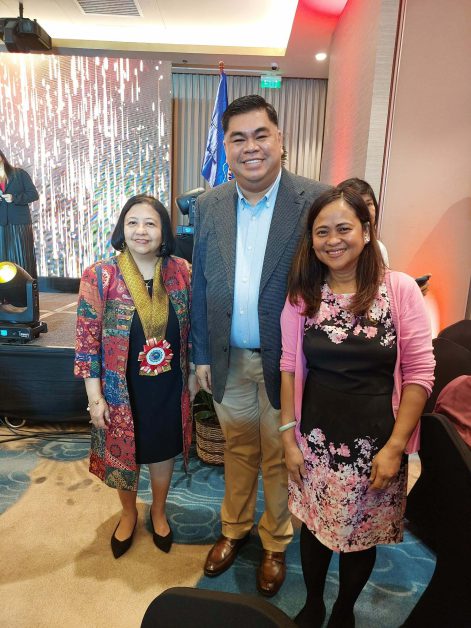
Notably, the conference was attended by Richel Lamadrid, PhD Director of the Research, Innovation, and Sustainable Extension (RISE) Center of Saint Louis University (SLU), together with fellow research directors from sister CICM schools Saint Mary’s University (SMU) and University of Saint Louis Tuguegarao (USLT). SLU, a past recipient of RDLead engagement, continues to strengthen its research foundations, and its presence at the conference signaled the institution’s readiness to further deepen its participation in the program. The engagement reinforced hopes that SLU would soon identify an RDLeader within its ranks and/or once again become a recipient of RDLead support in the future, contributing actively to the expanding national research leadership network.
Rekindling the Flame of Research Leadership
In her welcome remarks, Ma. Louise Antonette De Las Peñas, PhD, President of NRCP, invited participants to reflect on the origins of RDLead, recalling its pilot launch in 2018. Anchoring her message on the conference theme, she likened research to fire—beginning with a single spark of inspiration that spreads light and warmth, powerful enough to fuel national development. She emphasized that research is a powerful tool for development, and that cultivating a research culture is the bedrock of a thriving research ecosystem. Excellent research, she stressed, demands diverse perspectives and collective effort. She concluded with a call to action: to embrace the fire, keep it burning bright, and allow individual flames to converge into synergy that sustains the nation’s research enterprise.
Numbers that Speak of Passion and Perseverance
Through an inspirational video message, Renato Solidum, PhD Secretary of the Department of Science and Technology (DOST), underscored how the conference theme captures the resilience and innovative drive of the RDLead community. From the initial cohort, the program has now produced 116 RDLeaders, with 41 currently active, intervening across 114 host institutions nationwide. These figures, he noted, are more than statistics—they are a testament to passion, perseverance, and unwavering dedication to science. Each RDLeader, he said, holds a spark that, when united, keeps the fire of science burning for the country.
Reinforcing this narrative of growth, Leah Buendia, PhD DOST Undersecretary for Research and Development, highlighted the program’s evolution from 75 RDLeaders during its pilot phase to the current 116. The achievements across Luzon, Visayas, and Mindanao demonstrate that mentorship pays, and that RDLeaders’ willingness to serve is instrumental in building strong, research-driven communities.
HEIs as Crucibles of Excellence
Addressing host institutions, Ms. Maridon Sahagun, DOST Undersecretary for Scientific and Technical Services, celebrated the growing recognition of Filipino researchers on both local and international stages. She commended HEIs for embracing the RDLead program—investing in mentorship, upgrading research infrastructure, and streamlining processes that allow students and faculty to work harmoniously. Research excellence, she emphasized, flourishes where there is a sustained commitment to nurturing researchers. Ultimately, HEIs must translate research into real and lasting change for Filipinos.
Meanwhile, a video message from Engr. Sancho Mabborang, DOST Undersecretary for Regional Operations, addressed regional partners such as PCAARRD and PCIEERD. He spoke of the shared passion to produce meaningful R&D results that empower the youth to aim high and dream big. Inclusivity, he stressed, requires giving voice to all HEIs—big and small—so they can seize opportunities and chart their own development paths.
Policy, Evidence, and the Power of Synergy
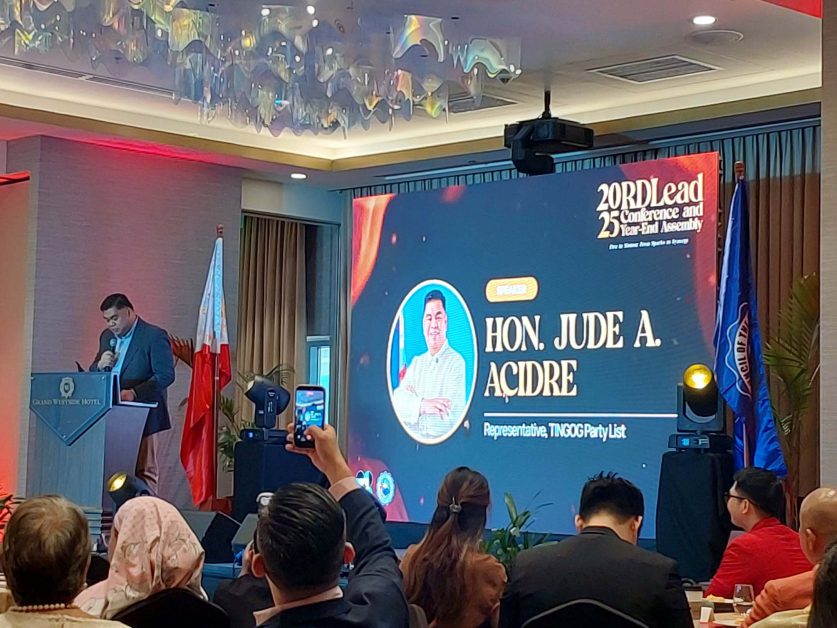
The conference’s main session featured Hon. Jude Acidre, Representative of the TINGOG Party List, who delivered a compelling talk on “Policy Development towards Synergy in Philippine Research.” He asserted that policy-making and research partnerships are inseparable: policies not rooted in evidence have limited reach, while research divorced from policy risks stagnation.
He framed RDLead as a deliberate policy choice that unlocks the potential of often-overlooked HEIs, and introduced the 3Rs—Responsiveness, Relevance, and Recognition—as pillars of an inclusive research community. Responsiveness calls for research that moves with the moment, as seen in rapid COVID-19 responses. Relevance demands that research be placed where it matters most, guided by data such as the hard truths revealed by EDCOM 2 on dropout rates. Recognition, he argued, means acknowledging untapped regional strengths, supporting faculty with time to research, and mentoring the next generation—because greatness can emerge from anywhere.
His closing statement resonated deeply: “Policy without research is guesswork; research without policy is delay and no action.”
Stories of Fire Across the Regions
A highlight of the event was the presentation of RDLead video documentaries showcasing regional engagements:
- “Dilaab” (Mindanao), meaning a bright and passionate flame, featured initiatives in Caraga State University and Agusan del Sur College of Agriculture and Technology. Interventions focused on research and journal management and proposal writing for funding, with sustainability and mentor–mentee relationships identified as key challenges.
- “Larab” (Visayas), meaning flame or blaze, spotlighted Visayas State University and Southern Leyte State University. The documentary emphasized that mentorship is a time-intensive and iterative process, with RDLead mentors described as the “wind beneath the wings” of emerging researchers—building not only skills, but confidence through shared work.
- “Uram” or “Liyab” (Luzon) highlighted Saint Mary’s University, where mentoring addressed untapped research energy and aimed to build an entrepreneurial research ecosystem through collaboration and coordination.

Collaboration in Action
A live testimonial from Leny Galvez, PhD RDLeader and Science Research Specialist from the Department of Agriculture–Philippine Fiber Industry Development Authority, illustrated collaboration in practice. Working with Catanduanes State University, she shared experiences in capacity building and introducing tissue culture techniques for abaca, a crop abundant in the region. Her account underscored the importance of pooling resources and funds to sustain meaningful research activities.
Sustaining the Fire
The event concluded with an open forum, where RDLeaders shared on-the-ground experiences—reporting increases in research publications and funded project proposals as tangible outcomes of their engagements. This was followed by awards and recognition for outstanding RDLeaders and partner HEIs.
In his closing remarks, Bernardo Sepeda, PhD Executive Director of NRCP and Project Leader of RDLead FIRE, returned to the conference’s central metaphor: lighting the fire through sparks that grow into synergy and use the weapons of science, technology and innovation for national development. Between sessions, participants actively networked, exchanged ideas, and forged new collaborations—quietly ensuring that the fire would continue to spread.
As the RDLead community looks ahead, the presence of institutions like SLU, represented by Dr. Lamadrid, affirms that past engagements continue to bear fruit. With strengthened research systems and renewed commitment, HEIs stand poised not only to host future RDLead interventions, but also to produce the next generation of RDLeaders—ensuring that the fire of Philippine research remains in motion. (Article and Photos by RISE Center)