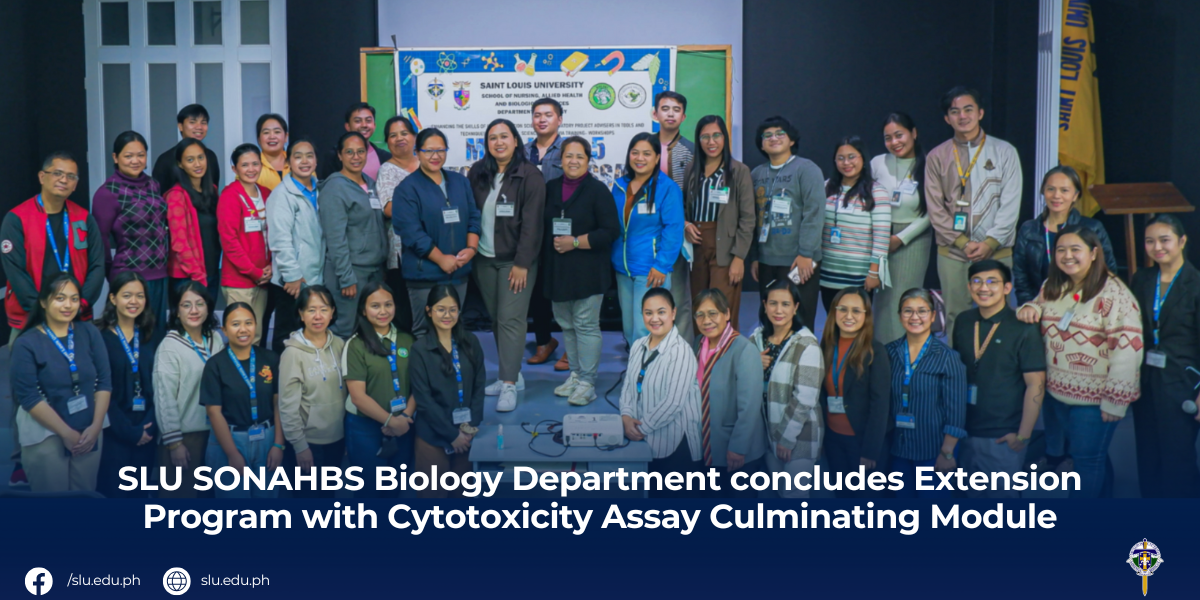
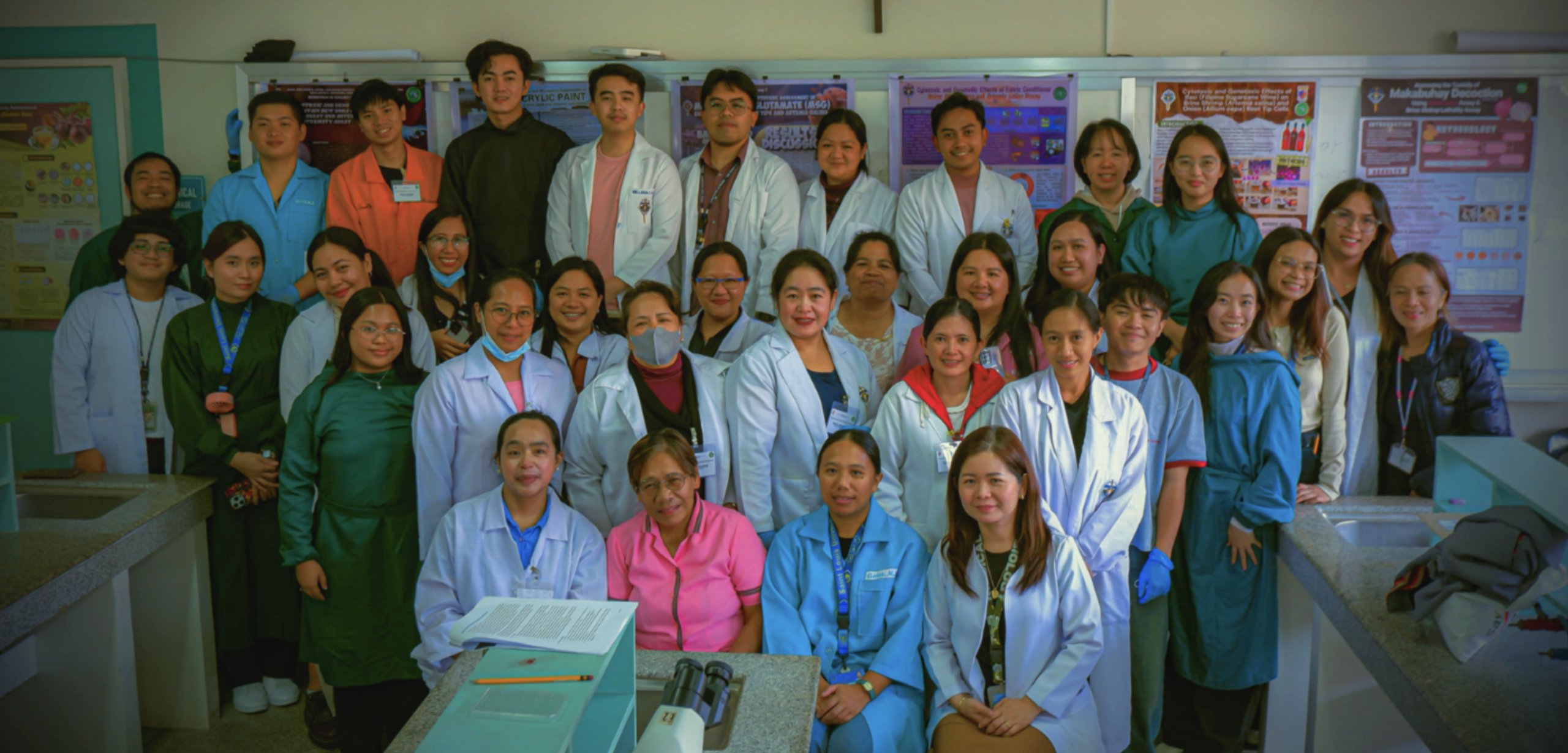
The Saint Louis University (SLU) Biology Department of the School of Nursing, Allied Health, and Biological Sciences (SONAHBS) concluded its extension program, “Enhancing the Skills of Basic Education Science Investigatory Project Advisers in Tools and Techniques for Biological Science Studies via Modular Training Workshops,” with the conduct of Module 5: Cytotoxicity Assay—Enhancing the Skills of Basic Education Science Investigatory Project Advisers in Tools and Techniques for Biological Science Studies through a modular training workshop. This culminating activity marked the completion of a series of capacity-building initiatives designed to strengthen the research mentoring competencies of science teachers in elementary and secondary education. Held on 15 December 2025 at the AVR of the Dr. Jose P. Rizal Building, the final module served as the capstone of the department’s semester-long extension efforts.
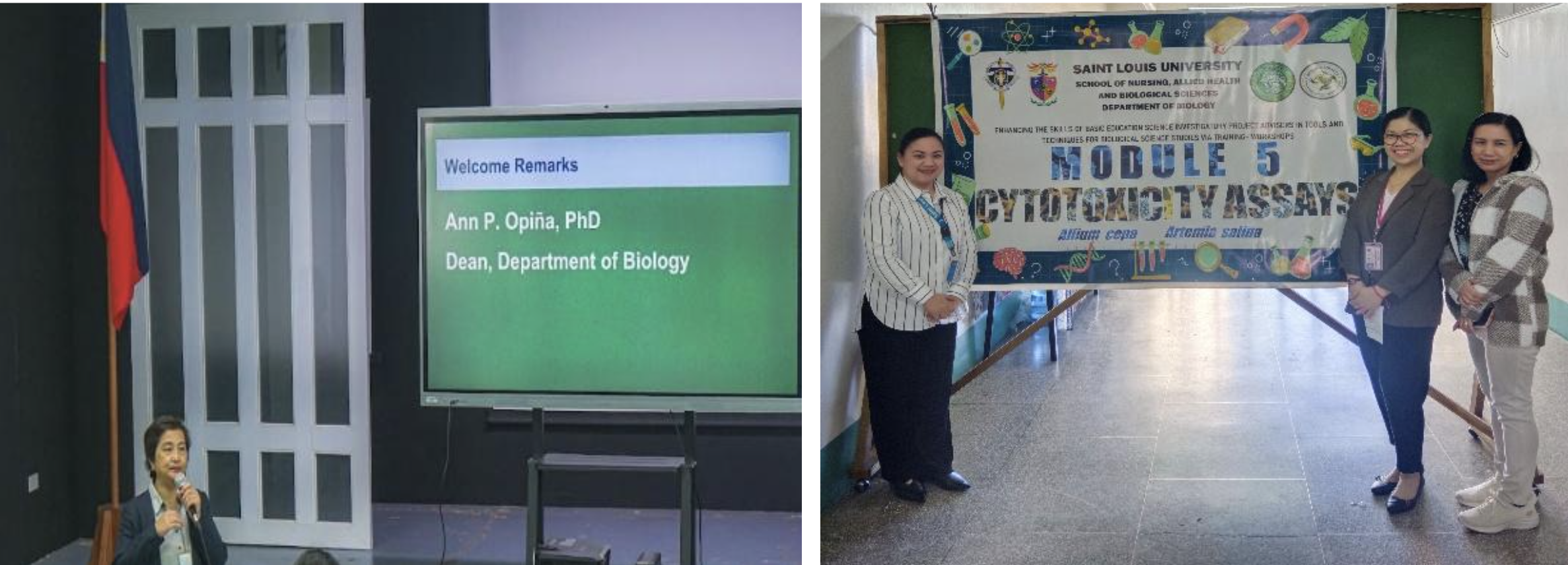
The program formally opened with welcome remarks from Ann P. Opiña, PhD, SONAHBS Dean, who emphasized the importance of extension initiatives in bridging higher education expertise with the needs of basic education teachers. This was followed by messages from Gloria Meryl T. Kingat, PhD, Head of the Department of Biology, who underscored the department’s commitment to teacher empowerment and research capacity-building, and Jeramie N. Molino, PhD Sustainable Research Extension Officer of the Research, Innovation, and Sustainable Extension (RISE) Center, who highlighted the role of sustainable extension programs in strengthening community partnerships and promoting a research-driven culture in education.
The opening program concluded with the presentation of the lecture-workshop objectives and rationale by Rocillyn G. William, PhD Extension Program Coordinator, who outlined how the activity was designed to equip science teachers with relevant knowledge and practical skills aligned with the goals of the extension initiative.
Technical Sessions and Hands-On Training
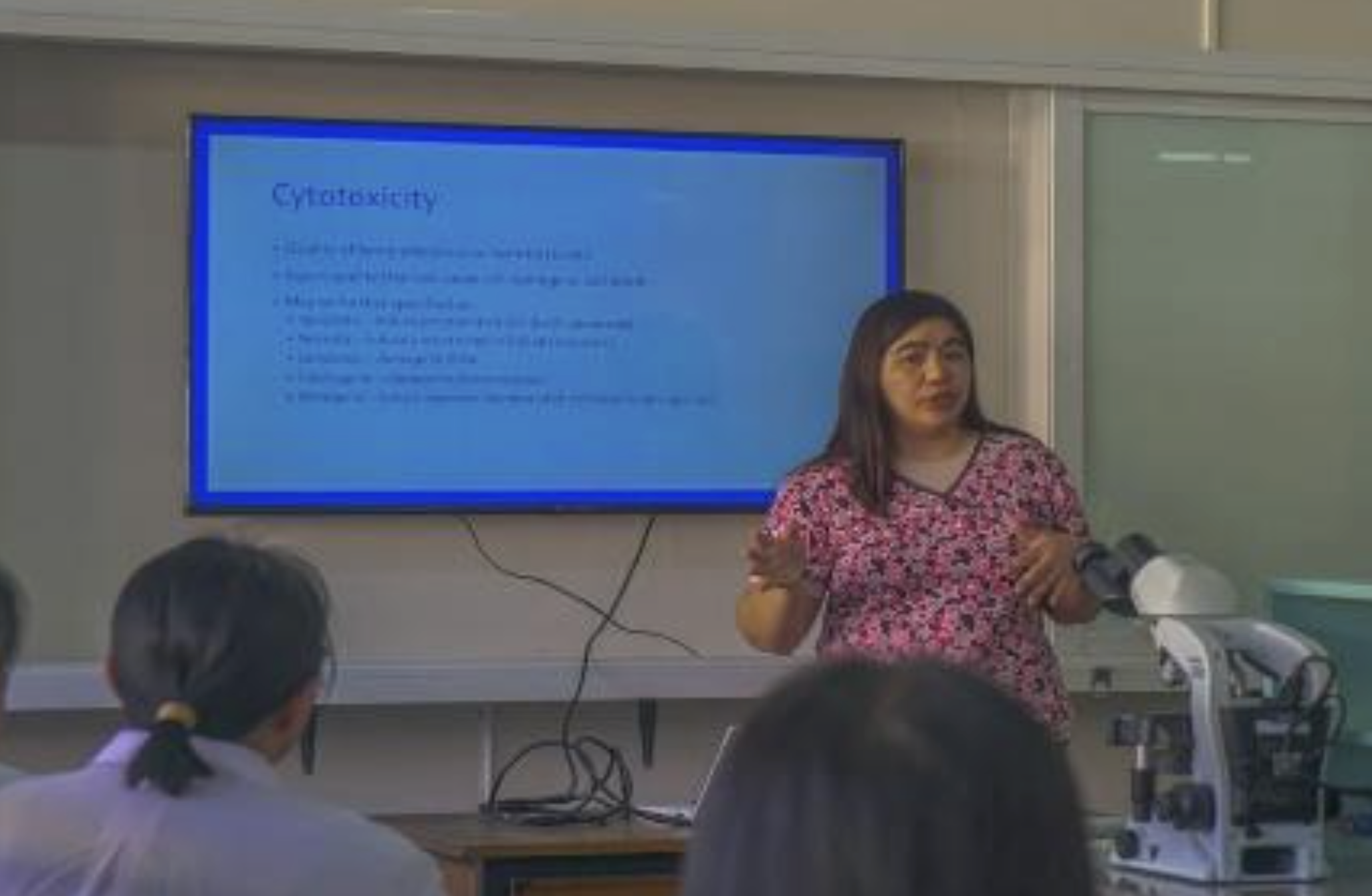
The technical sessions began with a lecture on cytotoxicity assays delivered by Norbert Q. Angalan, PhD who discussed the basic principles, applications, and relevance of cytotoxicity testing in biological and toxicological research. His lecture provided participants with a strong conceptual foundation, emphasizing how cytotoxicity assays can be appropriately integrated into basic education science investigatory projects while ensuring safety and adherence to ethical standards.
This was followed by a research presentation by Gerlie L. Racca, LPT, a faculty member of the Biology Department, who shared findings from her cytotoxicity study. The presentation highlighted the practical application of cytotoxicity assays in research, including experimental design, data analysis, and result interpretation. Through this session, participants gained valuable insights into structuring cytotoxicity-based studies and into guiding students toward scientifically sound, methodologically rigorous research outputs.
The training then progressed to the laboratory proper, where participants engaged in hands-on activities under the guidance of Jannete D. Awisan, PhD DrPH, faculty member of the Biology Department. Teachers were introduced to basic laboratory equipment, proper handling of materials, and the step-by-step procedures for conducting cytotoxicity assays. The laboratory component reinforced earlier theoretical discussions and emphasized best practices in laboratory safety, accuracy, and data documentation.
Through this structured, modular approach, the activity enhanced participants’ understanding of cytotoxicity concepts, developed practical laboratory competencies, and strengthened their capacity to mentor students in conducting ethical, feasible, and scientifically sound investigative projects. The training also highlighted the importance of interdisciplinary collaboration between the biology and medical laboratory science disciplines in enriching science education.

Recognition and Closing
The program concluded with the awarding of certificates of participation, led by Dr. Kingat and Dr. William. On behalf of the participating schools, Joyce V. Fernandez, PhD Academic Supervisor of the Diocese of Baguio-Schools (DOBS), expressed her heartfelt gratitude to the Biology Department and the facilitators for providing relevant, timely, and practical training that will greatly support teachers in mentoring student research. She emphasized the program’s value in enhancing the quality of science investigatory projects in their schools.
As the final module of the Biology Department’s Extension Program, the activity reaffirmed the department’s commitment to community engagement, teacher empowerment, and advancing research excellence in basic education. The successful implementation of the program reflects the strong partnership between higher education institutions and partner schools in promoting a research-oriented culture in science education.
The activity formally concluded with closing remarks from Dr. William, who encouraged participants to apply the knowledge and skills gained from the training in their respective schools and to sustain collaboration with the institution in future research and extension initiatives. The Biology Department extends its sincere appreciation to the participating schools, science teachers, facilitators, and administrators for their valuable support and collaboration. We look forward to future initiatives that will continue to enrich science teaching, learning, and research in the region.
Completing this extension program contributes to several of the United Nations’ Sustainable Development Goals. By enhancing teacher competencies and fostering applied science education, it advances SDG 4: Quality Education. The emphasis on ethical and responsible research practices supports SDG 16: Peace, Justice, and Strong Institutions, while the collaborative partnership between SLU and DOBS reflects SDG 17: Partnerships for the Goals. Moreover, integrating biological science tools and techniques aligns with SDG 9: Industry, Innovation, and Infrastructure, thereby promoting innovation in education and research. Together, these efforts highlight SLU’s commitment to sustainable, inclusive, and transformative education.
Prepared by:
Rocillyn G. William, PhD
Extension Program Coordinator
Biology Department, SONAHBS
Reviewed and Edited by:
Jeramie N. Molino, PhD
Sustainable Research Extension Office
RISE Center