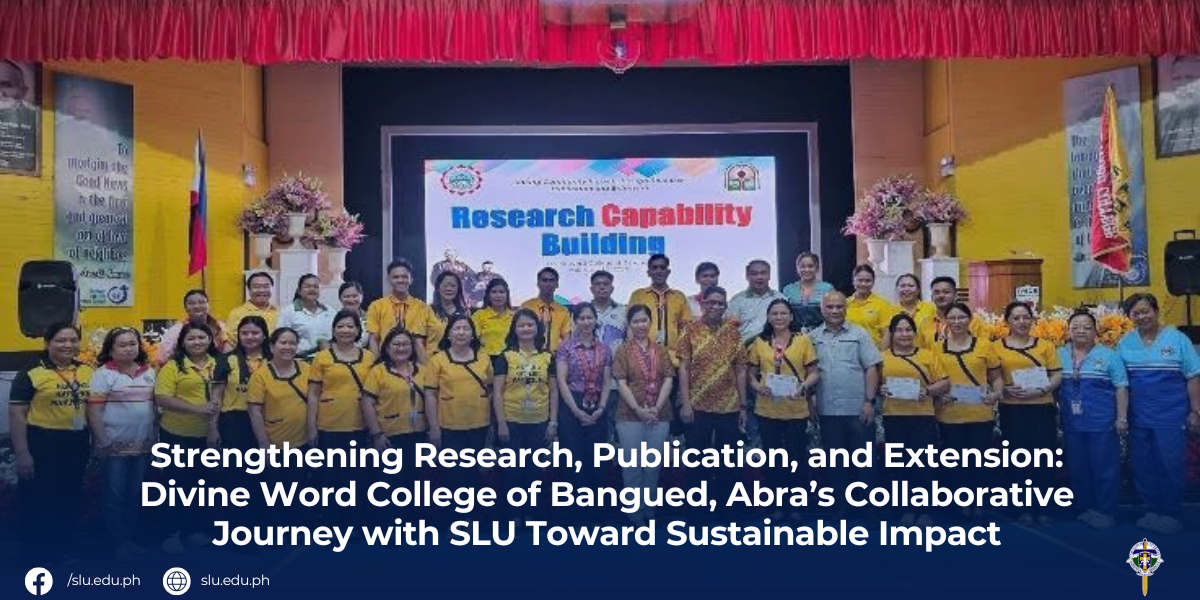
On 16 February 2026, the Divine Word College of Bangued hosted its Research Capability Building Seminar, a full-day event designed to strengthen faculty and administrators in research publication, writing strategies, and translating knowledge into practice.
The program began with registration, followed by the opening rites led by Rev. Fr. Yohanes Bala, SVD, Finance Officer, who offered the prayer. The national anthem was rendered by Mrs. Sarah Jane I. Valencia, MAT-Fil, while the rationale was delivered by Maylene R. Pambalan, PhD Research Director, together with Jeanne Acelador, MBA, representing administration.
In her message, Dr. Pambalan reminded participants that research is not an isolated academic exercise but a vital activity that must be linked with instruction, extension, and outreach. She emphasized that the true measure of research lies in its impact on communities, urging faculty and administrators to ensure that their outputs are translated into meaningful practice and contribute to the institution’s mission of relevance and responsiveness.
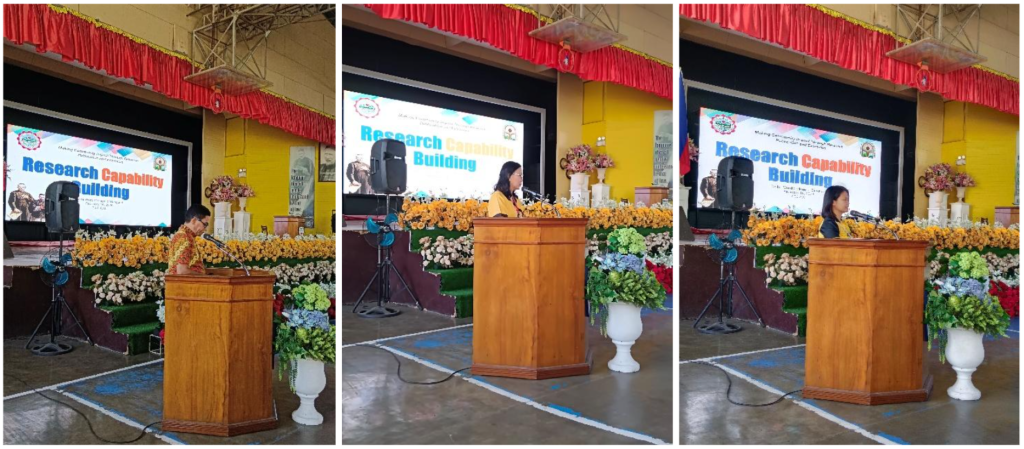
Elmerita B. Palcon, PhD, Academic Officer, then introduced the distinguished resource speakers. This set the stage for the seminar’s core learning sessions, featuring two experts from Saint Louis University’s Research, Innovation, and Sustainable Extension Center: Laarni B. Natividad, PhD, Research Capacitation and Support Services Officer, and Jeramie N. Molino, PhD, Sustainable Research Extension Officer. Together, they guided participants through critical aspects of scholarly work and institutional responsibility, weaving insights on ethical publishing, research visibility, and the transformative role of extension into a cohesive narrative that underscored the relevance of research in both academic and community contexts.
Dr. Natividad, PhD opened with Topic 1: Ethical Authorship and Global Visibility, emphasizing that responsible research publication must be grounded in integrity, transparency, and accountability. Drawing on standards set by the Committee on Publication Ethics (COPE) and International Committee of Medical Journal Editors (ICMJE), she discussed common ethical issues, including plagiarism, data fabrication, duplicate publication, and improper authorship practices. She highlighted the importance of clear contribution agreements, responsible peer review, and disclosure of AI use, urging faculty to mentor students in ethical publishing.
Her talk concluded with the reminder that ethical research strengthens credibility and enhances global visibility through reputable indexing platforms like Scopus and Web of Science. In Topic 2: Tools and Strategies for Scholarly Publishing, Dr. Natividad outlined the publication workflow—from journal selection to avoiding predatory publishers, and stressed the importance of building a strong research identity through reputable platforms. She reinforced that publishing is not merely a career requirement but a responsibility to share credible knowledge and contribute meaningfully to the global research community.

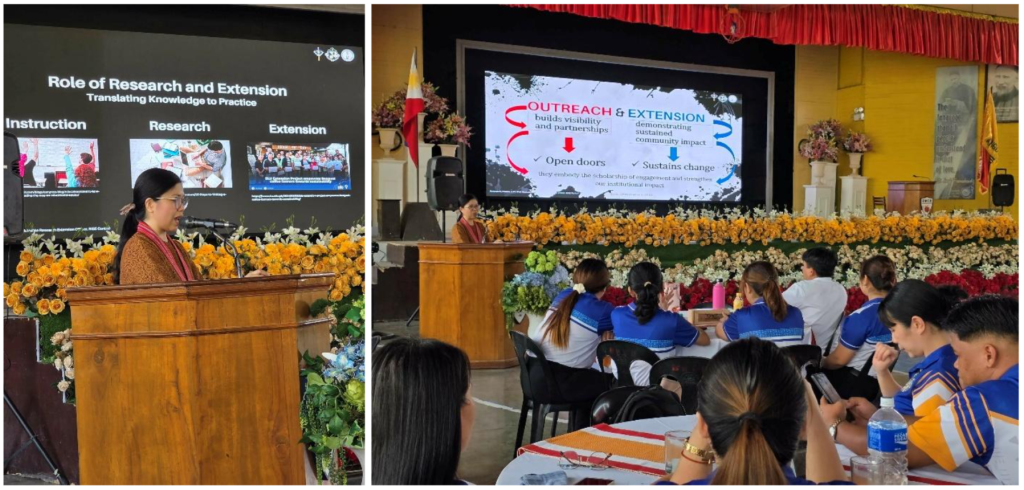
Dr. Molino followed with three interconnected topics. In Topic 1: Role of Research and Extension: Translating Knowledge to Practice, she emphasized the CHED trifocal mandate —Instruction, Research, and Extension—and underscored that extension is a core responsibility of higher education institutions. Using the Knowledge-to-Action Framework, she explained how research outputs must be refined and adapted into practice through participatory processes, reminding participants that “research without extension risks irrelevance; extension without research risks superficiality. Together, they create a transformative, sustainable impact.”
In Topic 2: Extension and Outreach: Complementary Pathways to Community Impact, Dr. Molino clarified the distinction between outreach and extension. Outreach, she noted, is short-term and visibility-driven, while extension is long-term, participatory, and transformative. Both are vital, with outreach opening doors and extension sustaining change.
Finally, in Topic 3: Making Community Impact Through Meaningful Extension Activities, she stressed that extension is measured not by the number of activities but by the difference they make in people’s lives. She challenged faculty and administrators to reflect on commitments, asking: Who benefits? How do they benefit? Her message was clear: extension is not just an activity, it is a transformation, and transformation begins with commitment.
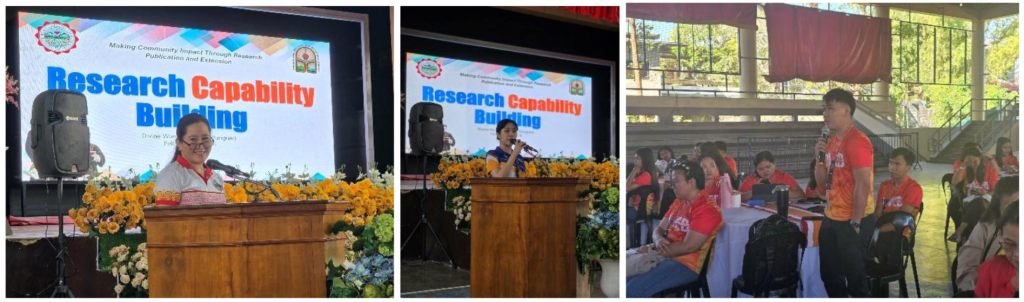
Each talk was followed by an open forum, giving participants the chance to engage directly with the speakers, raise questions, and share their own perspectives. These interactive exchanges enriched the sessions, turning them into dynamic conversations rather than one-way lectures.
The forums were complemented by participants’ reflections and takeaways, ensuring that the insights gained were not only understood but also anchored in both scholarly practice and the broader institutional mission. Importantly, the lessons they carried from these discussions encouraged participants to take research more seriously, not only as part of teaching but also as a foundation for credible publication and meaningful extension work. In this way, the seminar inspired a shift from knowledge acquisition to knowledge transformation, urging educators to translate their scholarship into an impact that communities can truly feel.
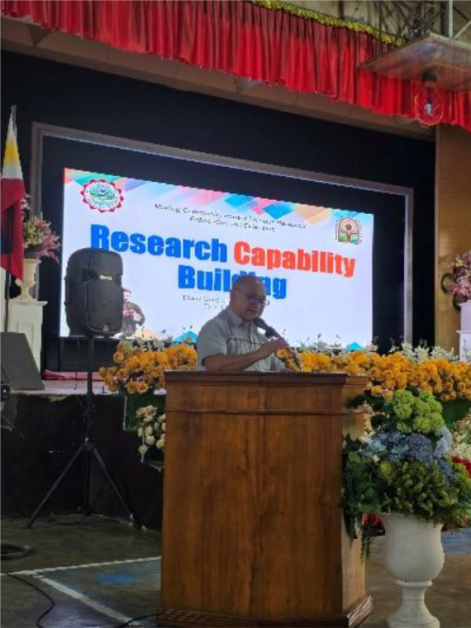
The program concluded with the message of Rev. Fr. Edgar L. Calunod, SVD, PhD, President, who highlighted the importance of research, publication, and extension as integral to the mission and daily life of every educator. His remarks underscored that these three pillars are not only academic requirements but also vital responsibilities that shape the relevance and impact of higher education institutions. This was followed by the awarding of tokens and certificates, led by Rev. Fr. Calunod, together with the administrators of DWCB, and by the closing prayer, also offered by Rev. Fr. Yohanes Bala, SVD, Finance Officer.
Throughout the day, the proceedings were smoothly guided by the masters of ceremony, Mr. Dionne Cedric Codien and Ms. Natividad Jornacion, MALit, ensuring a seamless flow from start to finish.
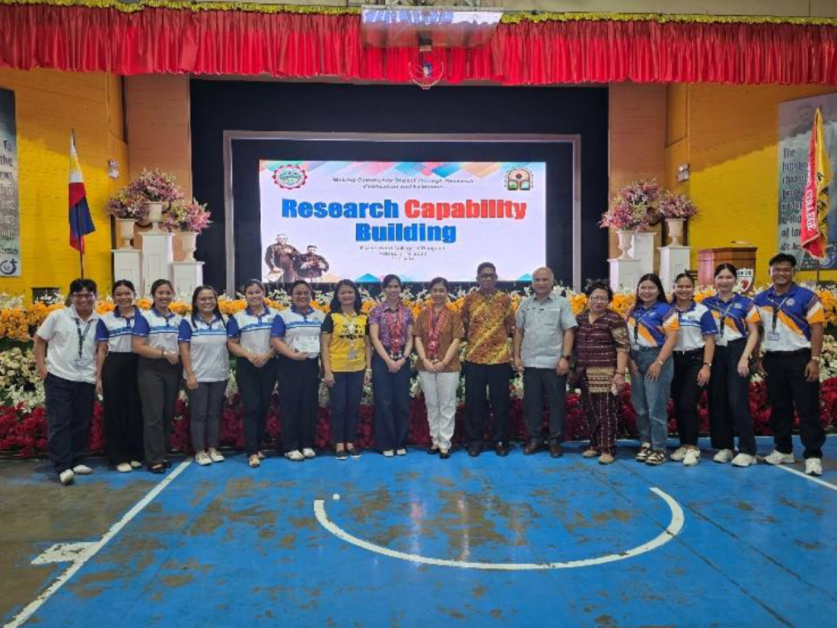
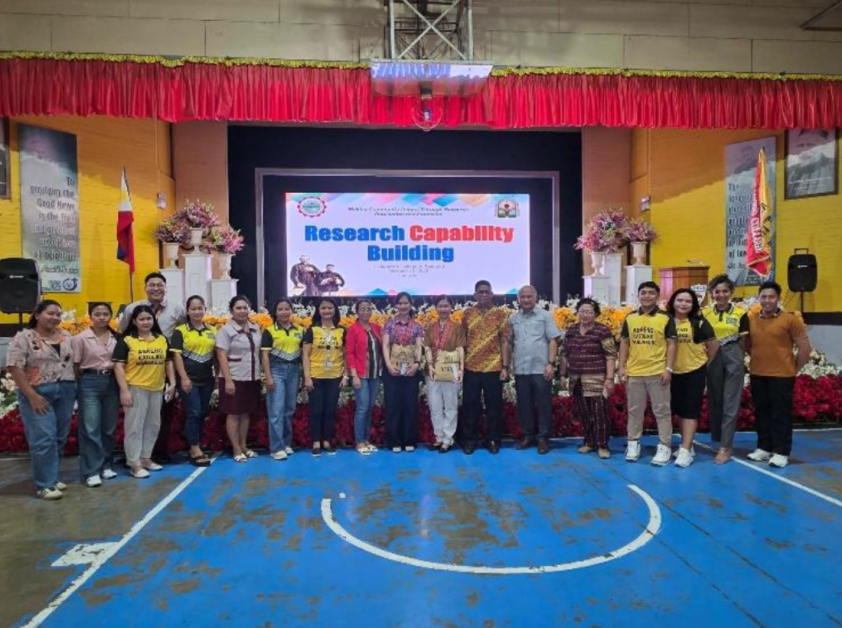
Taken together, the presentations of Dr. Natividad and Dr. Molino, complemented by the reflections of Dr. Pambalan and Rev. Fr. Cualan underscored that research, extension, and outreach are interconnected pathways that ensure universities remain socially responsible and impactful. Outreach sparks connection, extension sustains transformation, and research provides the evidence base. When integrated, they embody the CHED trifocal mandate and create lasting change. The ultimate message resounded: research without extension risks irrelevance, extension without research risks superficiality, but together they generate transformative, sustainable impact for communities and society.

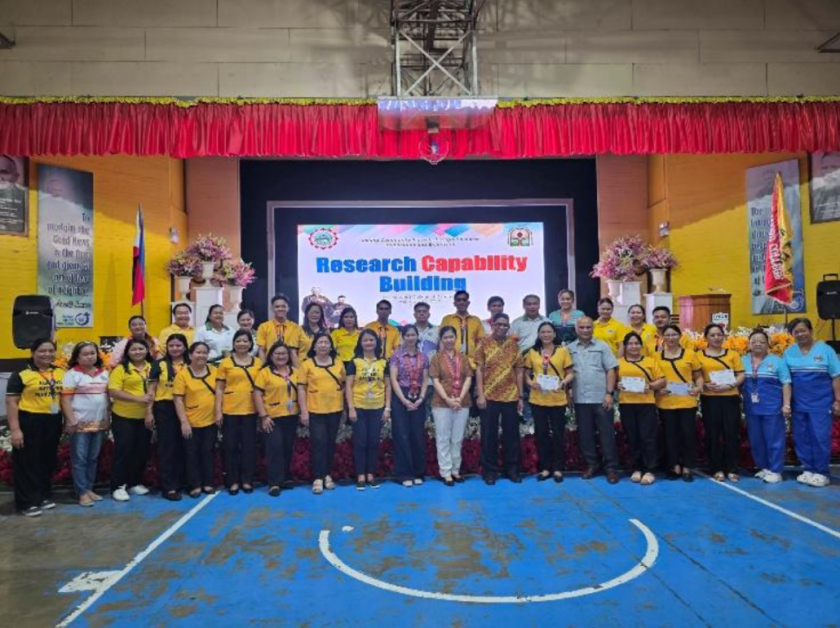
This seminar not only strengthened academic skills but also aligned with the United Nations Sustainable Development Goals (UNSDGs) and the CICM advocacies. By promoting quality education (SDG 4), fostering innovation and responsible research (SDG 9), empowering sustainable communities (SDG 11), and building partnerships for the goals (SDG 17), the event reminded participants that their work is part of a larger global mission. True to the CICM spirit of education, mission, and social responsibility, the seminar affirmed that research and extension are not confined to classrooms or journals, they must be lived out in service, shaping communities, nurturing justice, and safeguarding creation.
From research to impact, DWCB journeys with communities toward transformation—living out Fr. Theophile Verbist’s reminder that ‘We have a good and beautiful mission!’ where knowledge becomes service, and service blossoms into sustainability and transformation. (Article by Dr. Jeramie N. Molino and Dr. Laarni B. Natividad and Photos by Dr. Maylene Pambalan)