
Reinforcing its commitment to academic excellence and the advancement of research across Congregation of the Immaculate Heart of Mary (CICM) Higher Education Institutions (HEIs), Saint Louis University (SLU) co-hosted with the other CICM HEIs the seminar-workshop for CICM Faculty with the theme “From Curiosity to Contribution: Building Research Habits for Publication” at the Audio-Visual Room, Msgr. Charles Vath Library Building, SLU Main Campus on 2-3 March 2026.
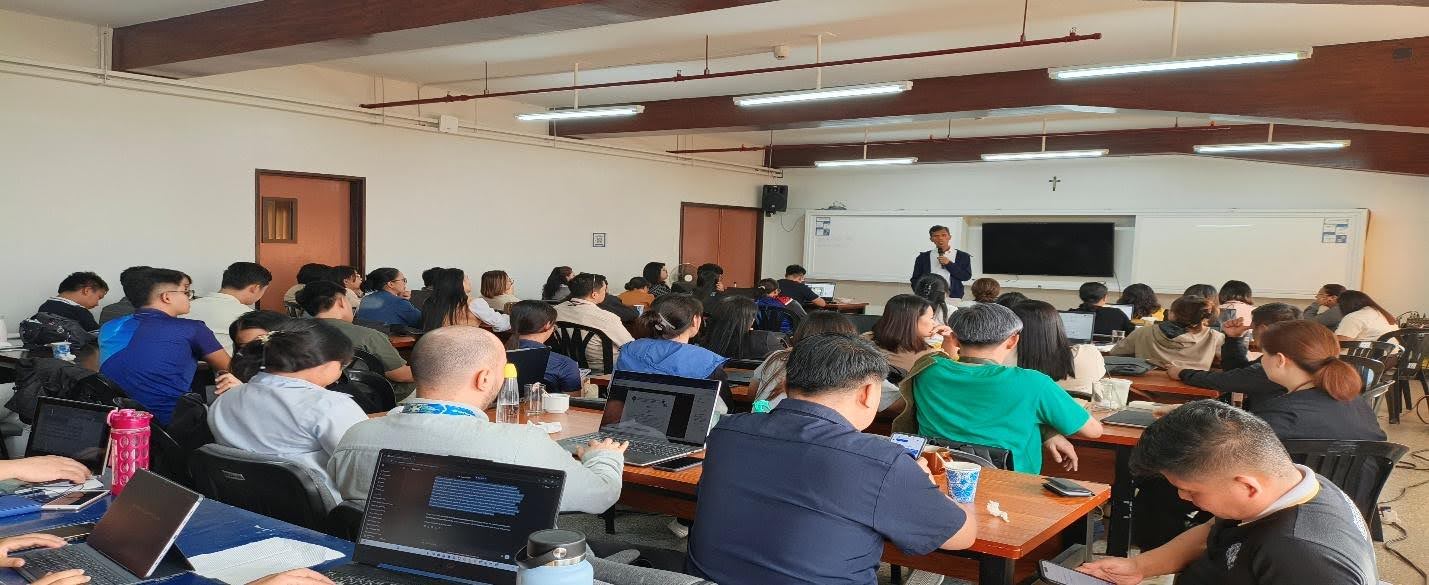
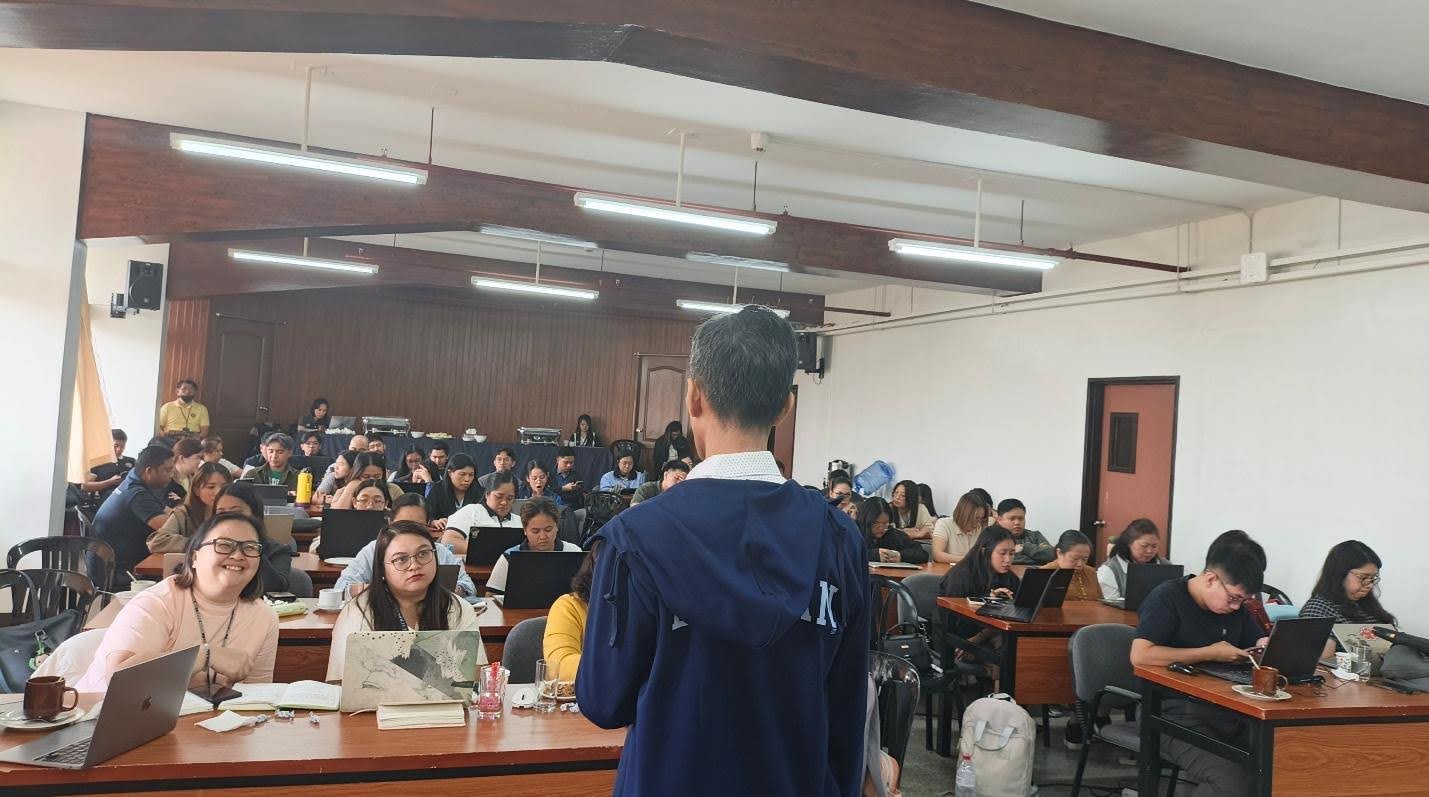
Organized by the SLU Research, Innovation, and Sustainable Extension (RISE) Center, the two-day formation program gathered 64 faculty members from four CICM schools: Saint Louis University (32), Saint Mary’s University (16), University of Saint Louis Tuguegarao (9), and Saint Louis College of San Fernando (7).
The initiative was designed to inspire educators to cultivate research habits and develop publishable scholarly work. Anchored on the twin objectives of Motivation and Mindset, and Skill-Building and Practice, the program encouraged teachers to recognize research as a meaningful extension of their vocation and to acquire foundational competencies in problem formulation, conceptual framework development, and research design.
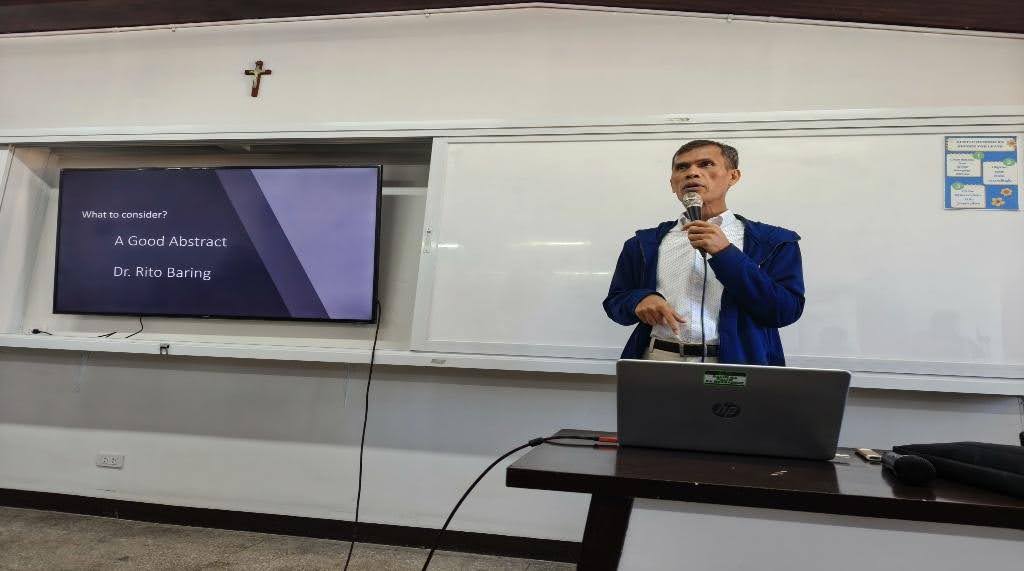
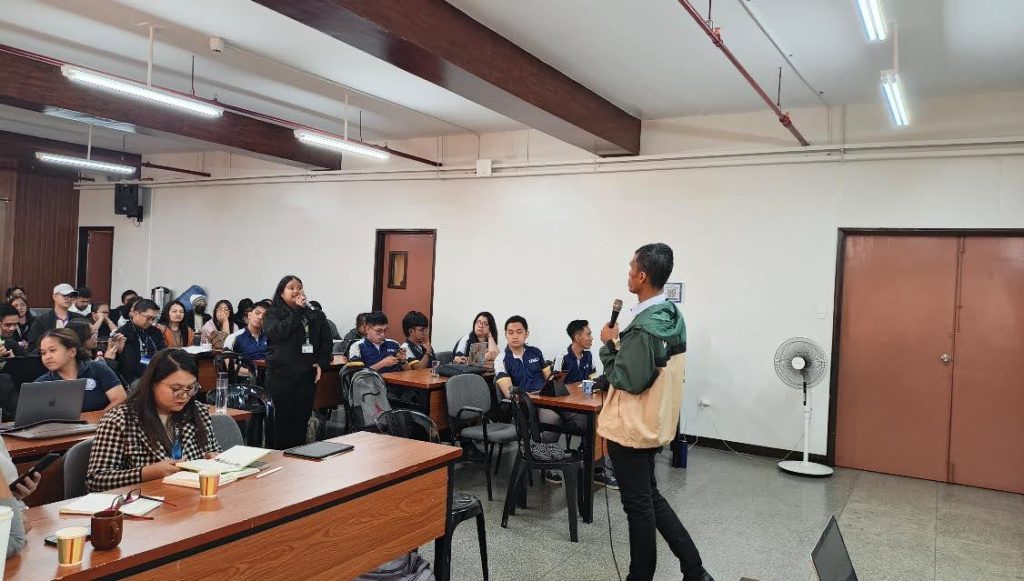
Prof. Rito V. Baring, Ed.D., a Full Professor at the Theology and Religious Education Department of De La Salle University Manila facilitated the seminar. Dr. Baring is recognized for his work in empirical theology, religious education, curriculum development, and evaluation research. His numerous publications in Scopus- and ISI-indexed journals, and his service as a CHED Technical Panel Member for Catholic Religious Studies (2025–2028), highlight his significant contributions to the academic community.
Foundations of Teacher-Led Research
On the first day, participants explored the significant role of teacher-researchers in generating knowledge and improving educational practice. Dr. Baring emphasized that research should not be viewed merely as an academic requirement but as a meaningful vocation that calls for dedication, curiosity, and perseverance.
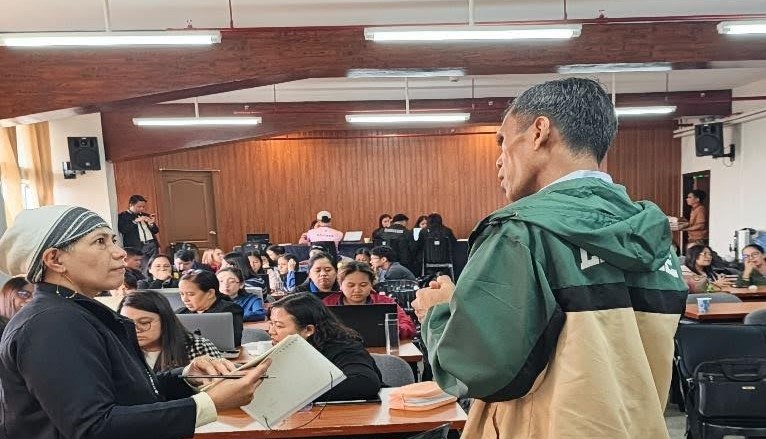
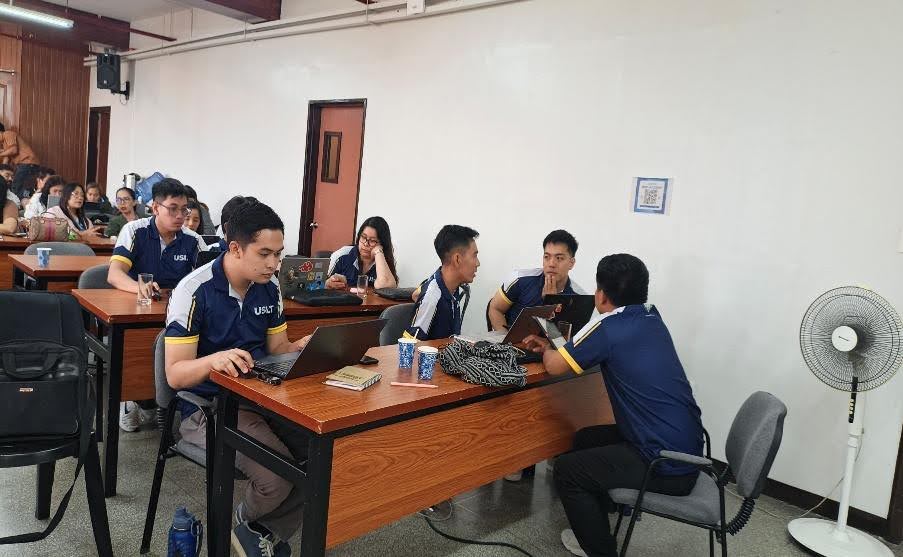
Participants then engaged in collaborative activities, including the “Problem Tree” method, which involves searchable questions. Throughout the discussions and activities, participants shared several insights that reflected their developing perspective on research. Many highlighted the importance of shifting one’s mindset toward viewing research as an opportunity for growth, choosing topics that genuinely spark interest and passion, and recognizing that meaningful research often becomes a personal commitment that requires continuous effort and engagement.
Research Design and Publication Preparation
The second day transitioned from research planning to dissemination. In the morning, each faculty member from the participating schools shared their draft abstracts, which were then critiqued by Dr. Baring, who provided constructive feedback and guidance for improvement. Participants subsequently explored qualitative, quantitative, and mixed methods and drafted initial research designs outlining participants, instruments, and procedures. Peer exchanges fostered refinement and critical engagement. Further guidance focused on manuscript preparation and publication strategies, including structuring academic papers, selecting appropriate journals, avoiding plagiarism, and responding professionally to reviewers.
The program concluded with a reflective discussion on sustaining research discipline through effective time management, collaboration, and resilience. Dr. Baring encouraged participants to approach the research process with professionalism and perseverance, reminding them, “If your papers are rejected, do not take it personally, take it professionally.”
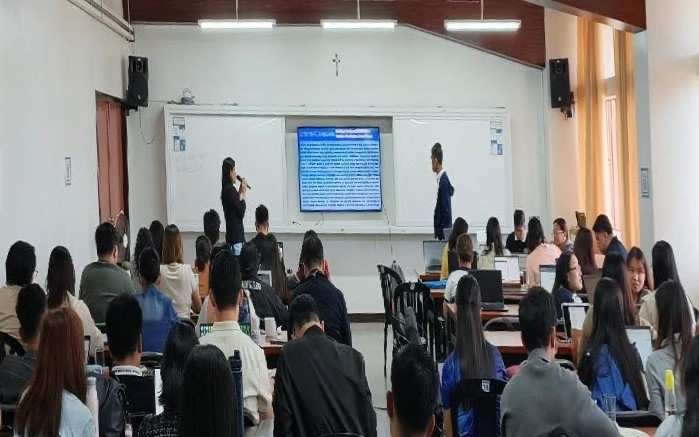
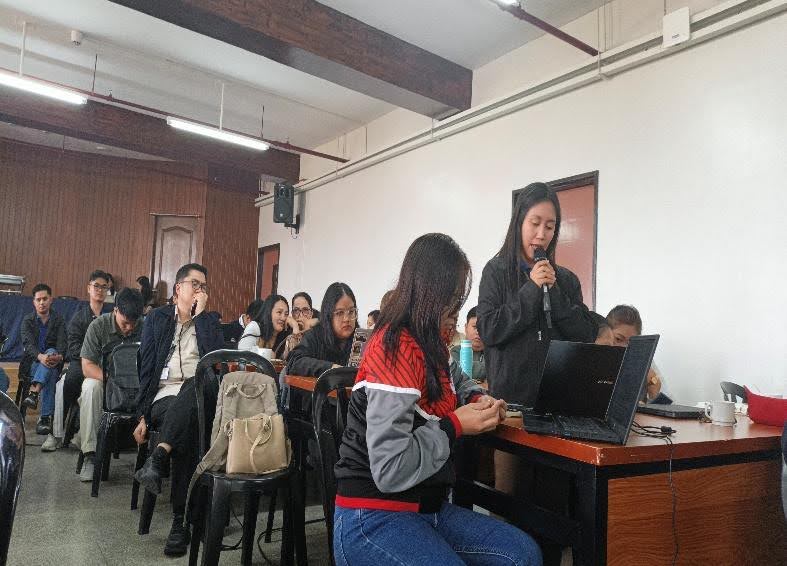
Participant evaluations further affirmed the seminar’s impact. One faculty member shared, “As a novice in research paper writing, Sir Baring explained the concepts clearly and inspired me to appreciate research more. The discussion on abstract writing also helped me understand it better.” Another reflected on transforming personal limitations into motivation: “Take advantage of your shortcomings (fear/struggles related to research) in setting your attitude (faith in God and faith in yourself) to move forward in your research engagement.”
More than a technical training, the workshop-seminar served as a formative academic experience that strengthened educators’ identity as knowledge creators and contributors to society. By nurturing disciplined inquiry and publication readiness, the initiative reinforces the research culture within CICM schools and advances their shared mission of transforming curiosity into meaningful contribution.
This initiative not only strengthens the research culture within CICM schools but also aligns with global development priorities. By equipping educators with research skills and fostering scholarly publication, the program advances SDG 4 (Quality Education) through improved teaching and learning practices, contributes to SDG 9 (Industry, Innovation, and Infrastructure) by generating knowledge that supports innovation, and exemplifies SDG 17 (Partnerships for the Goals) through collaboration among CICM institutions. Moreover, its emphasis on integrity and values-based inquiry reinforces SDG 16 (Peace, Justice, and Strong Institutions), ensuring that research becomes a transformative vocation that builds stronger academic and societal foundations. (Article and Photos by SLU RISE Center)