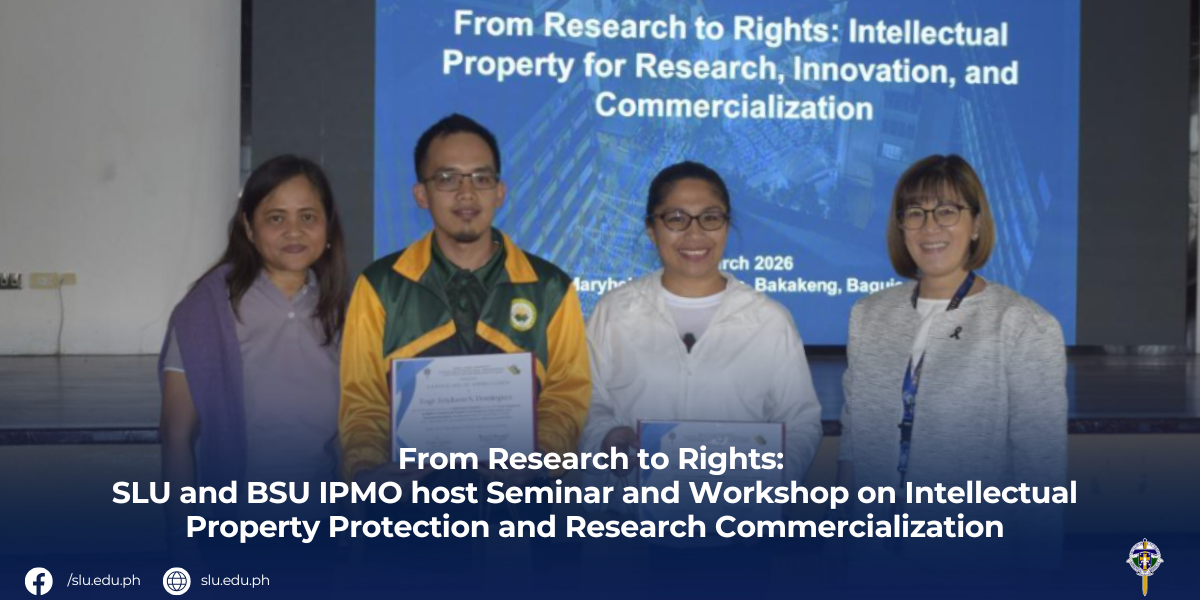
Faculty members of the School of Accountancy, Management, Computing, and Information Studies (SAMCIS) of Saint Louis University (SLU), members of the Benguet State University Intellectual Property Management Office (BSU IPMO), and representatives of the SLU Research, Innovation, and Sustainable Extension (RISE) Center gathered on 6 March 2026 at the Fr. Devesse AVR of the SLU Maryheights Campus for a full-day workshop titled “From Research to Rights: Intellectual Property for Research, Innovation, and Commercialization.” The event aimed to bridge the gap between academic research and the formal protection of intellectual outputs, equipping faculty researchers with the knowledge and tools needed.
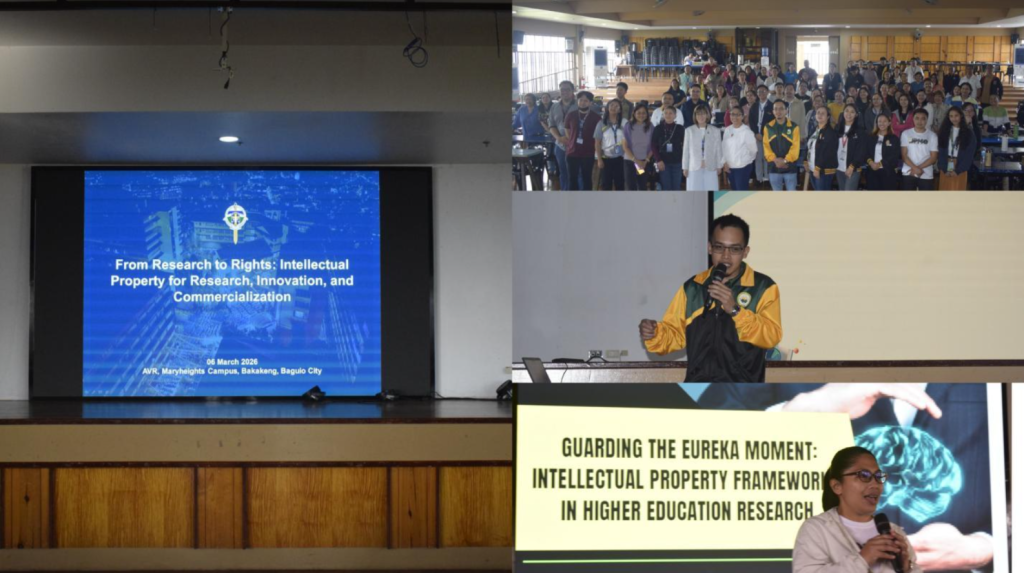
The activity supported SDG 9: Industry, Innovation and Infrastructure by promoting innovation-driven research and strengthening pathways for technology transfer and commercialization. Furthermore, the seminar-workshop contributed to SDG 4: Quality Education by providing researchers and educators with knowledge on intellectual property, rights, and innovation management.
A Call to Action
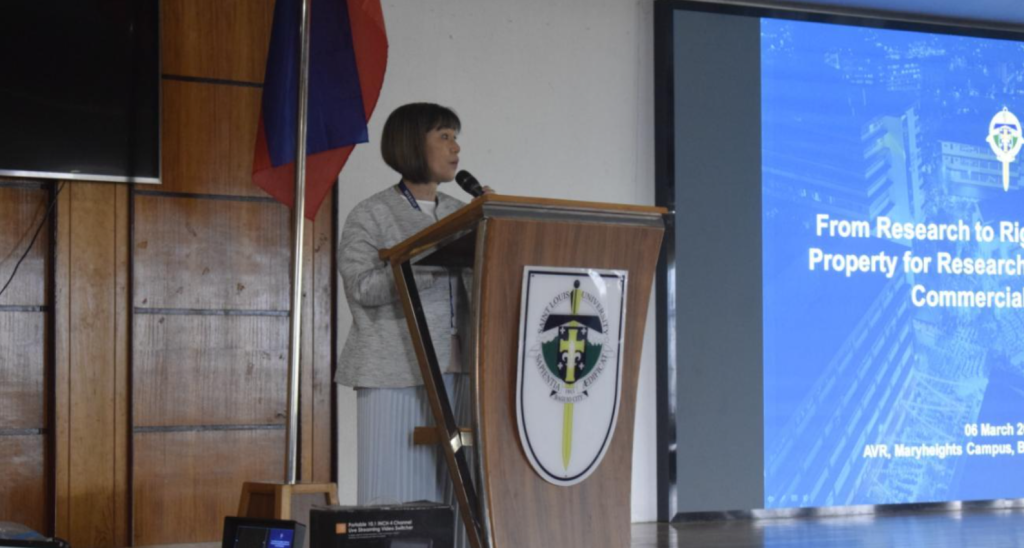
During the welcome remarks, SAMCIS Dean Gloria De La Peña, PhD, emphasized the importance of intellectual property education and urged the academic community to cultivate a mindset that goes beyond compliance or academic requirements. “We must nurture a culture of innovation. A culture where curiosity is strengthened, and new ideas are welcomed.” She also stated that one must encourage their students and even themselves to challenge existing systems and imagine possibilities to improve communities. “In doing so, we become more than educators. We become builders of a better society.” And, most importantly, for her, individuals become warriors of positive change.
IP Frameworks in Higher Education
Cynthia D. Garambas, PhD, Director of the BSU Intellectual Property Management Office and Project Leader of the RAISE-CAR Project 1, was the first to share her knowledge and presentation during the morning session. Her talk, titled “Guarding the Eureka Moment: Intellectual Property Frameworks in Higher Education,” provided a comprehensive overview of research outputs, IP rights, and the importance of registering intellectual property within the context of Philippine higher education. She defined intellectual property as the distinct creation or product of the human mind, or feedback, while an intellectual property right is a legal document that gives one the exclusive right to use and sell.
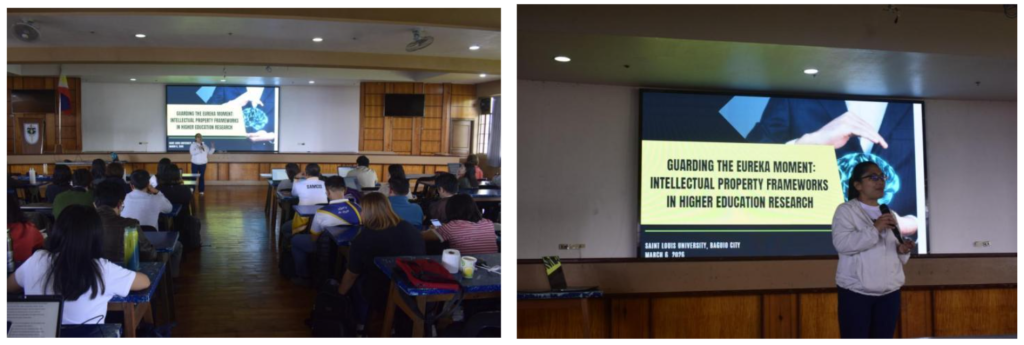
The talk began by outlining the broad range of outputs that researchers produce, emphasizing that intellectual property protection extends far beyond traditional inventions. Dr. Garambas provided a comprehensive overview of the main types of intellectual property and the rights associated with each. There are two main types of industrial property which cover patents, utility models, industrial design, and geographical indication; and copyright and related rights.
According to Dr. Garambas, for a patent to be granted, the invention must meet the requirements of novelty, industrial applicability, and inventive steps. Additionally, copyright protection arises automatically from the moment a work is created, which covers original works such as books, pamphlets, articles, lectures, musical compositions, and dramatic works, as well as derivative works such as translations.
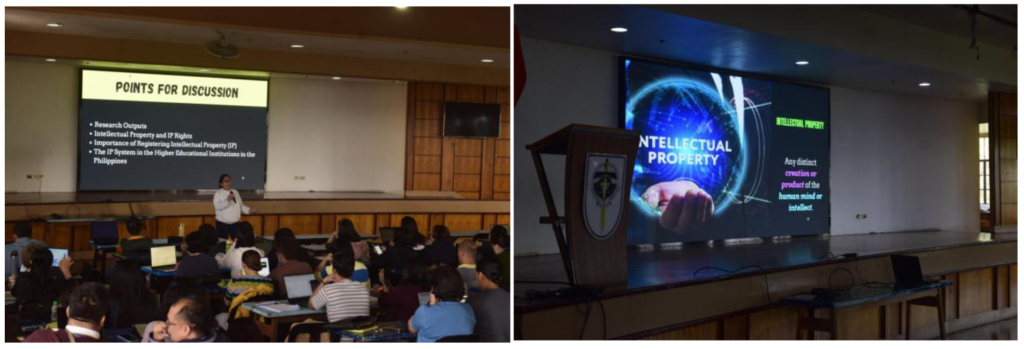
A recurring theme of Dr. Garambas presentation was about the practical importance of formally registering intellectual property. She outlined several key reasons, such as establishing clear proof of ownership, facilitating enforcement and legal action, promoting innovation and research, and enhancing institutional reputation and partnerships. Also, it facilitates technology transfer and commercialization. She also acknowledged the persistent challenges facing IP in higher education in the Philippines, particularly the prevailing “publish or perish” culture that prioritizes publication over IP registration, the high filing costs, and the general lack of commercialization maturity among academic institutions.
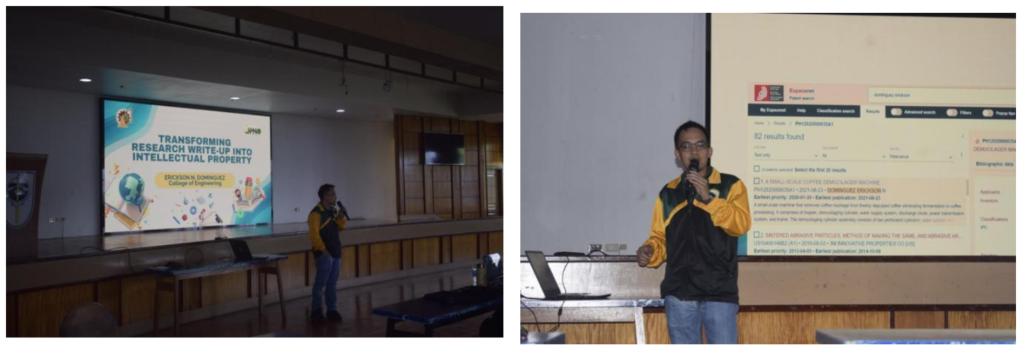
The second morning talk was delivered by Engr. Erickson N. Dominguez (BSU IPMO), who focused on the practical process of transforming research outputs into registrable intellectual property. He revisited the four main types of IP, such as patents, trade secrets, copyright, and trademarks, with a focus on the critical distinctions between them. Engr. Dominguez highlighted that for a utility model, novelty is the primary requirement; for an invention patent, inventive steps must also be demonstrated; and for trade secrets, the key considerations are confidentiality and the value of the information being protected.
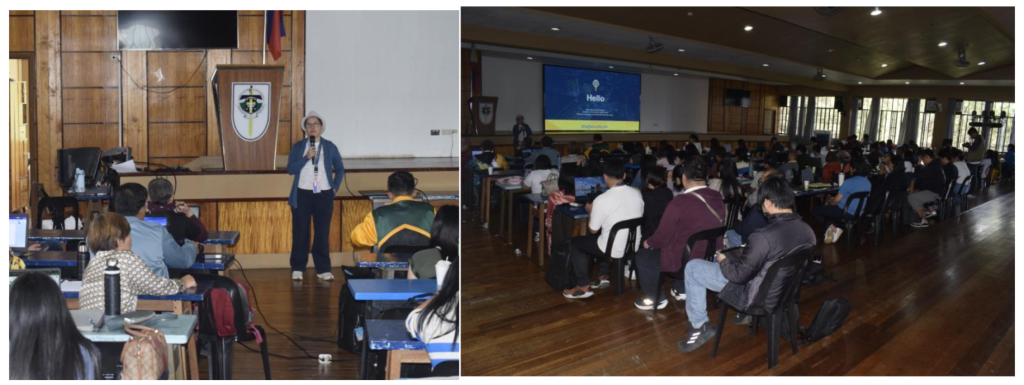
The first part of the afternoon was dedicated to an open question-and-answer session on intellectual property rights and processes. Participants inquired about various practical issues, which were addressed by Engr. Melissa Boado, the Innovation Technology Transfer Officer at the SLU RISE Center. A faculty participant inquired about the adviser’s role in the students’ creative endeavors. He asked whether the adviser is considered to have made a significant contribution to it. Engr. Boado answered that they are involved, but if the involvement is supervision, then they are not considered creators. “Pero kung significant yung contribution mo, say, nag-program ka, you created an image also, then you are a creator,” she added.
According to Engr. Boado, in these types of cases, the student and the adviser must talk. “Kasi pag faculty ang gumawa, pag-aari ng institution yung IP. Pag student ang gumawa, kahit pa result yun ng capstone nila, for example, sa kanila yun.” Another participant asked if an individual will receive a GAWAD award after filing a copyright or patent even if they are not under SLU. Prof. Laarni Natividad, PhD of RISE Center clarified that, for publications, one must have an SLU affiliation to receive a GAWAD award, likewise for innovations.
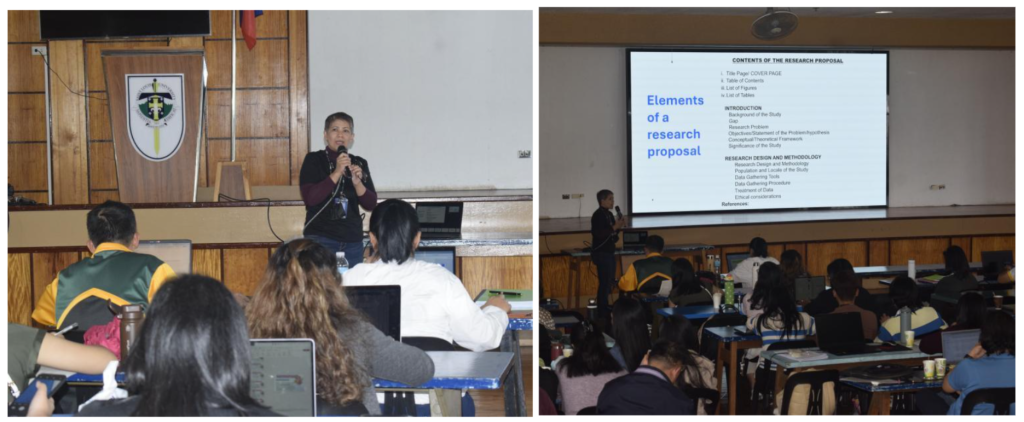
Before proceeding to the hands-on workshop portion, Ms. Lorraine Ngaosi, the SLU Undergraduate University Research and Innovation Coordinator, briefly covered the elements of a research proposal for undergraduate studies. As the undergraduate research defense is just around the corner, she reiterated the guidelines and required submissions.
Innovation Mapping and Prior Art Search
Dr. Garambas returned to lead a discussion on innovation mapping and the Prior Art Search Report, a critical step in the IP filing process that mirrors the Review of Related Literature in academic research. A prior art search, she explained, examines existing patents and technologies related to a proposed invention. The goal is to assess whether the innovation is sufficiently distinct from existing solutions. The search should ideally be conducted before the research or invention begins, before filing a patent application, and before starting business operations related to the output.
Participants were also introduced to practical search tools for conducting prior art searches, including Espacenet and Google Patents, with the help of Engr. Dominguez. He emphasized that a lower volume of existing technologies related to the invention is generally more favorable, as it suggests fewer competing claims in that technological space.
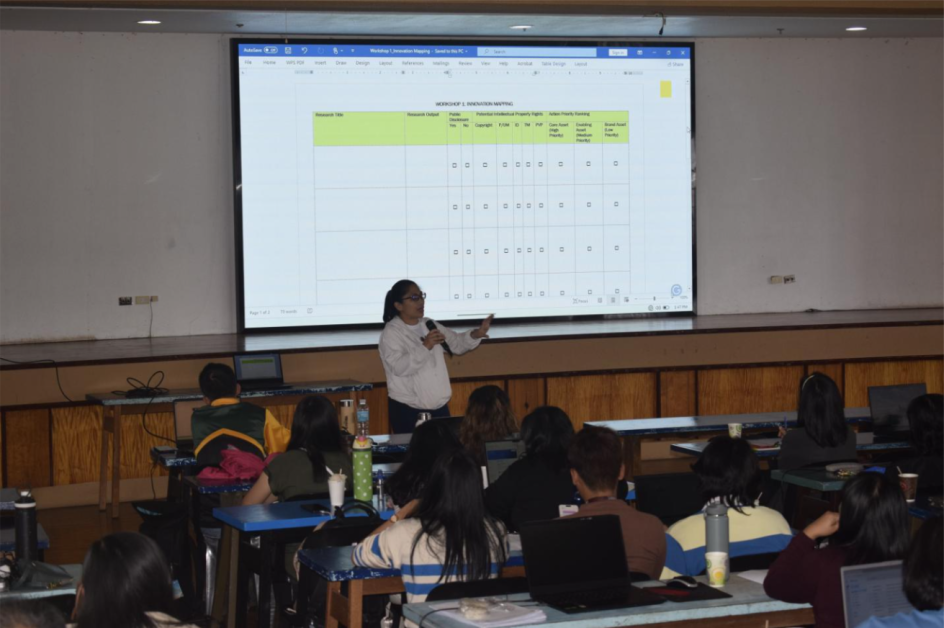
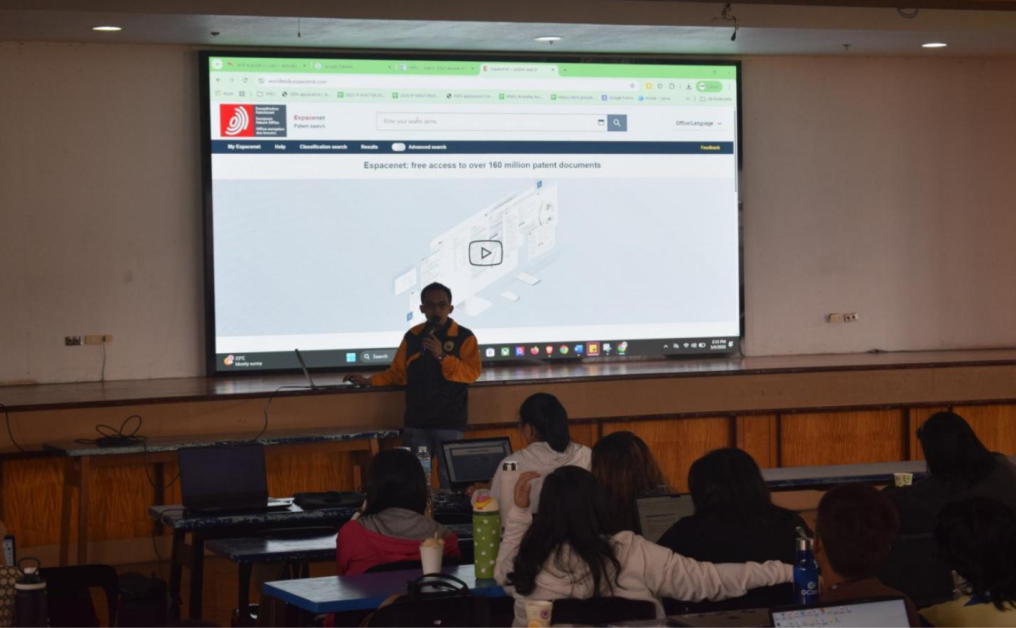
One of the afternoon’s more notable exchanges was on the possibility of inter-institutional IP collaboration between BSU and SLU. In response to the question of whether the two universities could co-file an IP, the BSU IPMO confirmed that cross-institutional collaboration on intellectual property is indeed possible, opening for more joint research-to-commercialization initiatives between the two institutions.
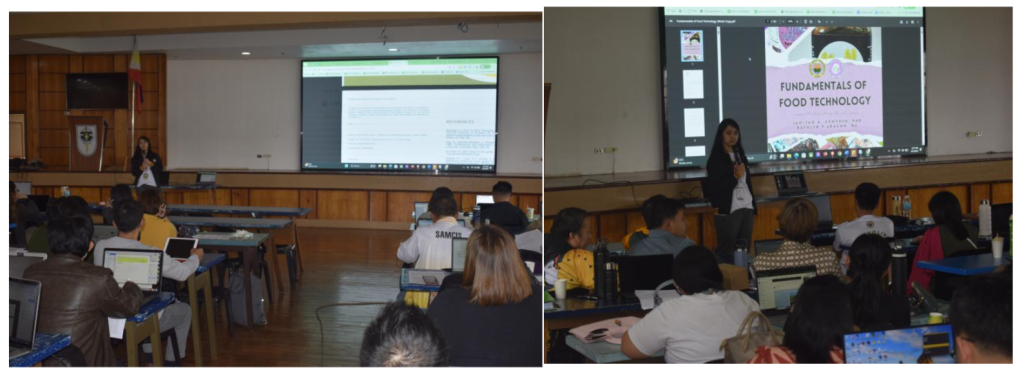
The BSU IPMO featured a manual, a Mint Growing Guide, which served as an example of how a proper copyright notice must be incorporated into any published material. It was also noted that the National Library of the Philippines requires a copyright notice to be included before accepting submissions.
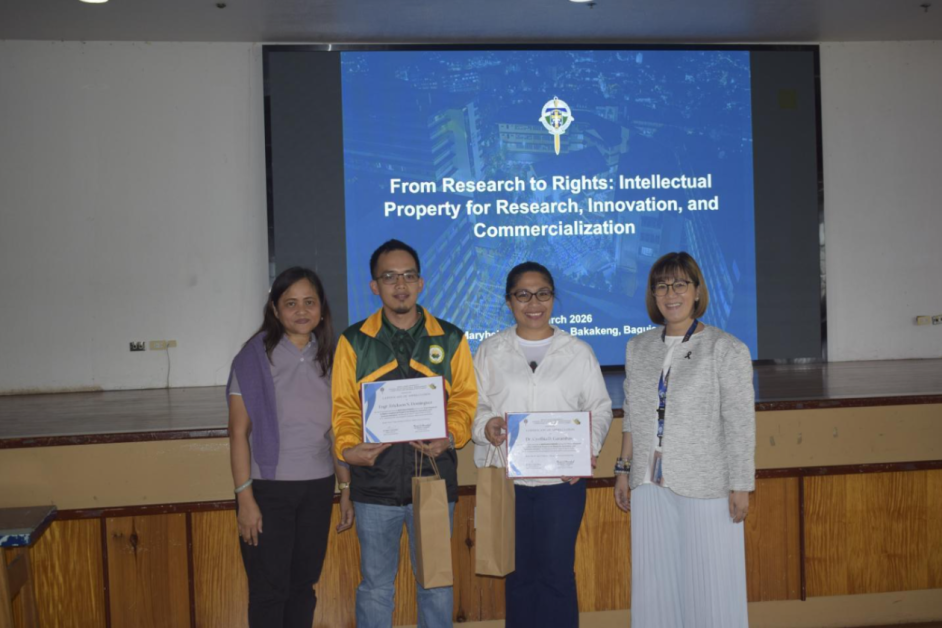
The workshop concluded with the awarding of certificates to the two resource speakers: Dr. Cynthia D. Garambas and Engr. Erickson N. Dominguez. The closing message was delivered by the RISE Center director, Prof. Richel Lamadrid, PhD who shared her support for protecting an individual’s intellectual property and offered the RISE Center’s assistance to those in need. (Article and Photos by the SLU RISE Center)