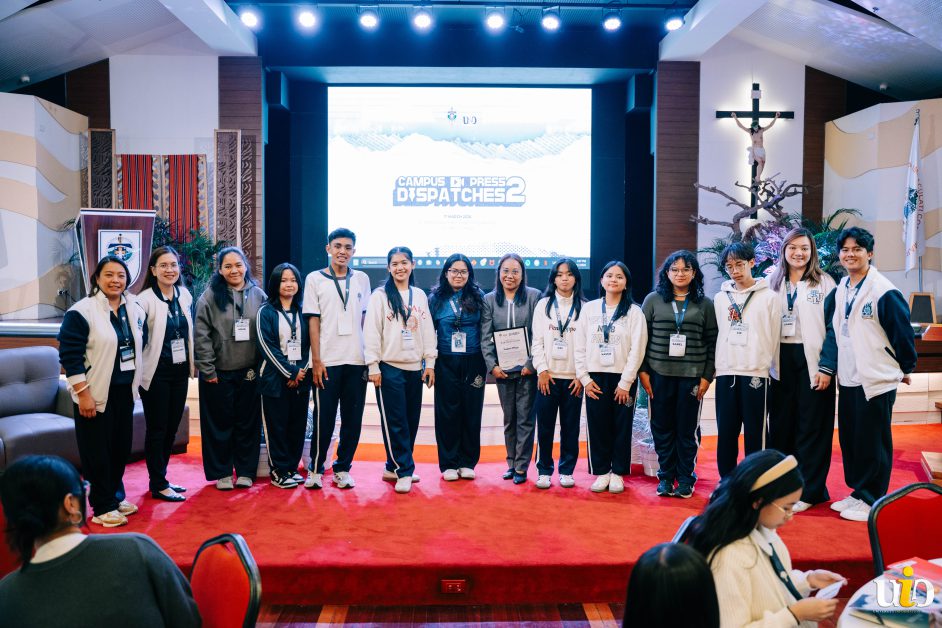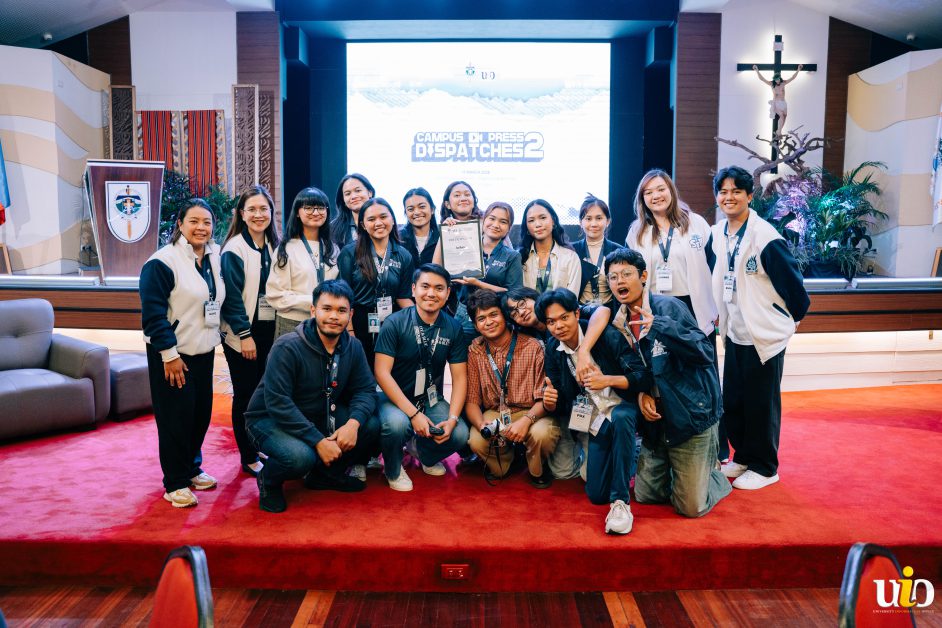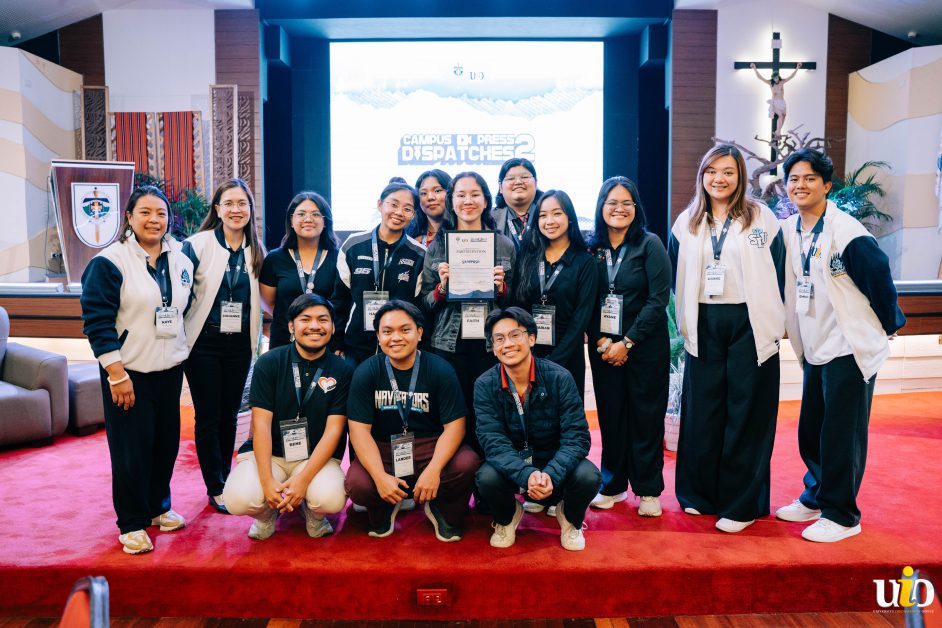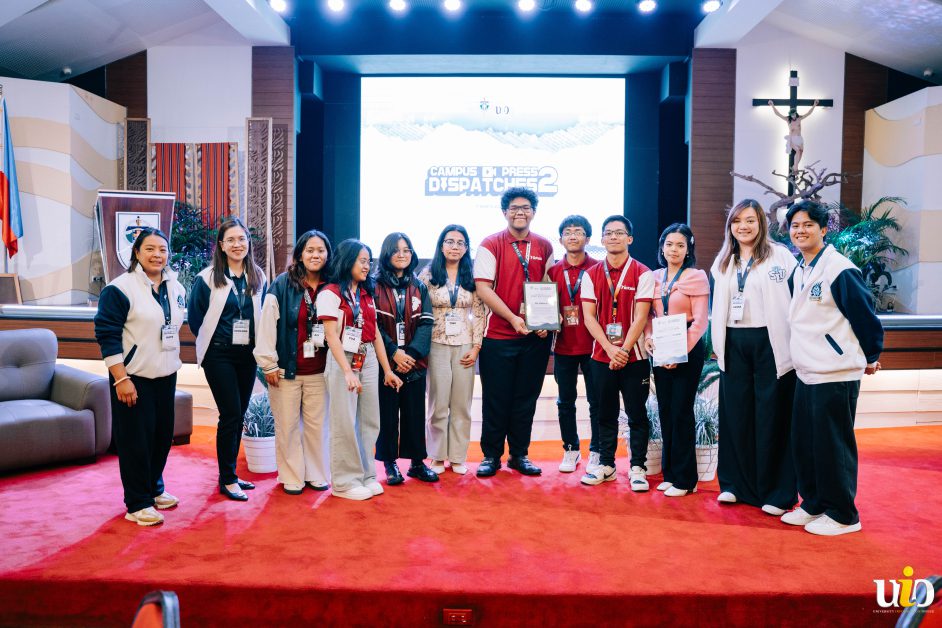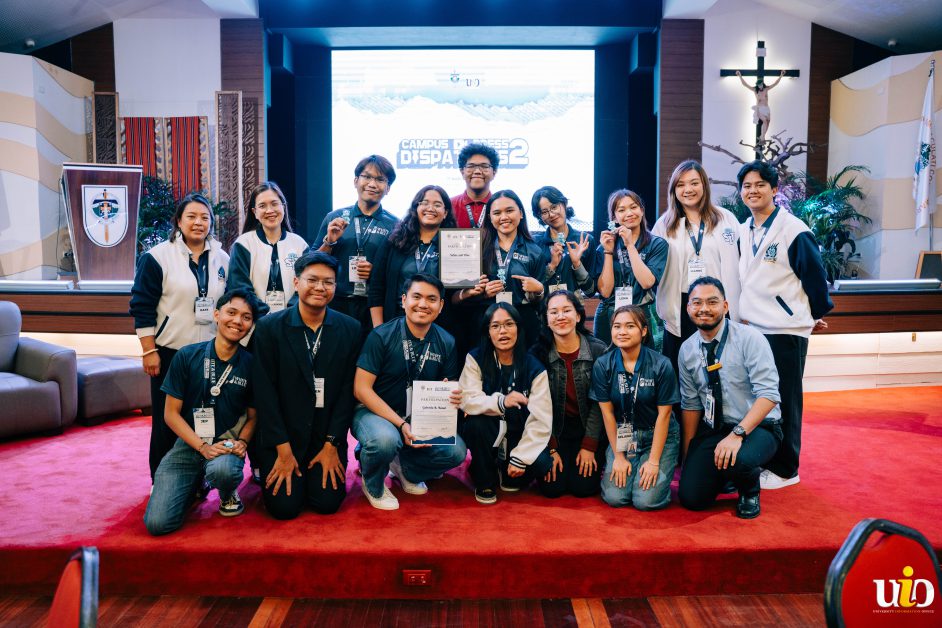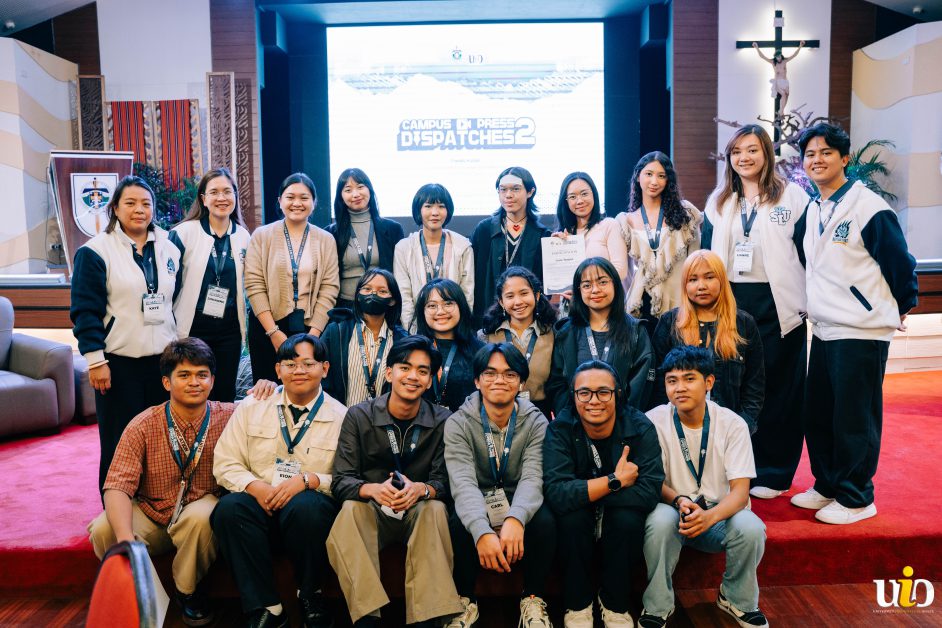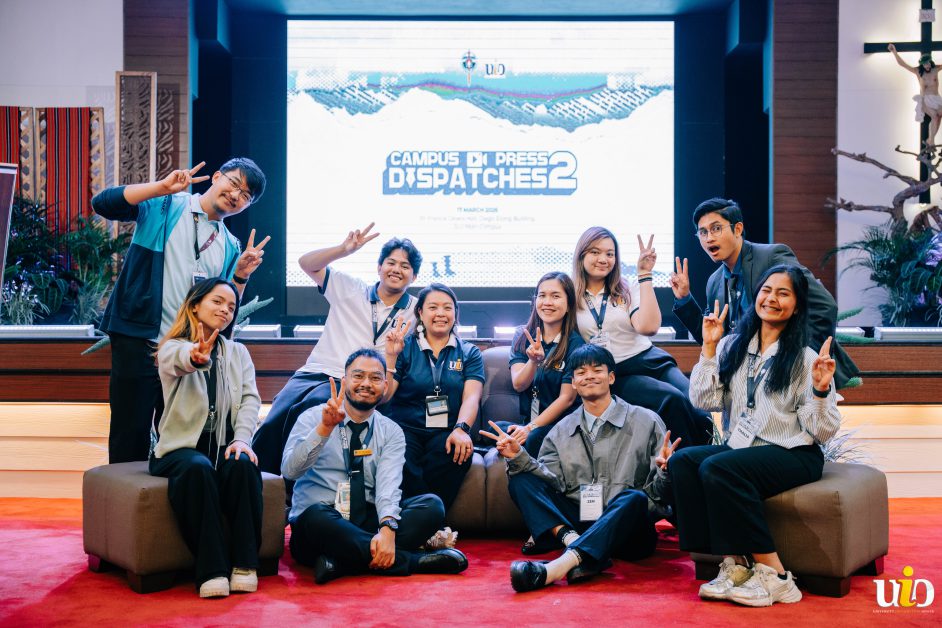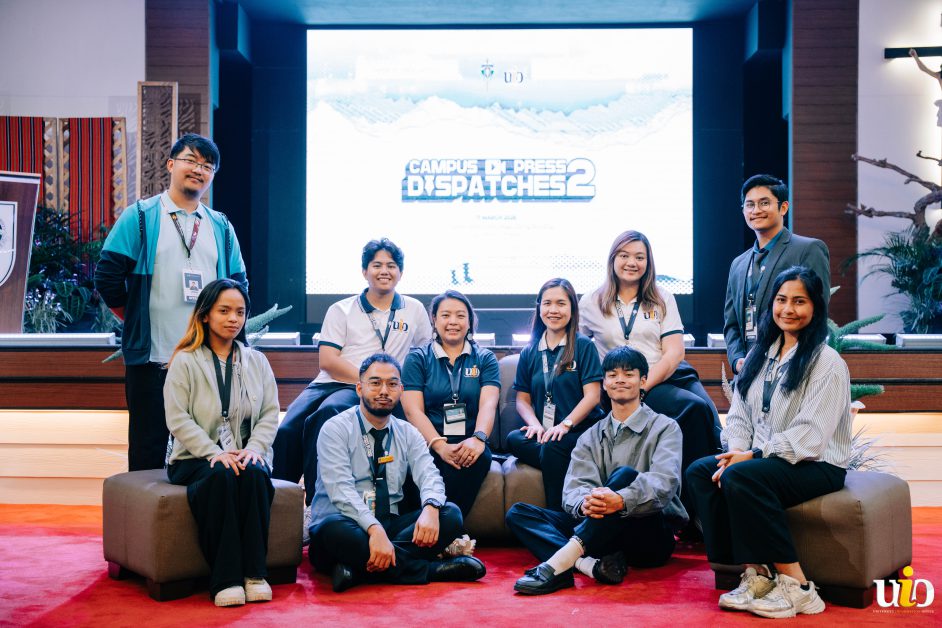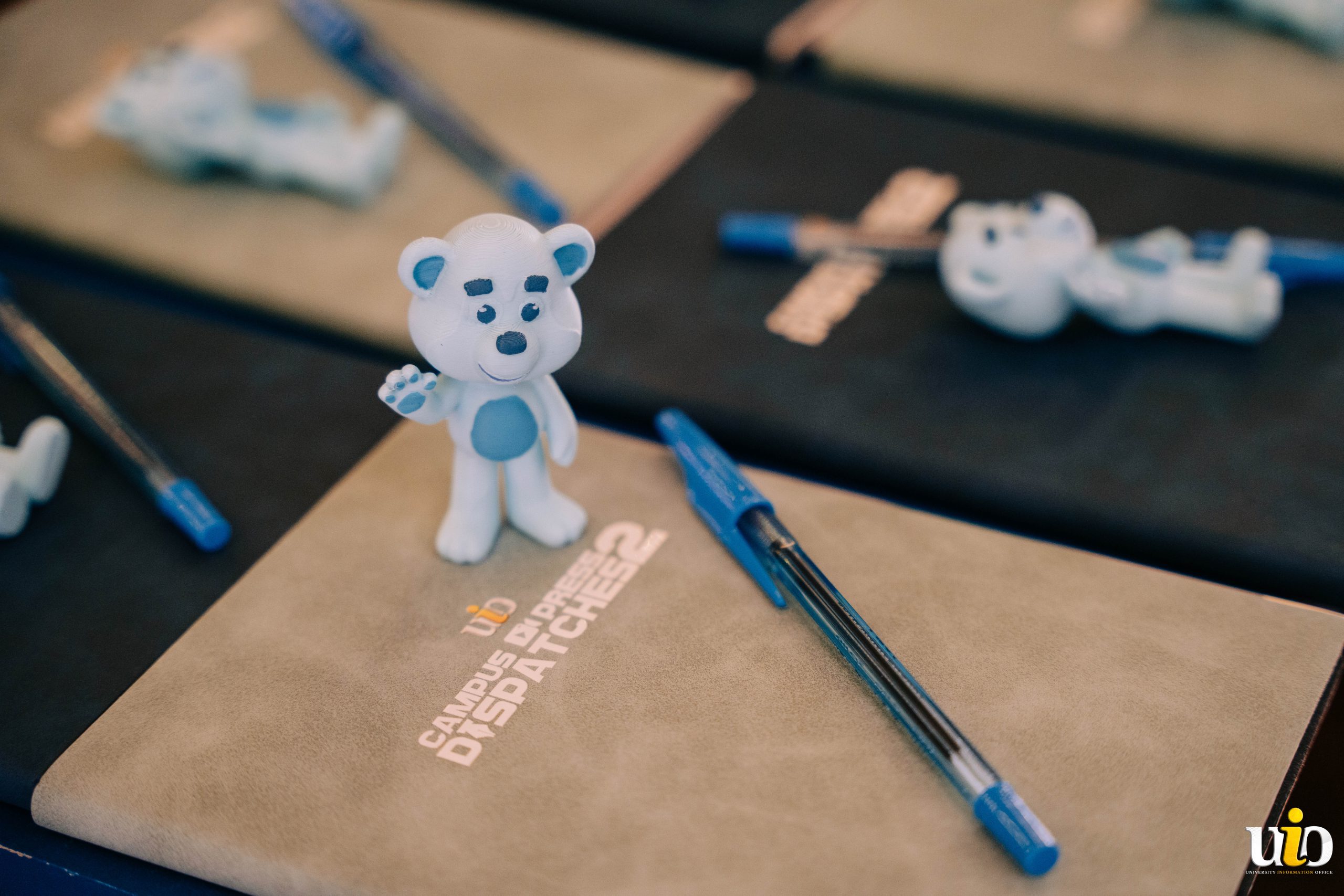
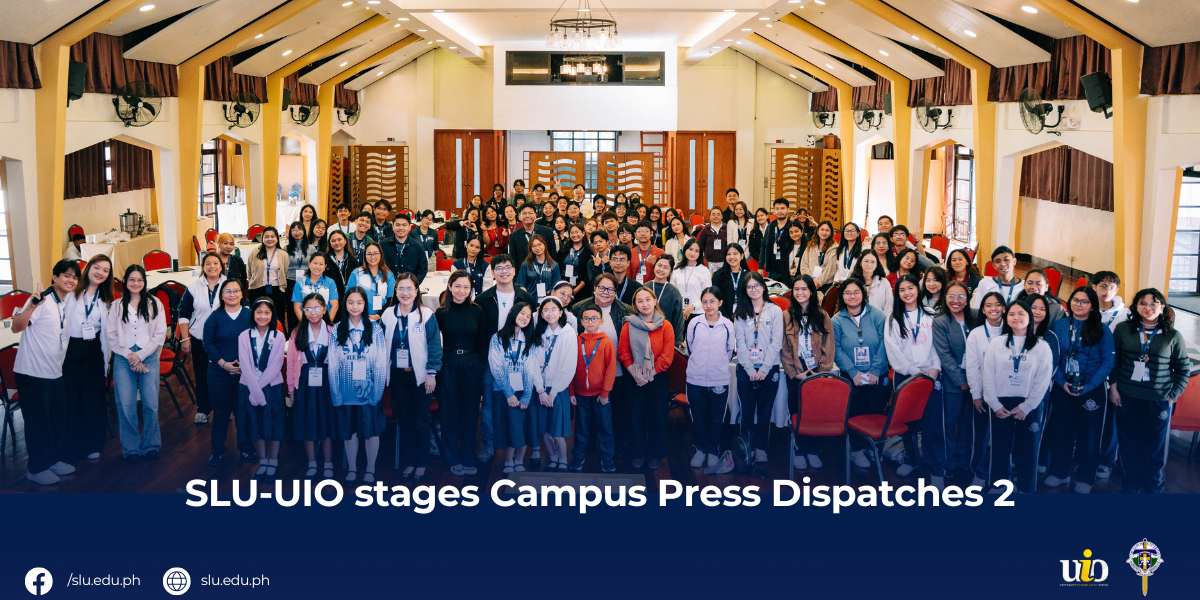
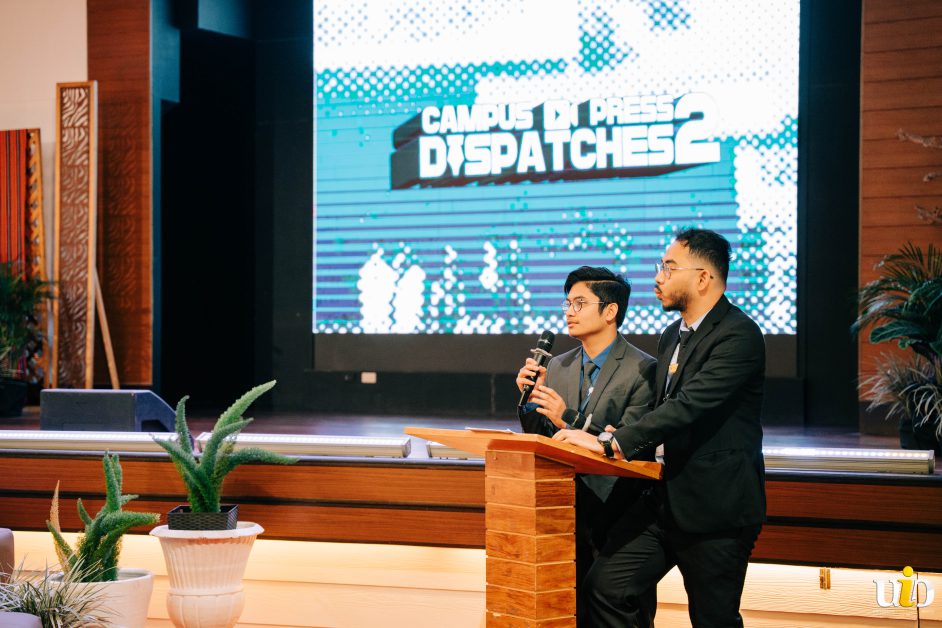
In its second consecutive year, Saint Louis University (SLU), through its University Information Office (UIO), conducted “Campus Press Dispatches 2: A Convergence of Louisian Student Publications” on 17 March 2026 at the Fr. Francis Gevers Hall, Diego Silang Building, SLU Main Campus.
Otherwise known as “Dispatches,” the gathering aimed to enrich the understanding of student journalists’ role in community journalism in the especially dynamic media landscape in recent times. Nine school publications were represented, namely:
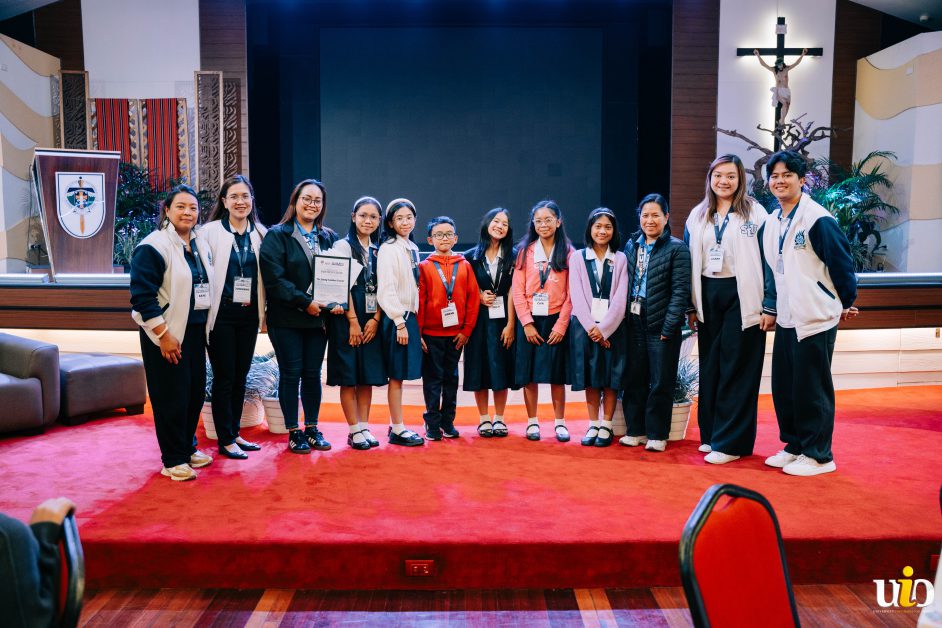
Basic Education School (BEdS):
- The Young Louisian Courier – SLU Laboratory Elementary School – English
- Tanglaw Hilaga – SLU Laboratory High School – Junior High
- The Louisian – SLU Laboratory High School – Senior High
SLU Schools Publications:
- Daily Dose – School of Nursing, Allied Health, and Biological Sciences (SONAHBS)
- Sampuso Publication – The Official Publication of the SLU Saint Aloysius Gonzaga Parish and the Congregation of the Immaculate Heart of Mary Campus Mission Volunteers (CICM – CMV)
- SCHEMA – School of Accountancy, Management, Computing and Information Studies (SAMCIS)
- Stellaris – School of Teacher Education and Liberal Arts (STELA)
- The Buttress – School of Engineering and Architecture (SEA)
- White & Blue – The Official Student Publication of SLU
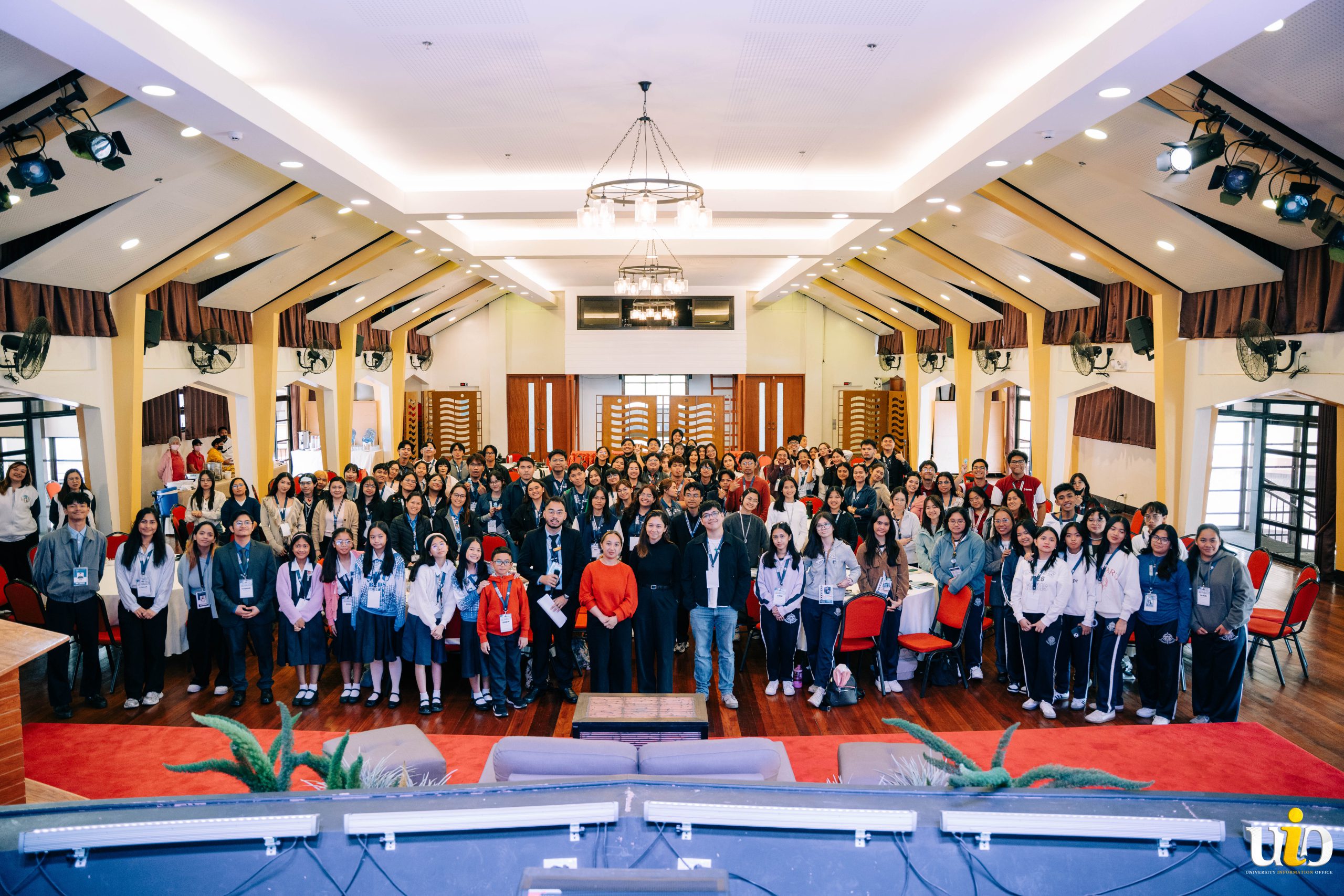
In addition to the said publications, two groups of BA Communication 1 students from the Languages and Communication Department, School of Teacher Education and Liberal Arts (STELA) also joined the said seminar-workshop.
In the event’s commencement, SLU Vice President for Administration, Atty. Shellah Yzanne P Merced, conveyed the opening remarks describing journalism within the school context as a global mission and a profound responsibility.
Atty. Yzanne remarked, “In every published story, we see or hear a young mind learning one of democracy’s most essential disciplines: the discipline of seeking truth, of pursuing transparency, of demanding accountability. In an age where information travels faster than ever, where rumors, misinformation, and half-truths can spread in seconds, the work of journalists becomes even more significant… Your role is not merely to report events, but to illuminate realities.”
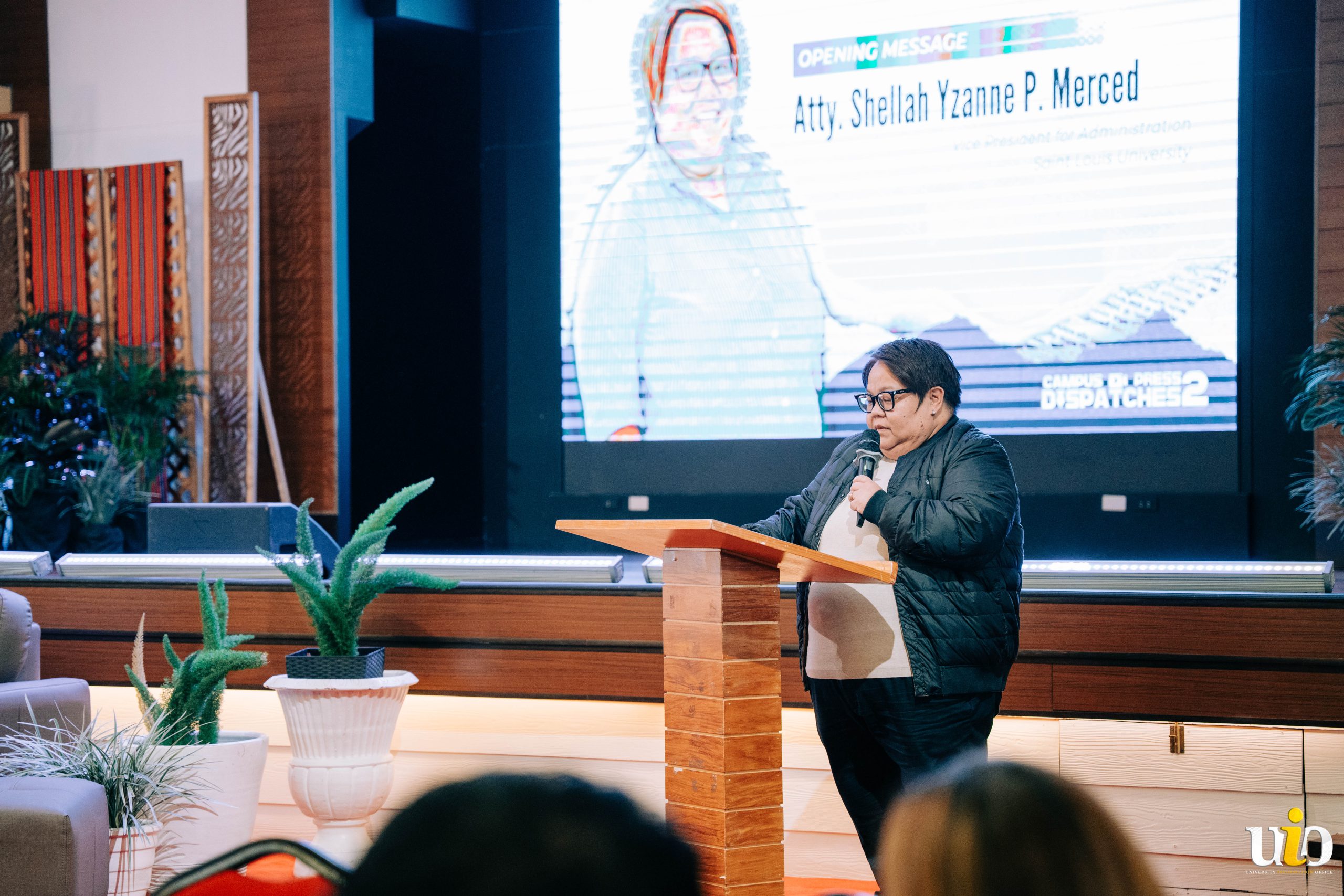
She also encouraged the student-journalists to recommit themselves to the ideals that make journalism meaningful namely: truth, fairness, and integrity, noting that, “[e]specially with what is happening globally, the world needs more courageous and honest storytellers.”
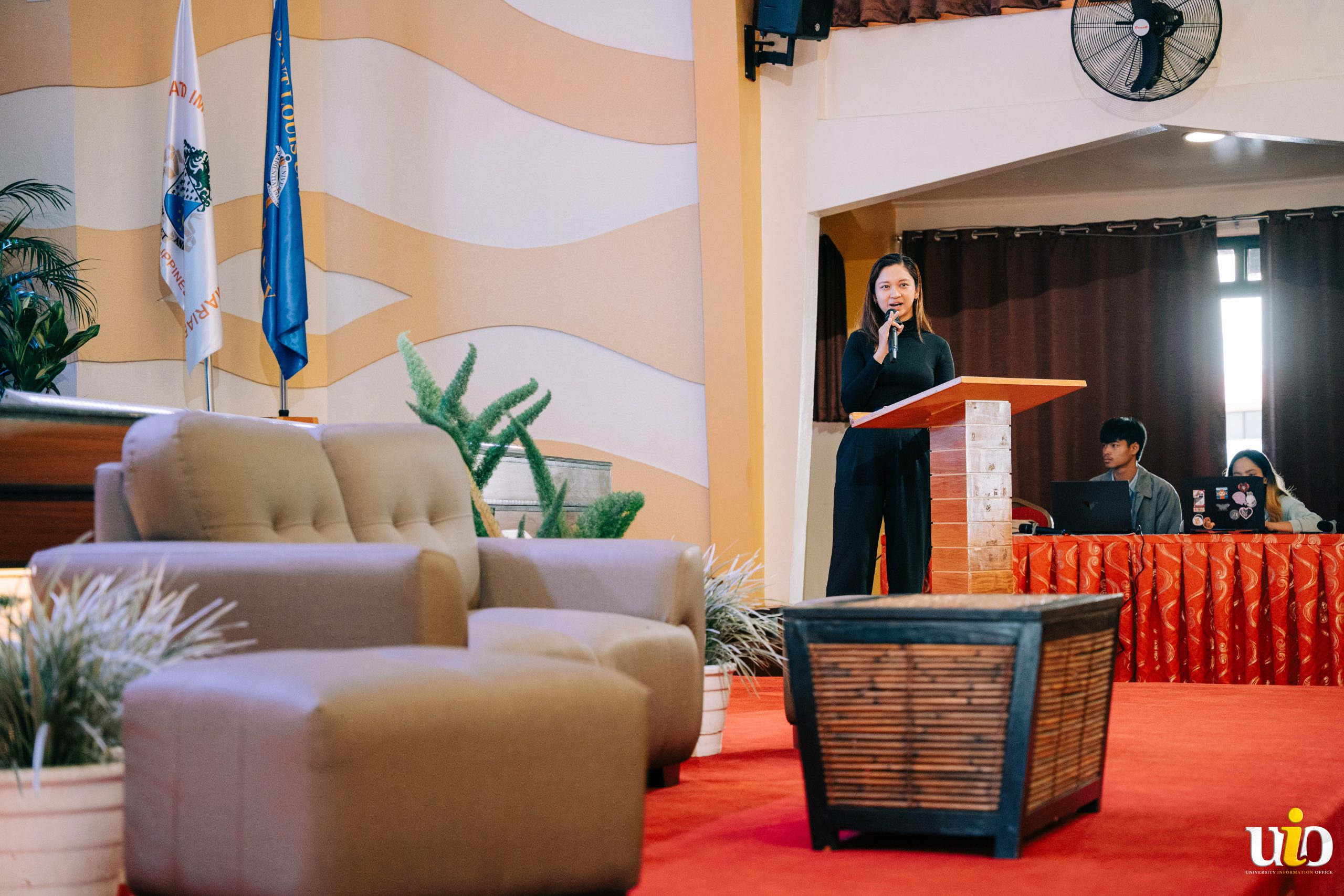
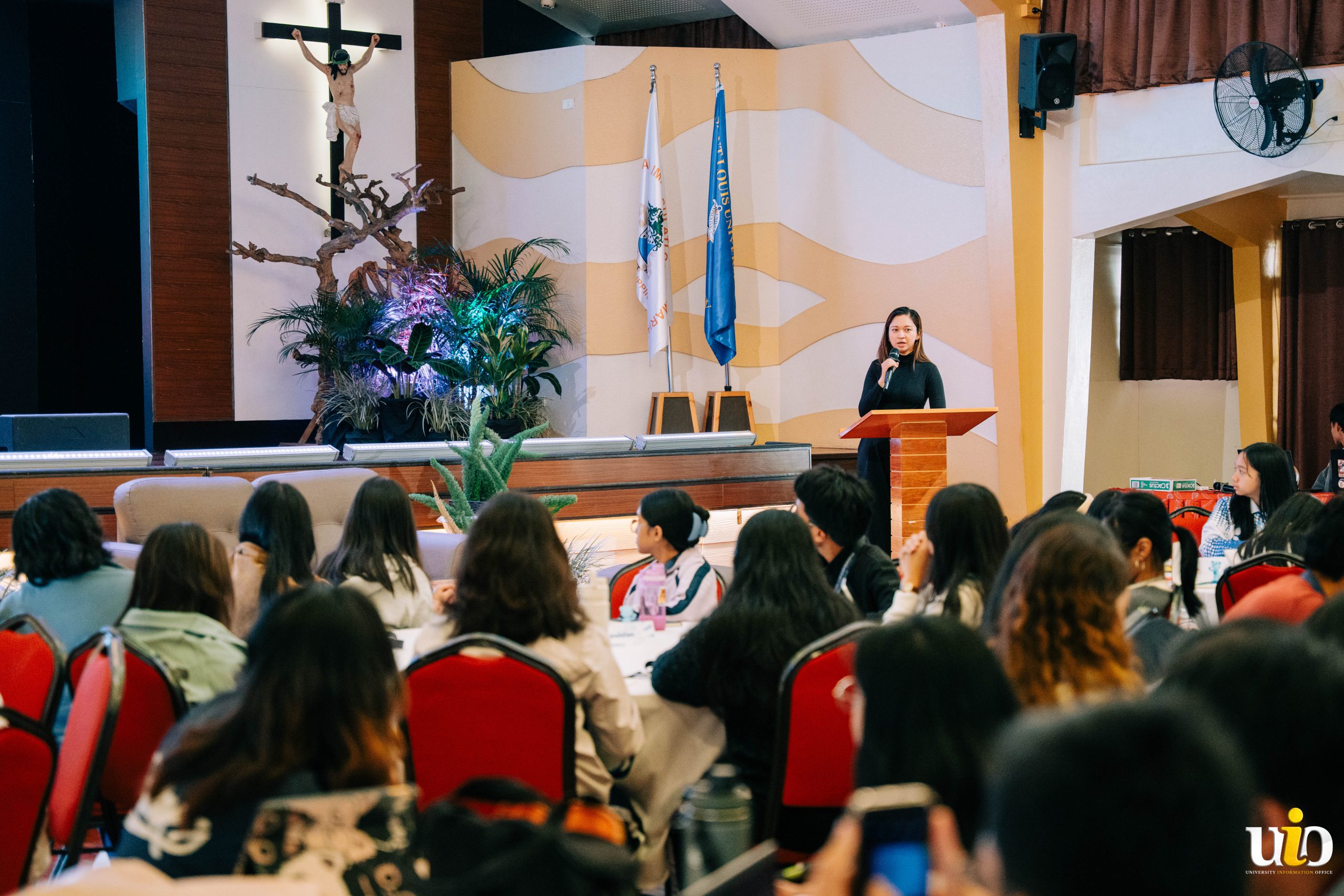
Session 1, Writing: “Words that Build: Writing to Mobilize Communities” by Reynadel “Edel” Valera
The first speaker was Ms. Edel Valera, Head Writer & Story Producer of The Fat Kid Inside Studios and FEATR Media on “Words that Build: Writing to Mobilize Communities”. She began her talk by presenting milestones throughout her career, highlighting that the most important recognition she received as a writer was becoming a feature editor for the first time, which was for her high school paper.
Delving into the context of feature writing, she then discussed the roles and intentions of a journalist. She established the contrast between information and mobilization through a story and documentary she and her team worked on titled, “Asin Tibuok”. She used this story as the framework for her 7-step process to effective storytelling. Feature stories should go beyond merely telling narratives. It should encompass and promote stewardships that call for societal changes.
“If it’s a good story, it should provide tangible support to the people you zeroed in on”, Ms. Valera said. She underscored that the true essence of a story is its impact and its ability to mobilize an audience. She closed her presentation by encouraging the young journalists saying, “Don’t just write so people know something. Write so people do something.” She drove this further through and said, “Go build something.”
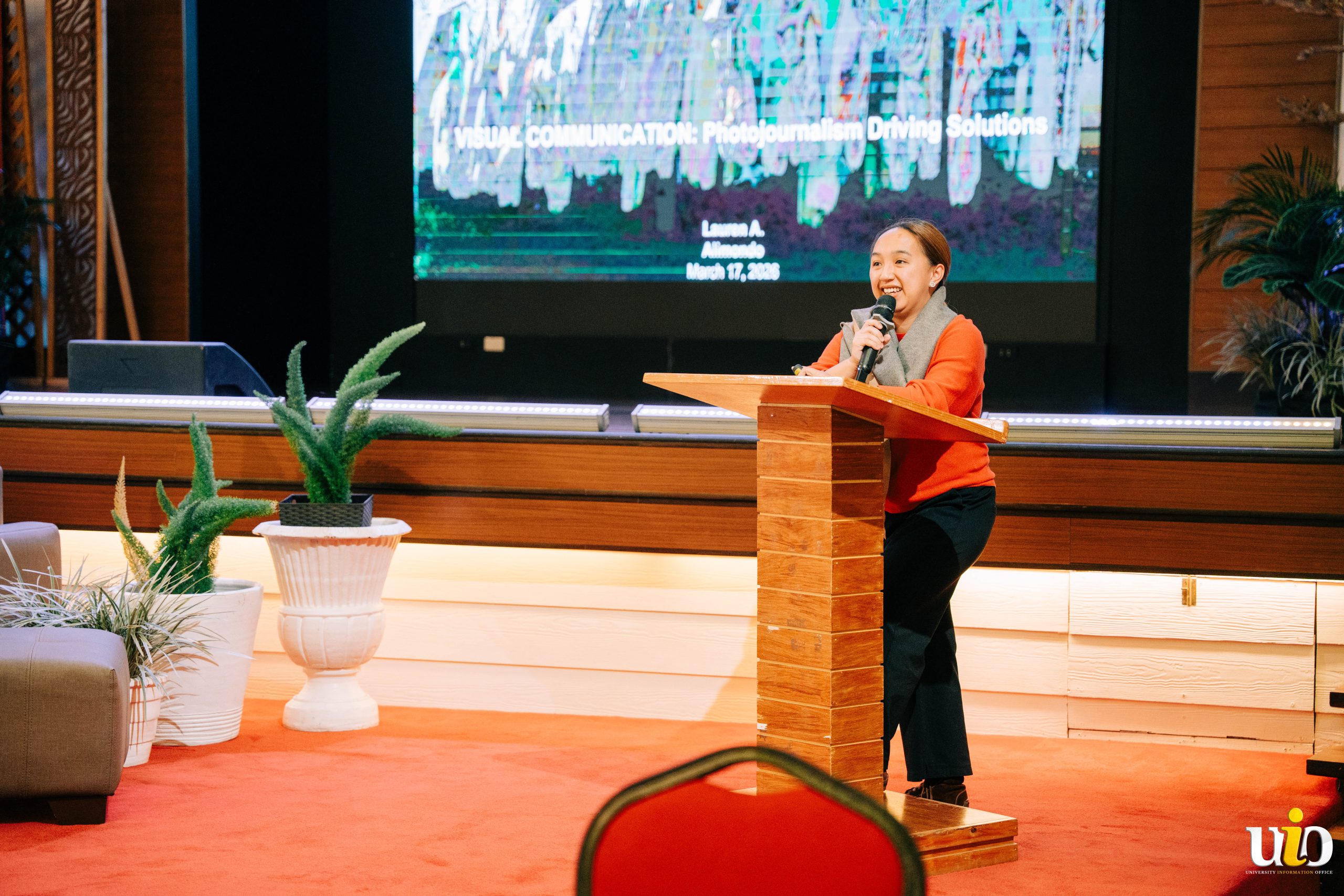
Session 2, Digital Journalism: “Visual Communication: Photojournalism Driving Solutions” by Lauren Alimondo
The second session was facilitated by Ms. Lauren Alimondo, a government worker and former photojournalist, on “Visual Communication: Photojournalism Driving Solutions.” Her discussion delved into the importance of photojournalism and its roles within and outside the newspaper. She emphasized that photojournalists must prioritize portraying the truth above all and added that their main purpose is to communicate stories and educate people through varying angles.
Ms. Alimondo’s talk also tackled negativity bias, further highlighting the need for solutions-focused visual journalism. She detailed that solutions-focused journalism entails a critical angle because it offers insights to society and draws views from people’s authentic experiences. Essentially, she listed how photojournalism drives solutions through visual evidence, humanized data, and legislative reform.
As a lasting message, she shared that regardless of equipment, anyone can take part in this form of visual journalism that is geared towards creating solutions for society. She also reminded the student journalists to observe ethics in journalism.
Session 3, “Voices Amplified: Digital Strategies for Local Empowerment” by Francis Irvin “Kiko” Quezon
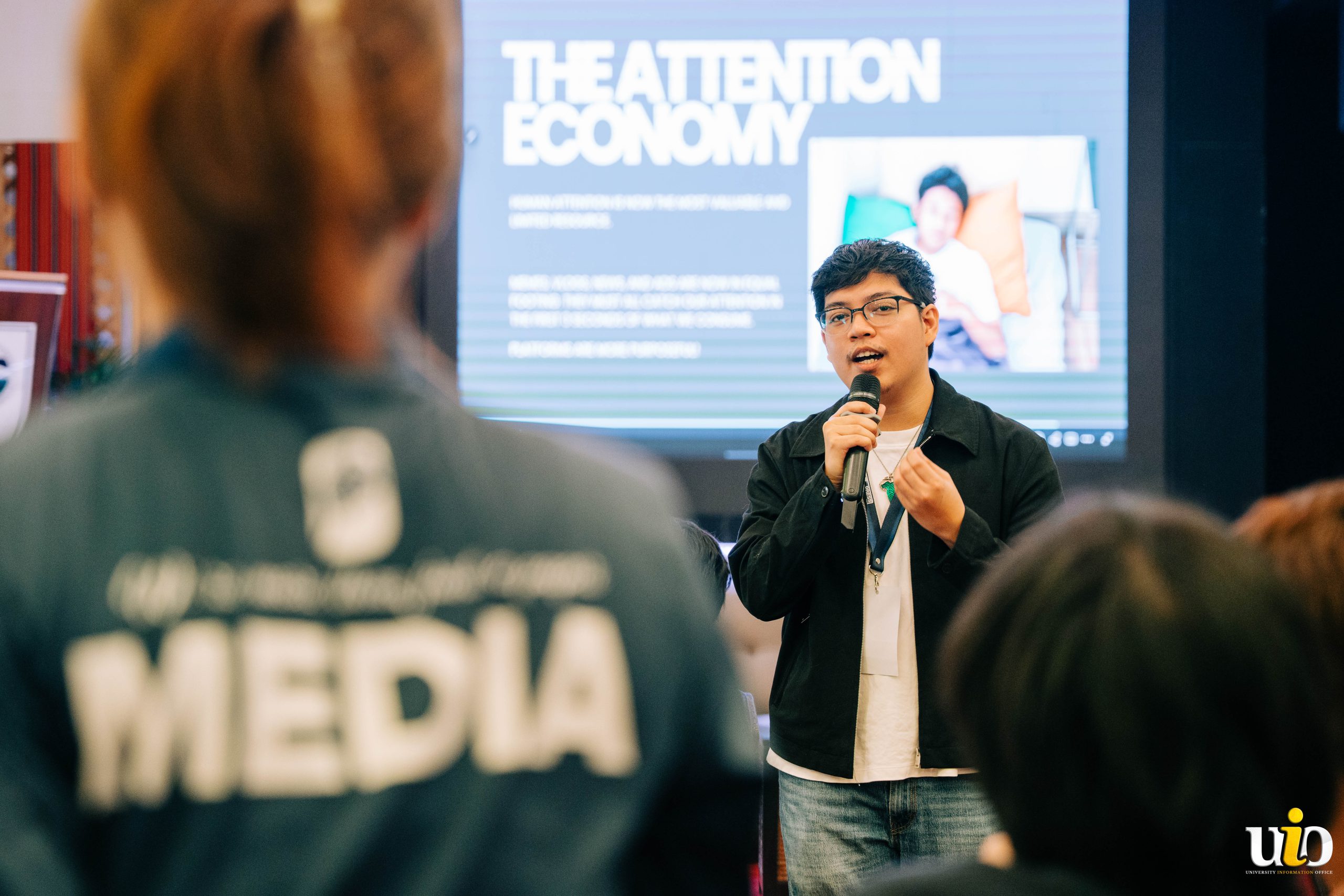
The third session speaker was Mr. Francis “Kiko” Quezon, TV Writer, Voice Artists & Multimedia Producer of the ABS-CBN Corporation. His talk “Voices Amplified: Digital Strategies for Local Empowerment” centered on content creation. He pointed out the increasing need for content because of emerging themes in digital media. “Now, everyone is their own channel,” he said.
Consequently, he emphasized that creating content is vital in today’s landscape, as people flock to their own online communities and carve out niches. This led into his discussion of mainstream media and the need to tailor writing for the masses. Mr. Quezon also outlined the concept of attention economy, beckoning a need to consider platforms and the use of long-form or short-form content to maintain audience attention and leverage algorithms.
He concluded his session expounding on data about the national educational crisis and the decline of online empathy. He stressed that better content creators are needed now more than ever. “Let us all encourage better judgement and better thinking as writers,” he urged the audience.
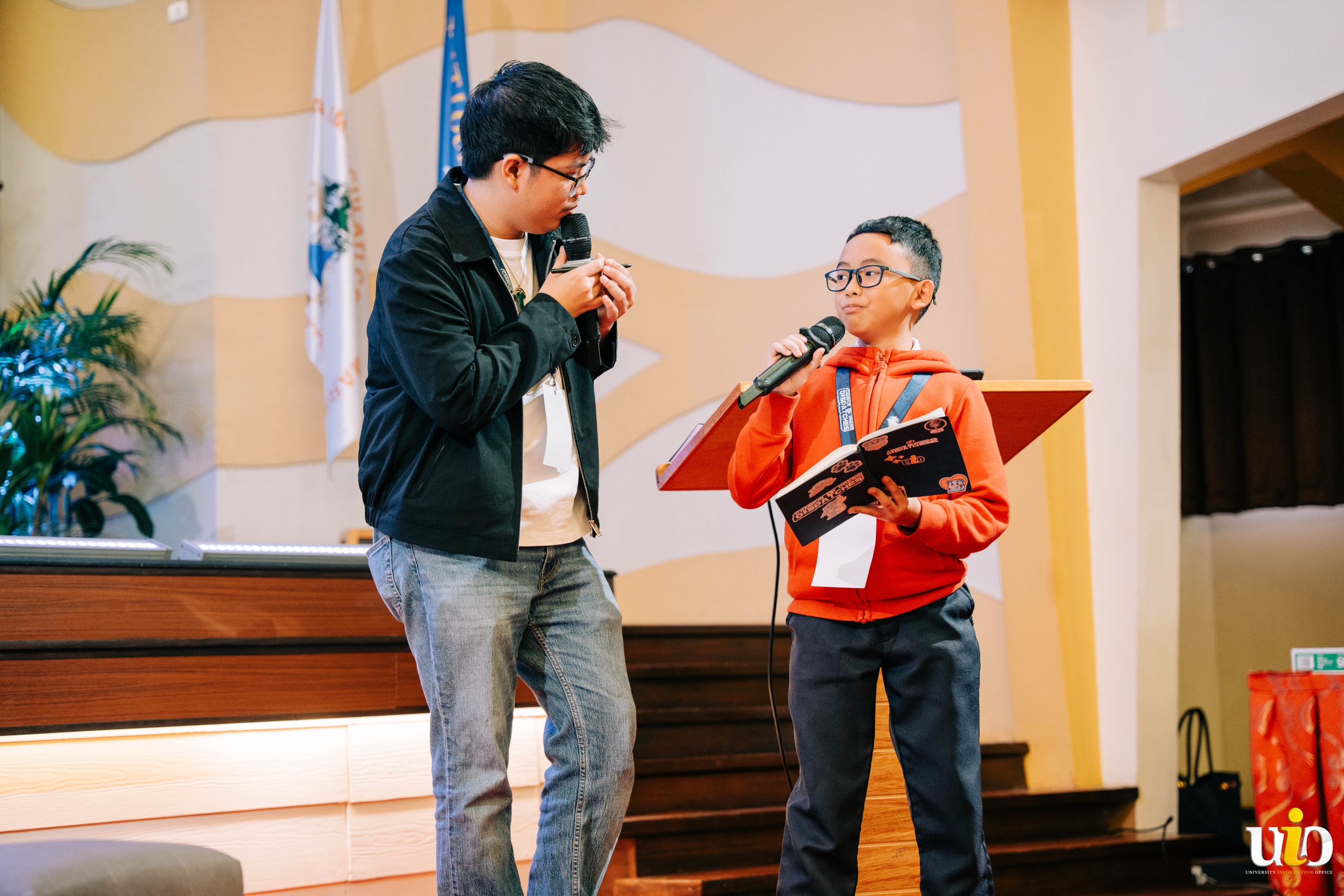
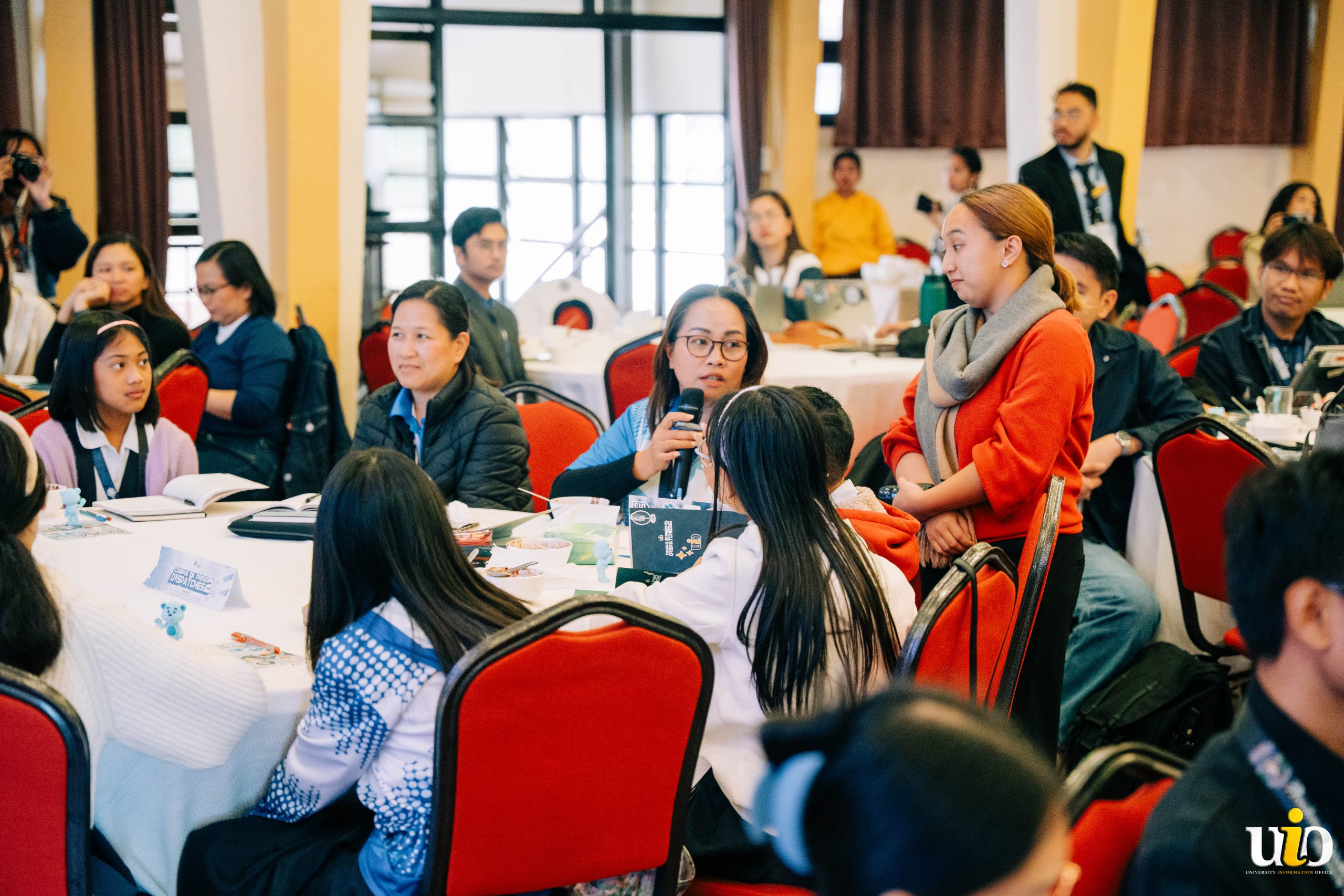
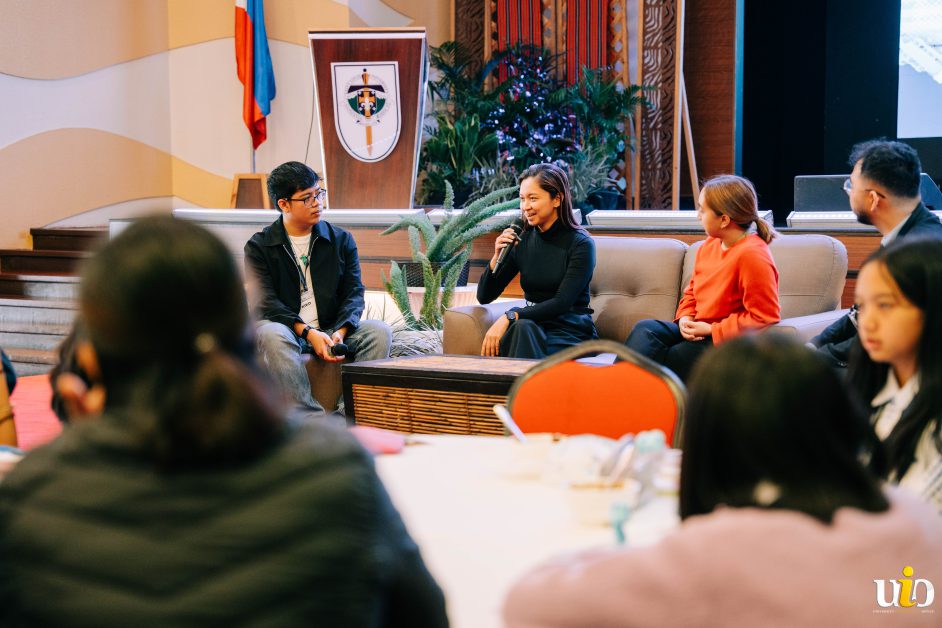
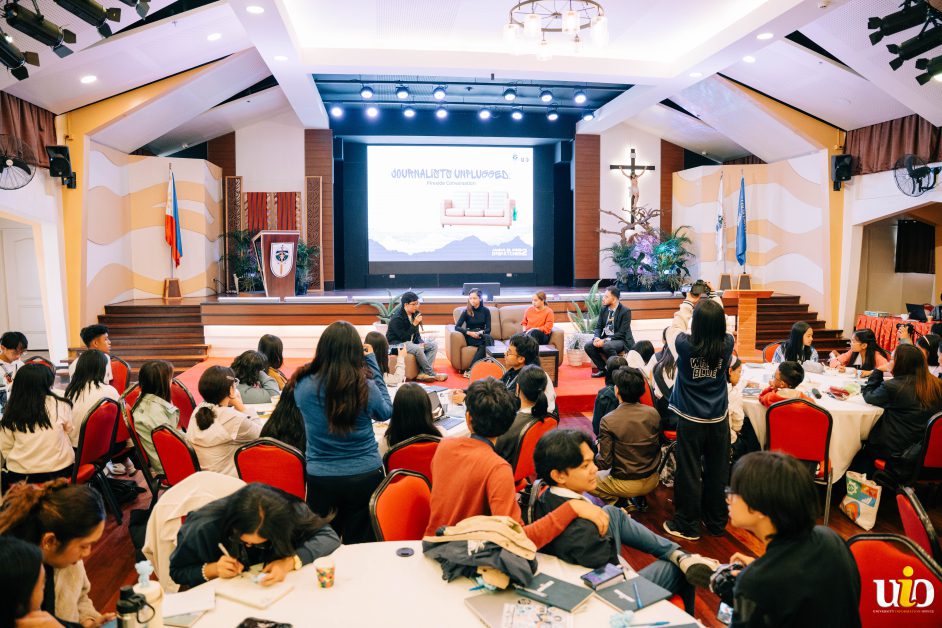
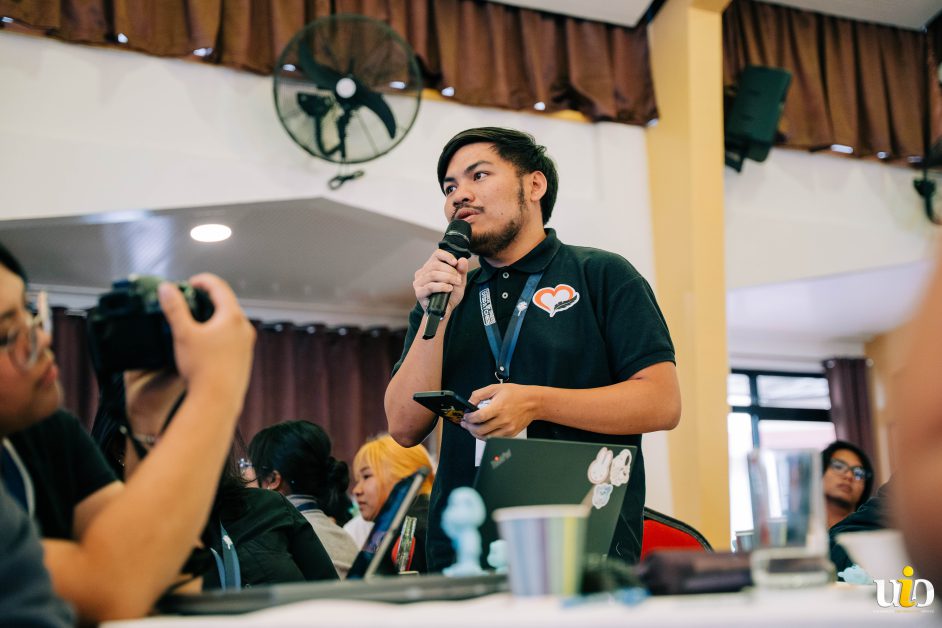
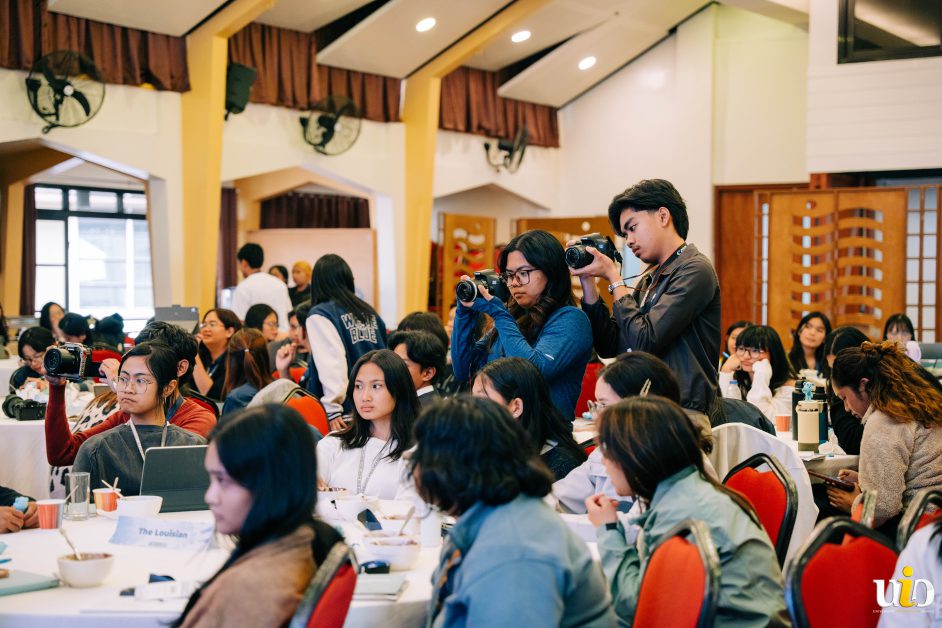
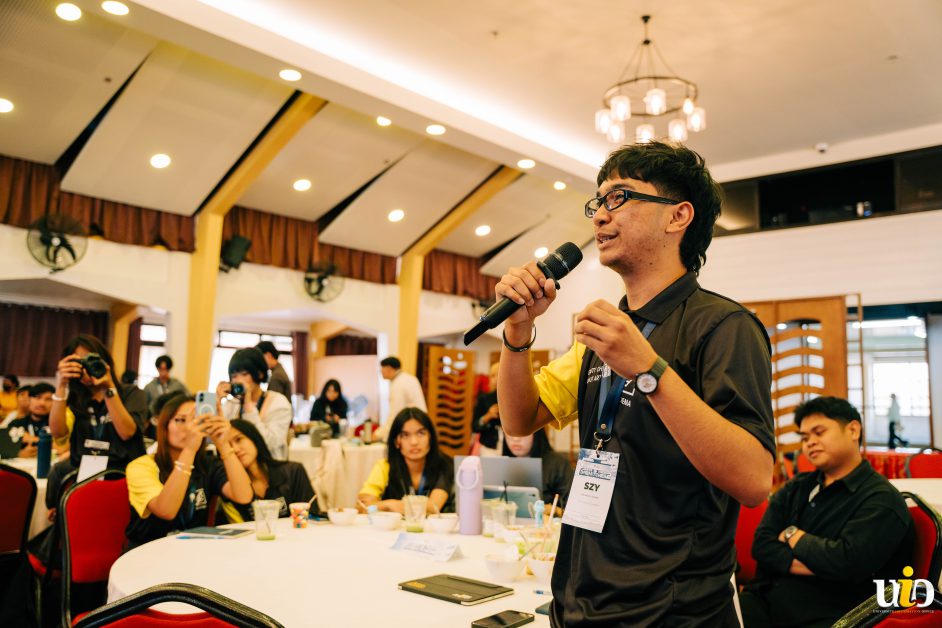
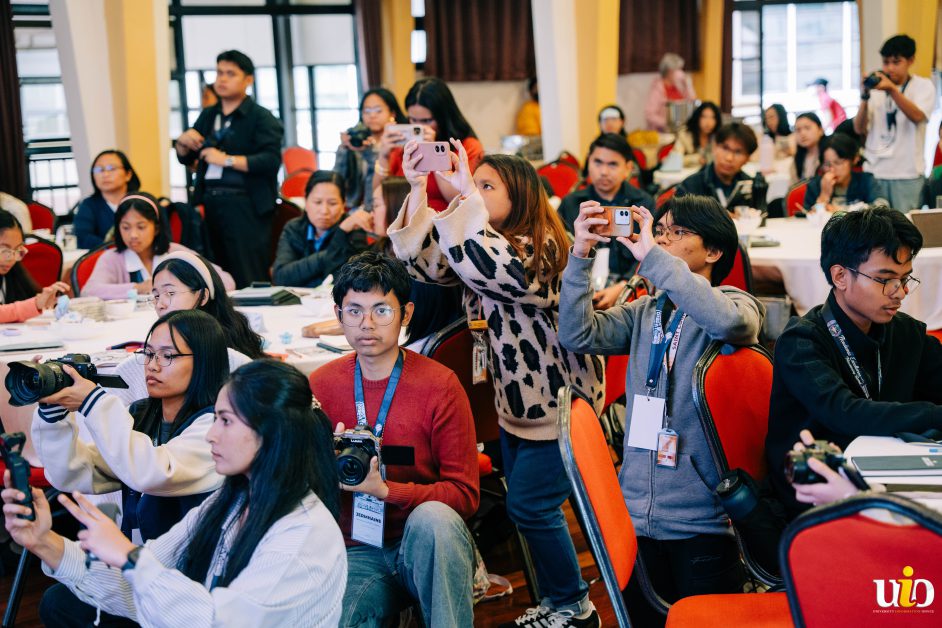
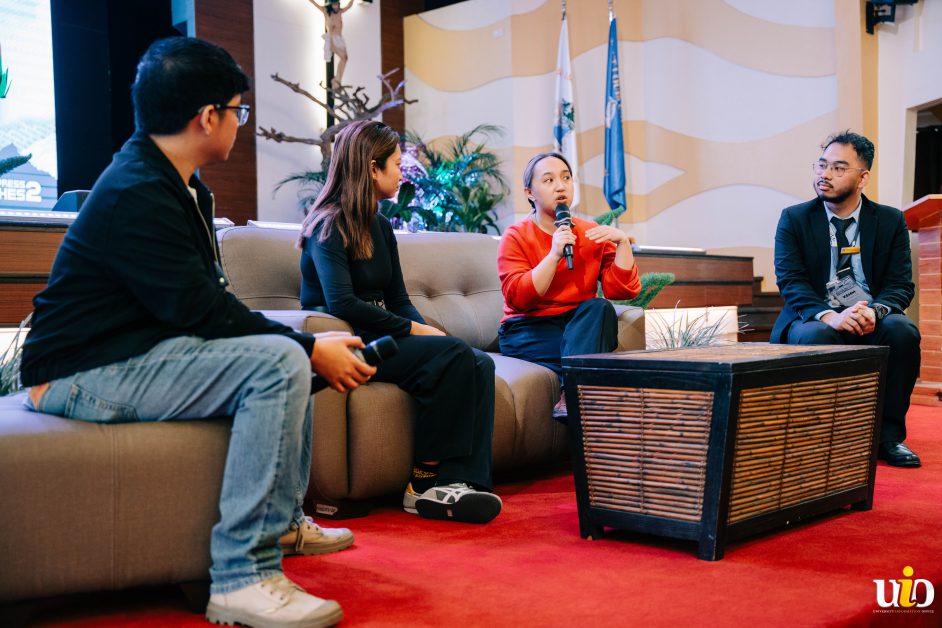
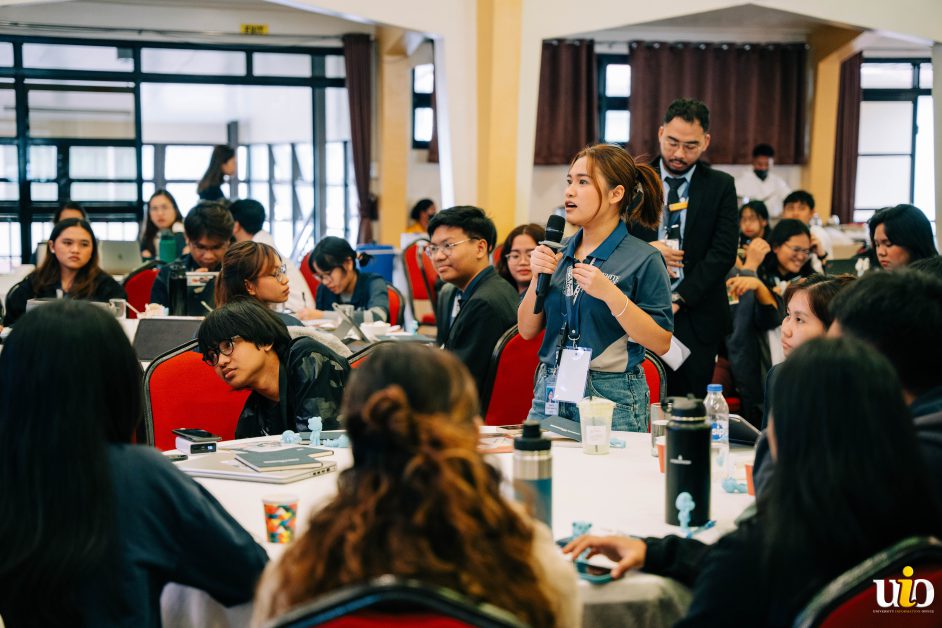
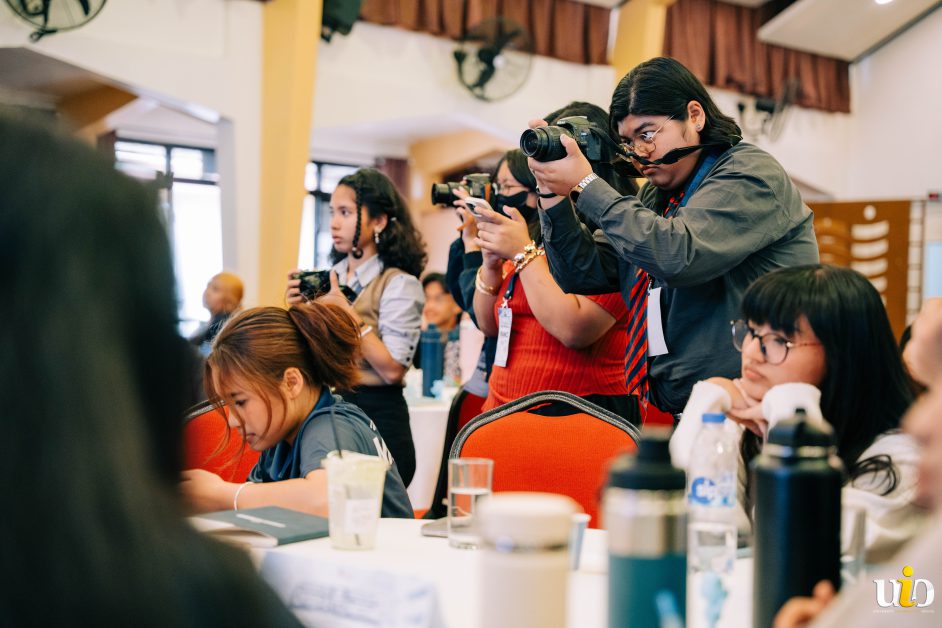
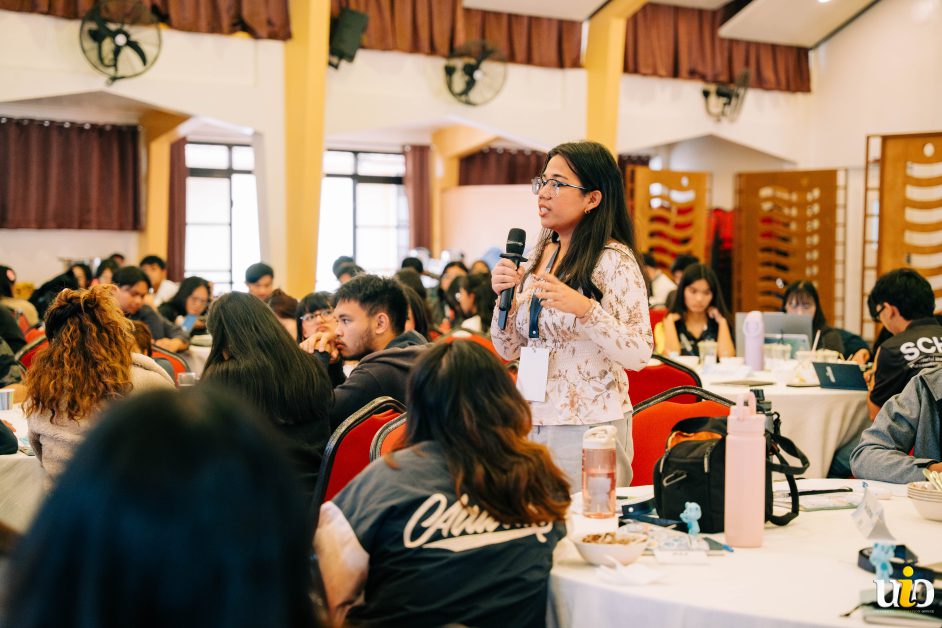
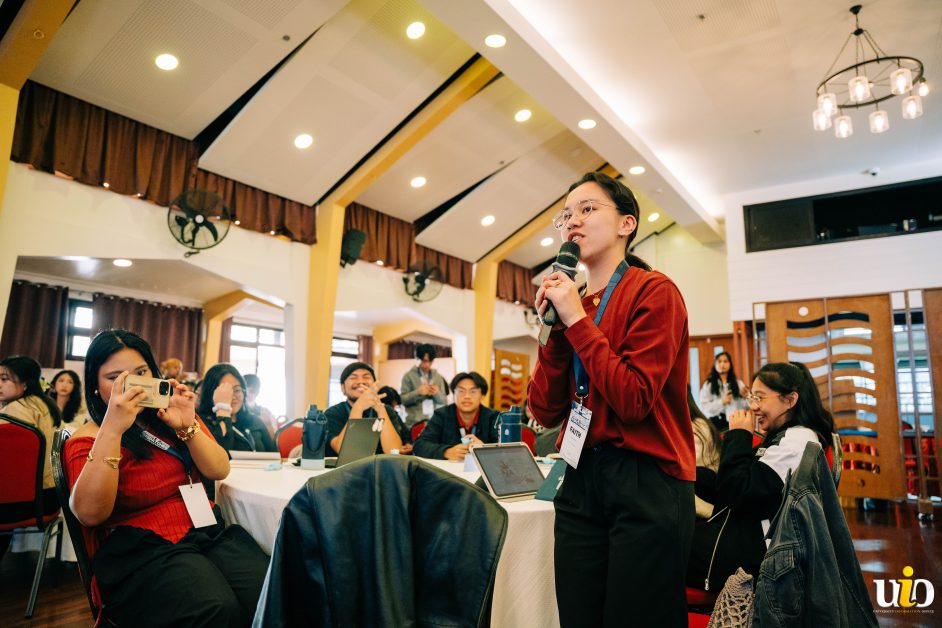
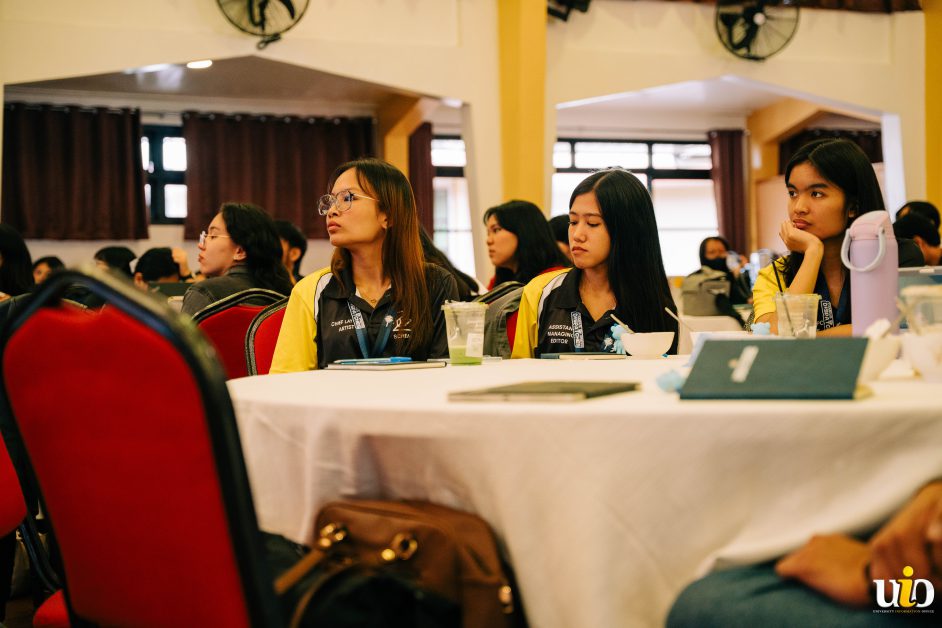
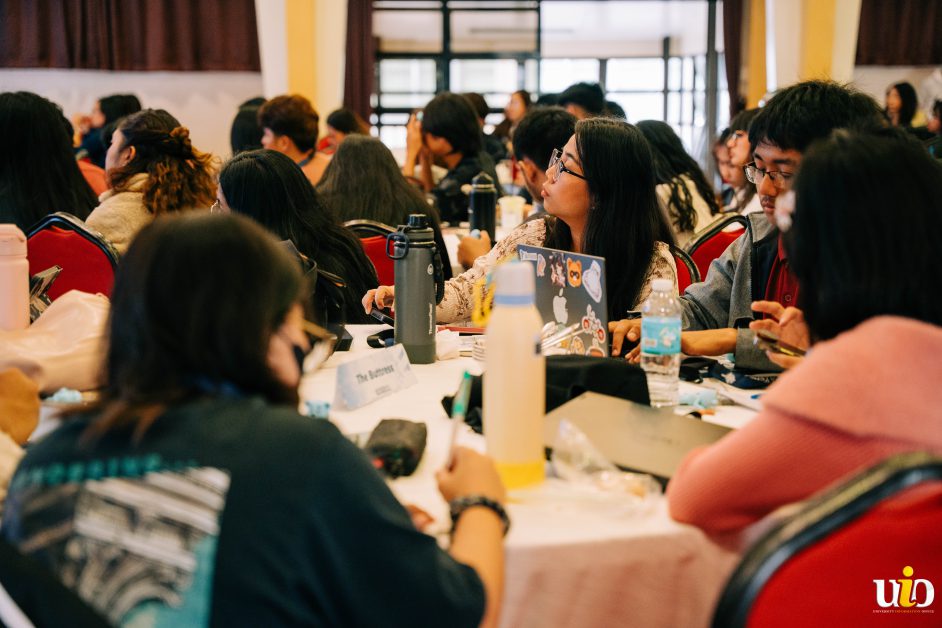
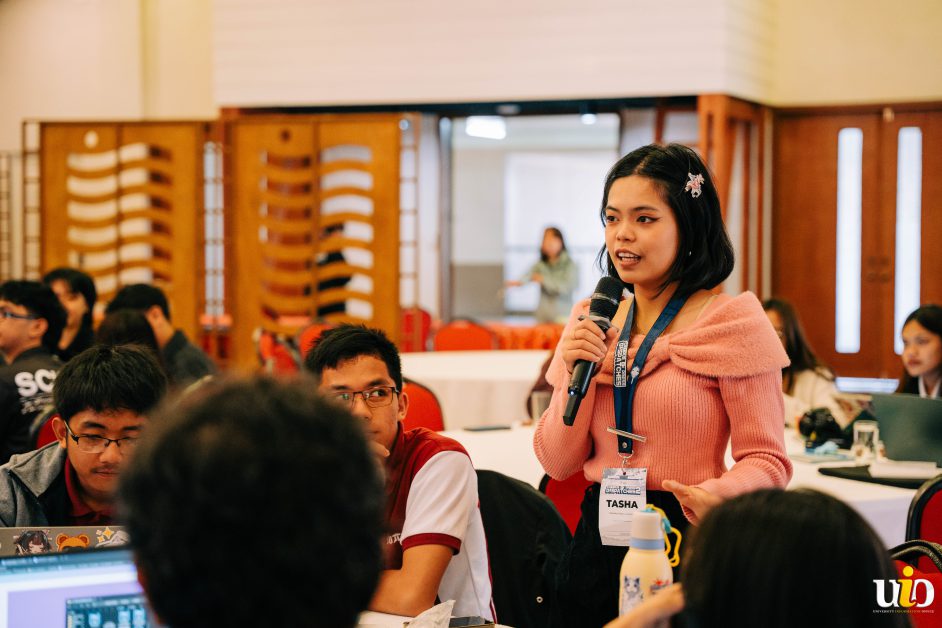
The morning session was concluded through the Q&A Session called “Journalists Unplugged: A Fireside Conversation,” allowing the participants to ask the speakers questions.
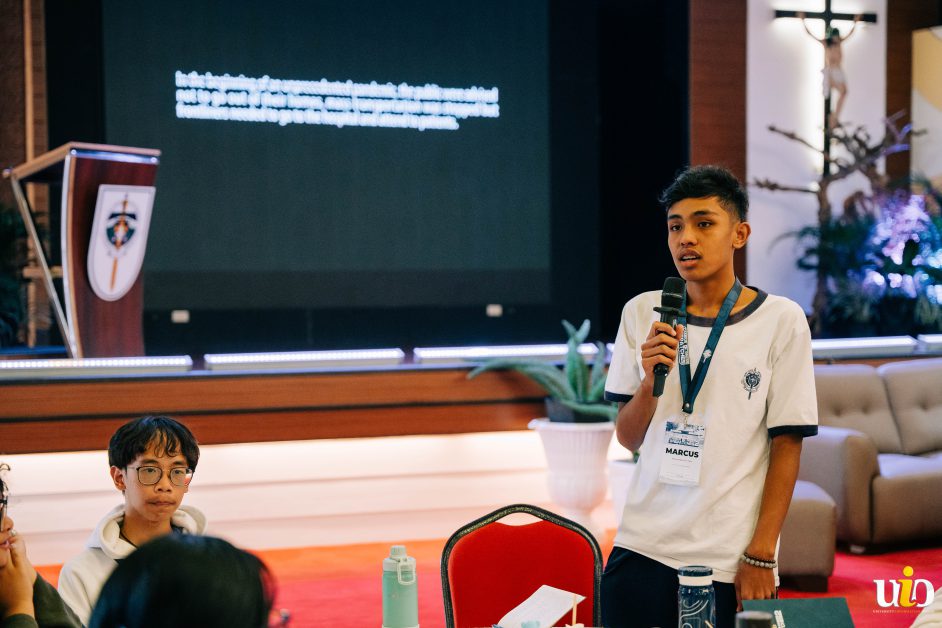
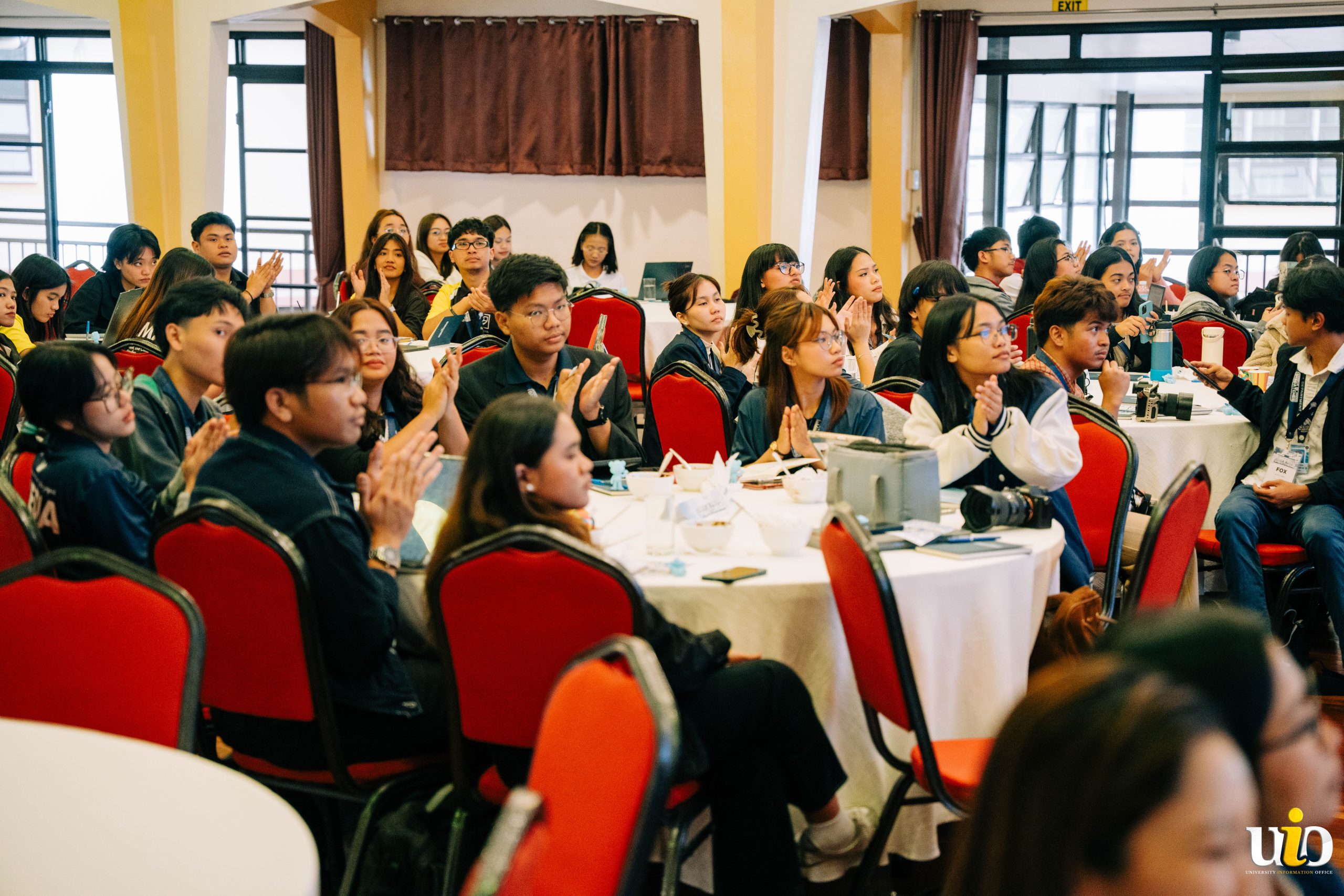
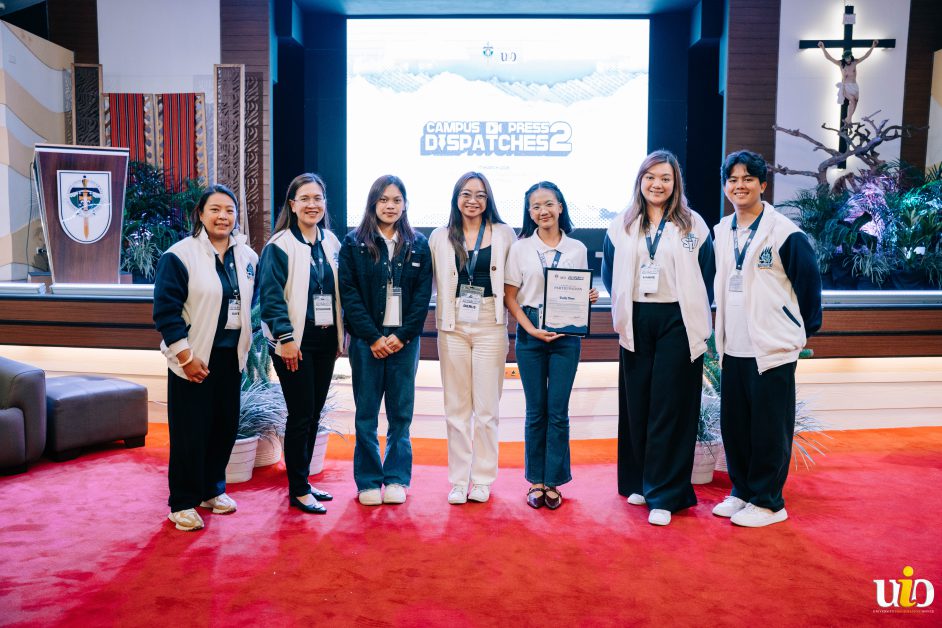
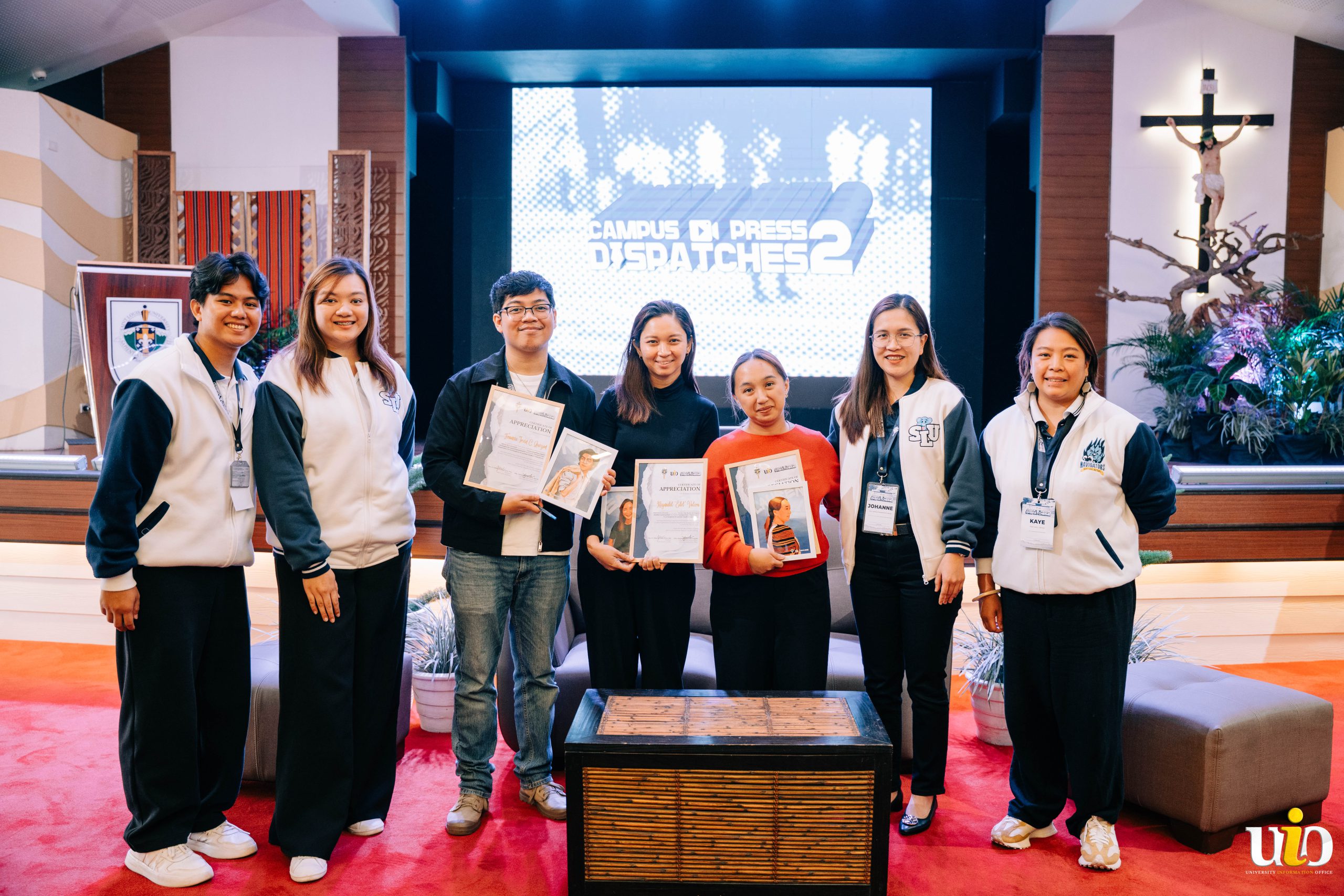
Following this, was the awarding of certificates for each speaker for imparting their expertise and wisdom to young and aspiring journalists.
Campus Press Dispatches: A Workshop of Timely Empowerment
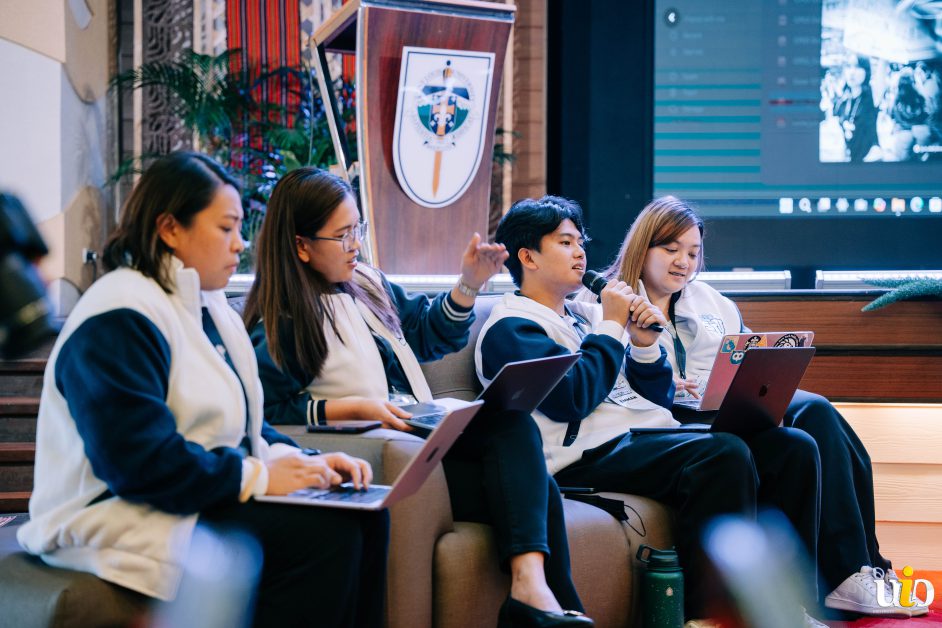
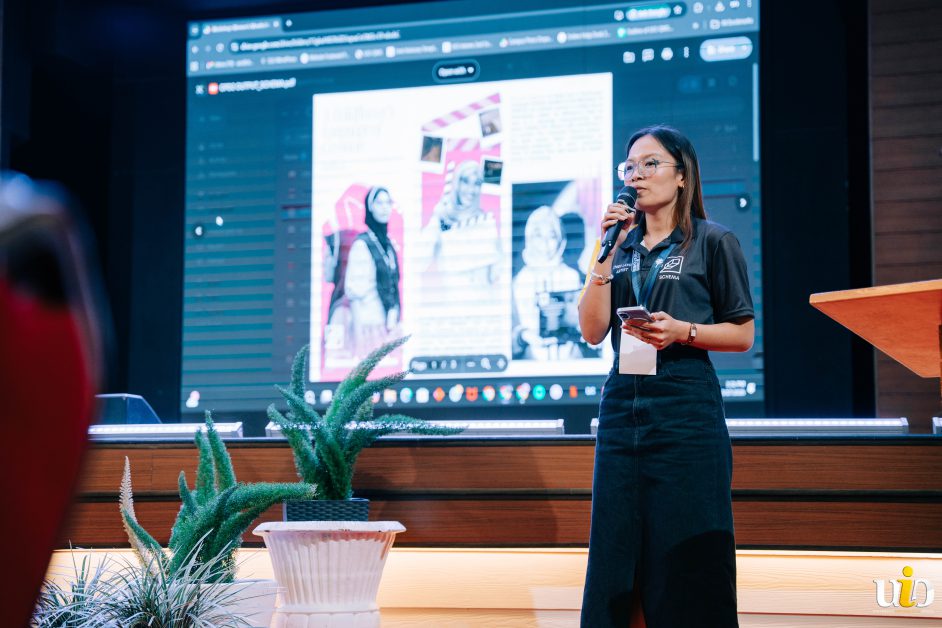
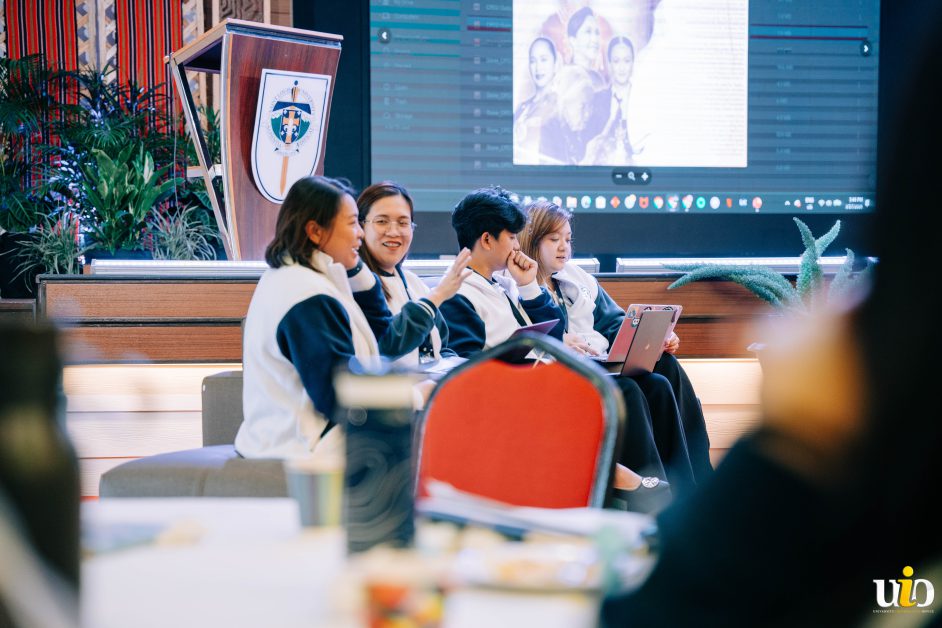
In the afternoon, Ms. Kaye Leah Sitchon, SLU-UIO Writer and communications professor from the School of Teacher Education and Liberal Arts (STELA) opened the workshop by presenting the workshop mechanics.
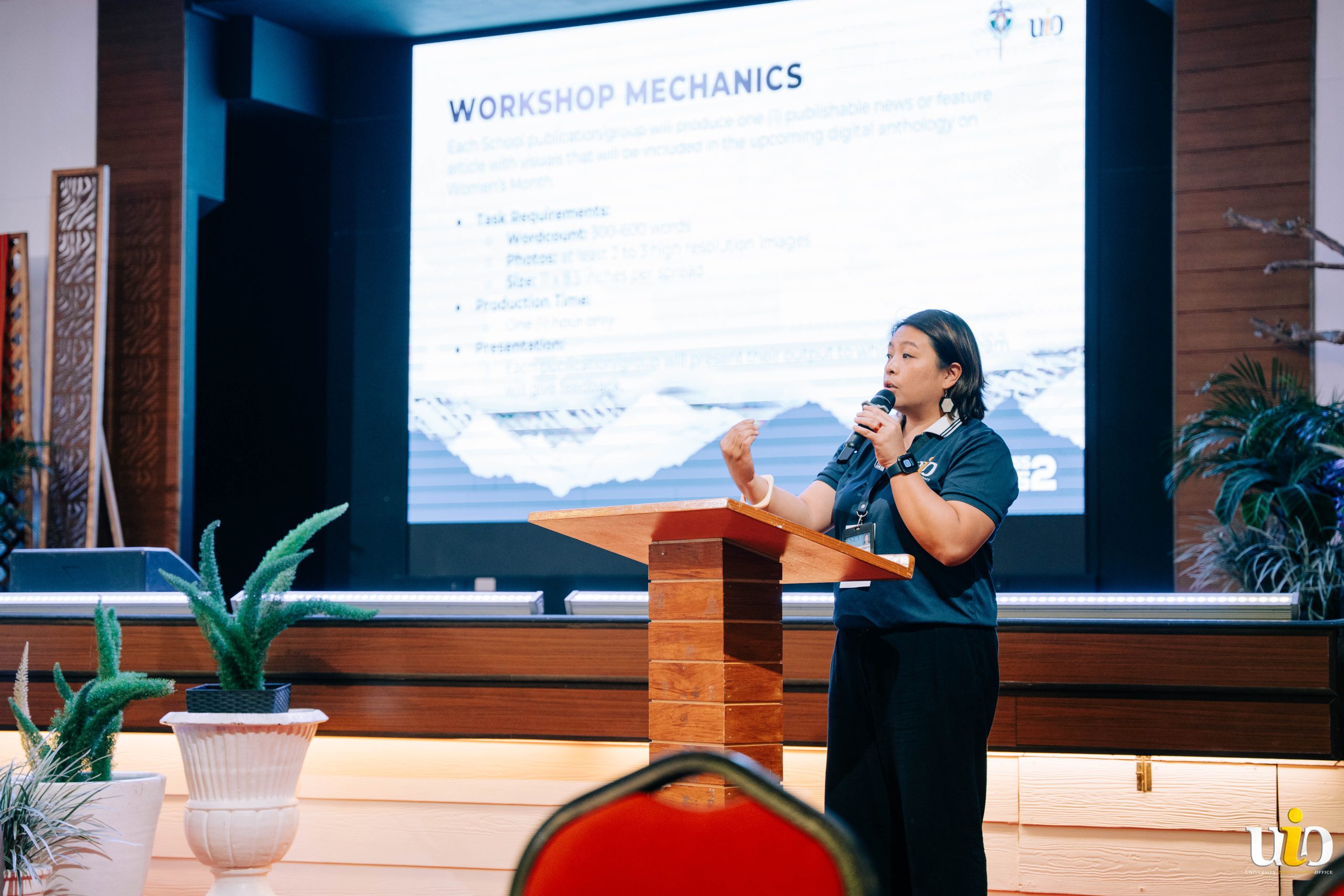
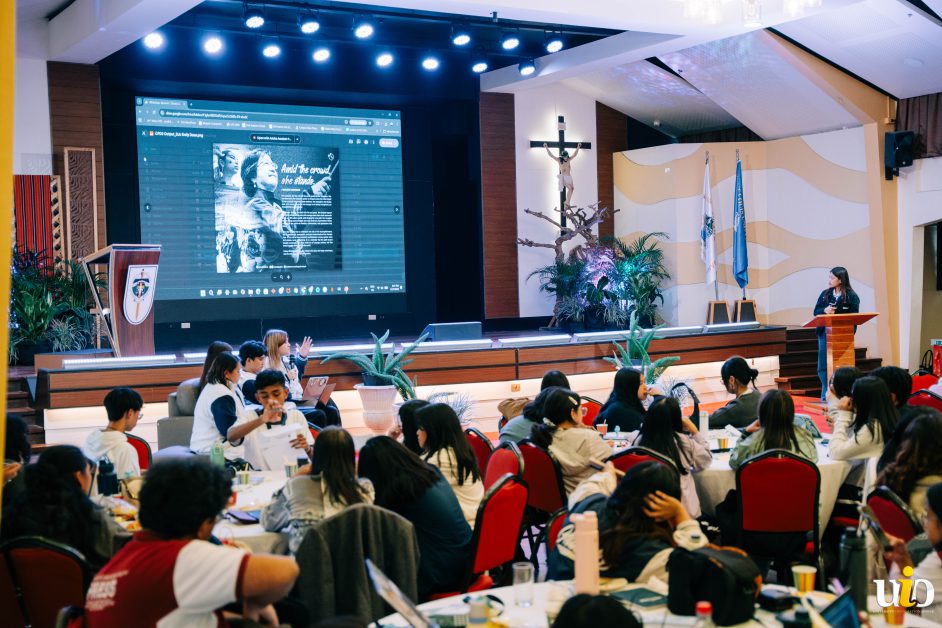
Within the given hour, each school publication or group produced one (1) publishable news or feature article with visuals that will be included in the upcoming digital anthology on Women’s Month.
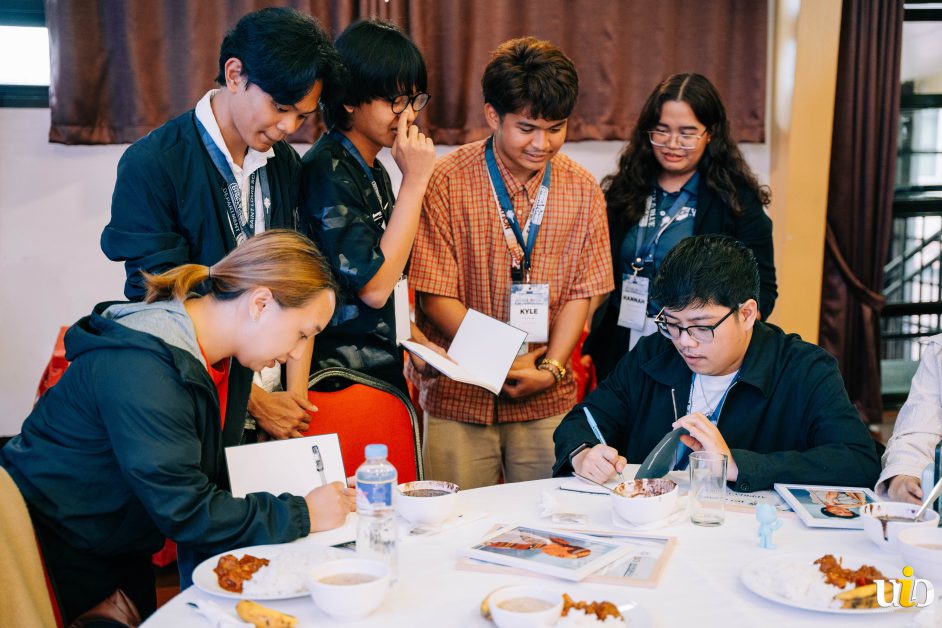
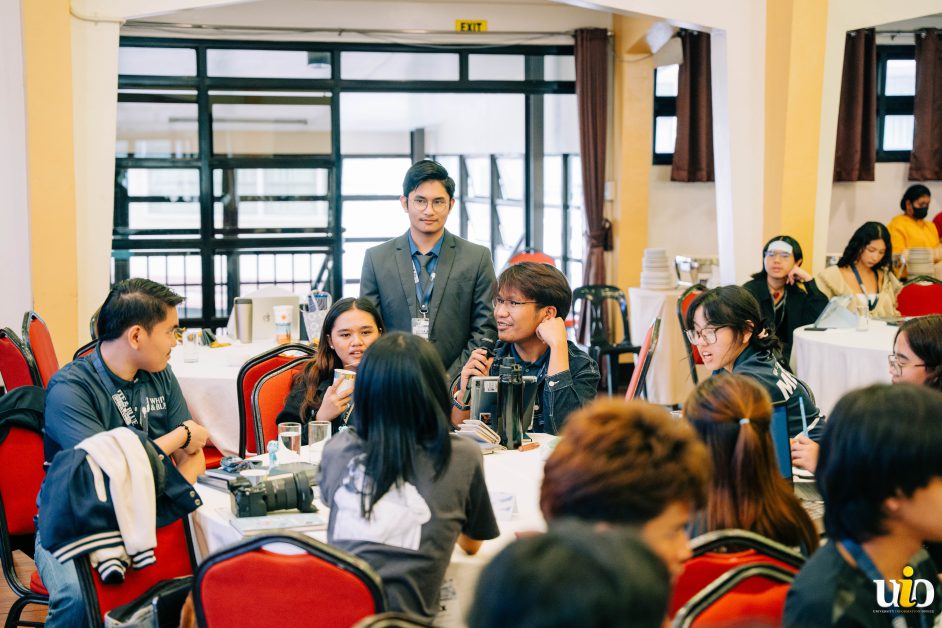
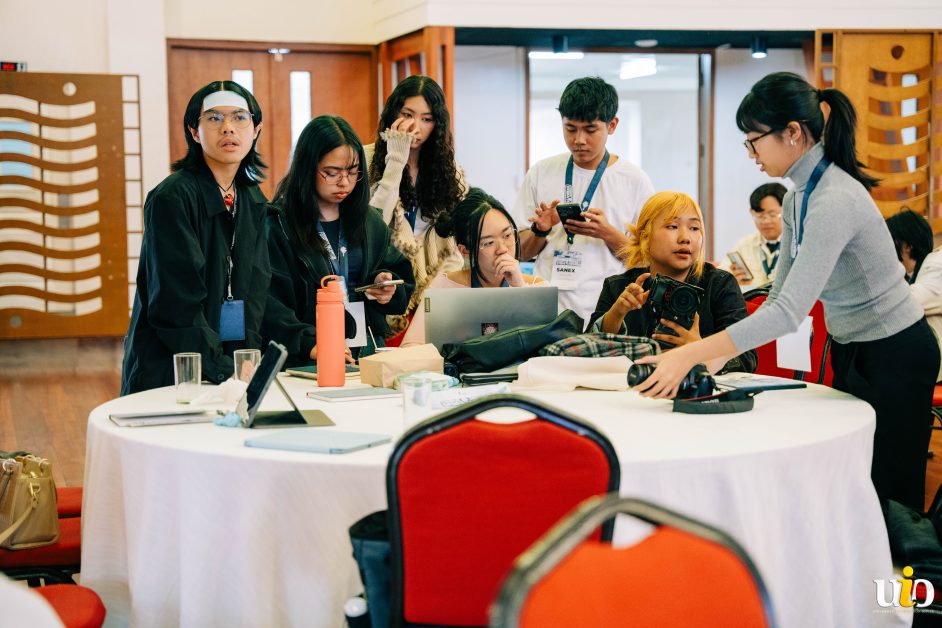
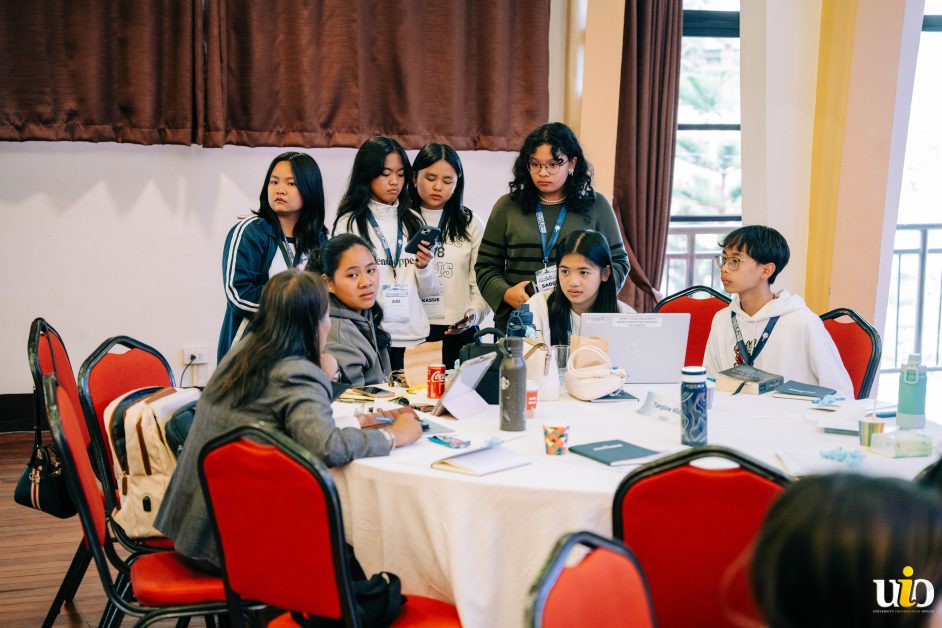
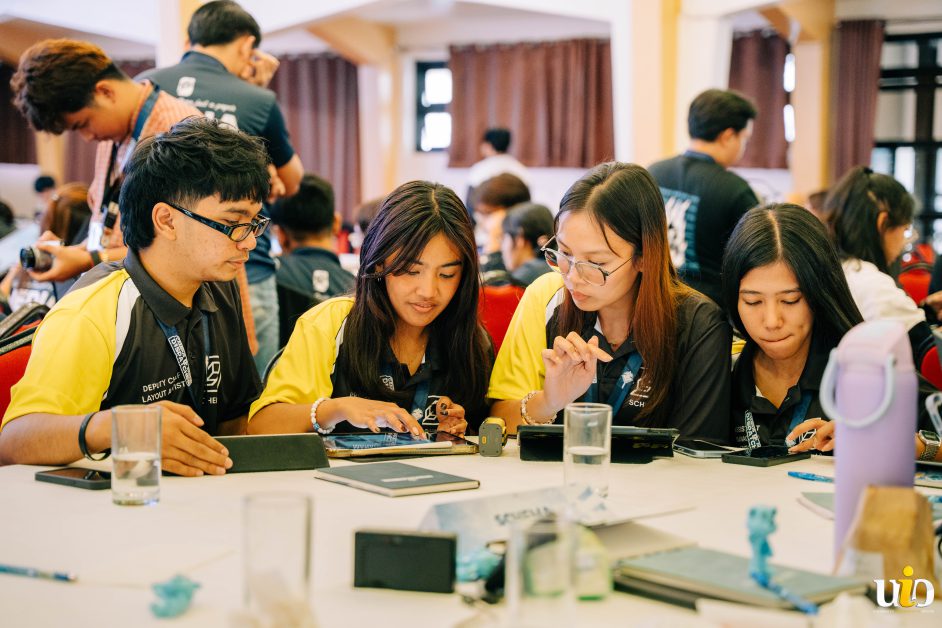
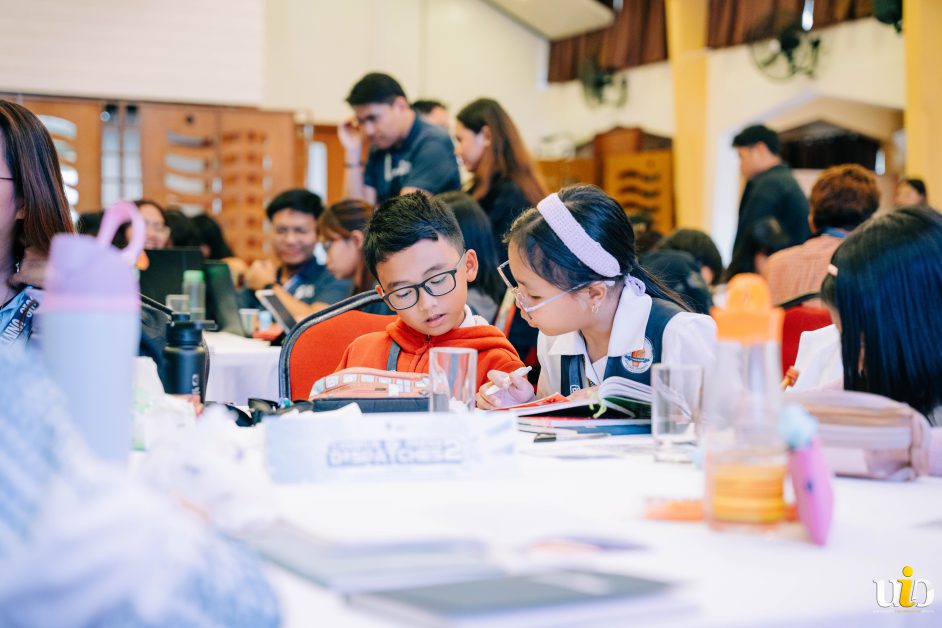
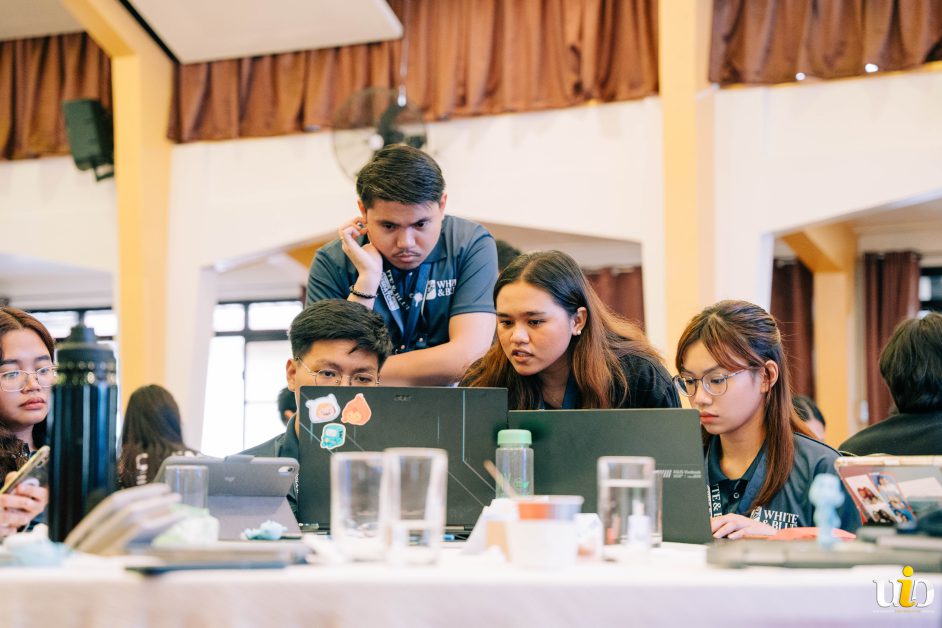
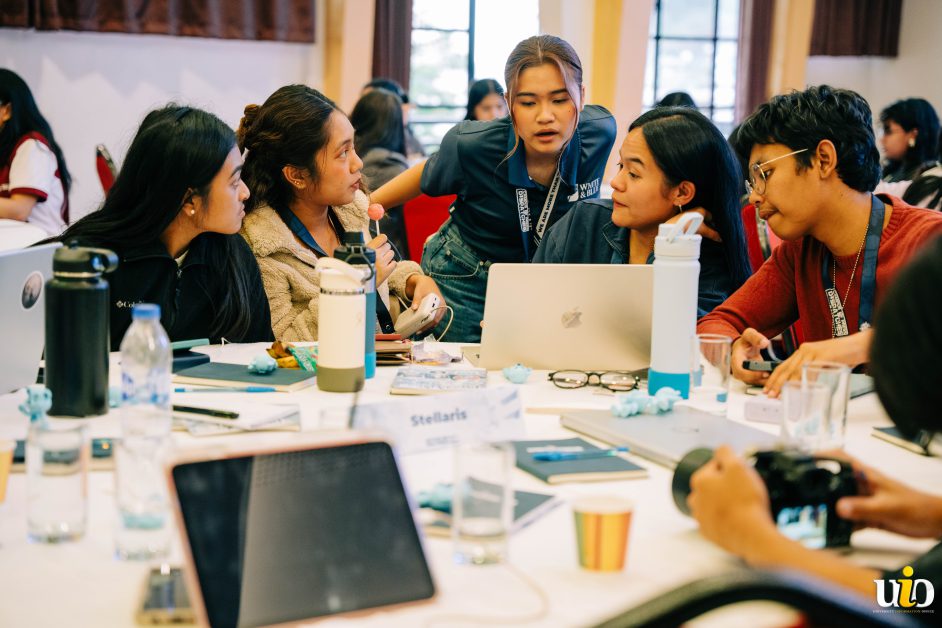
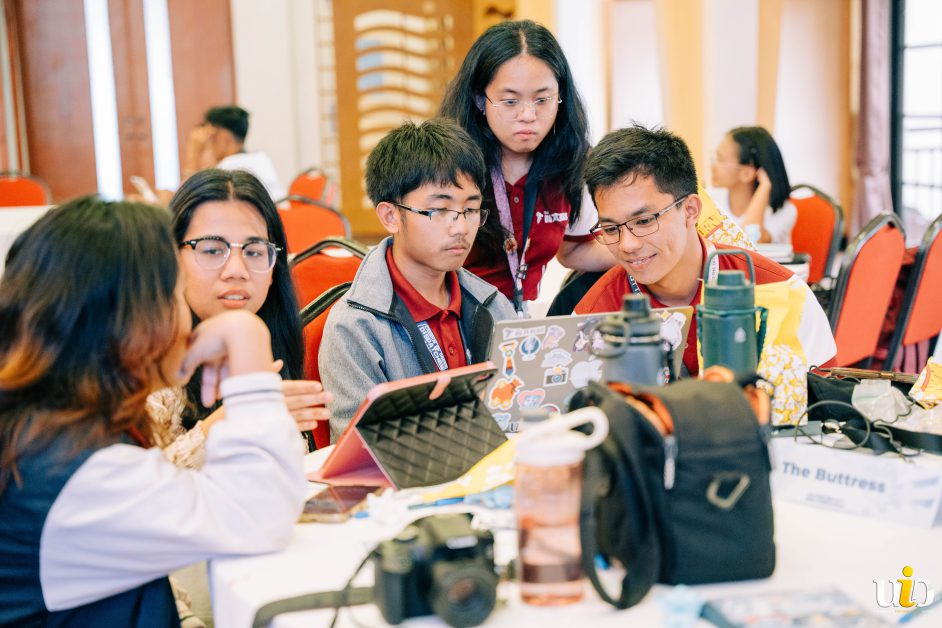
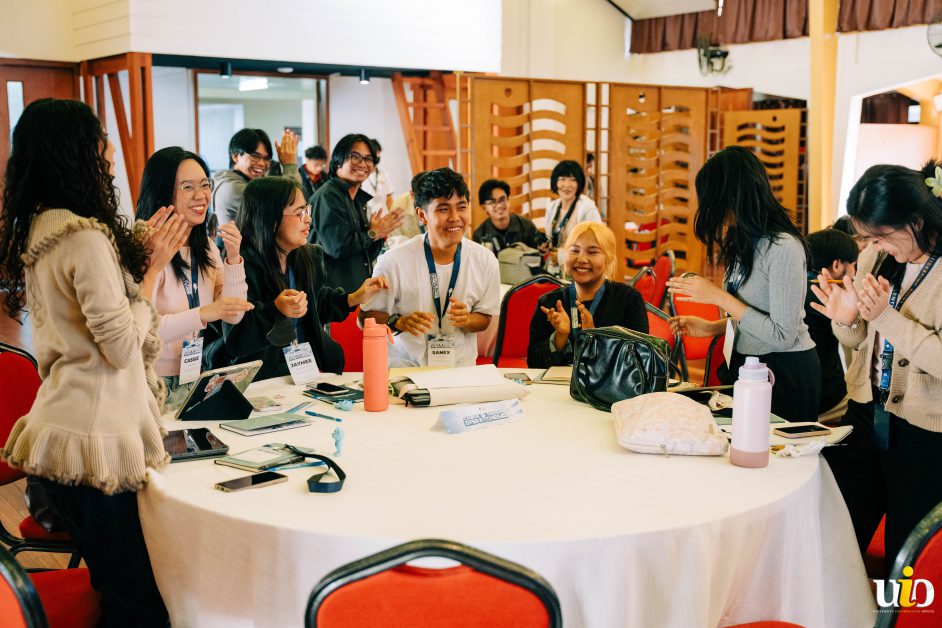
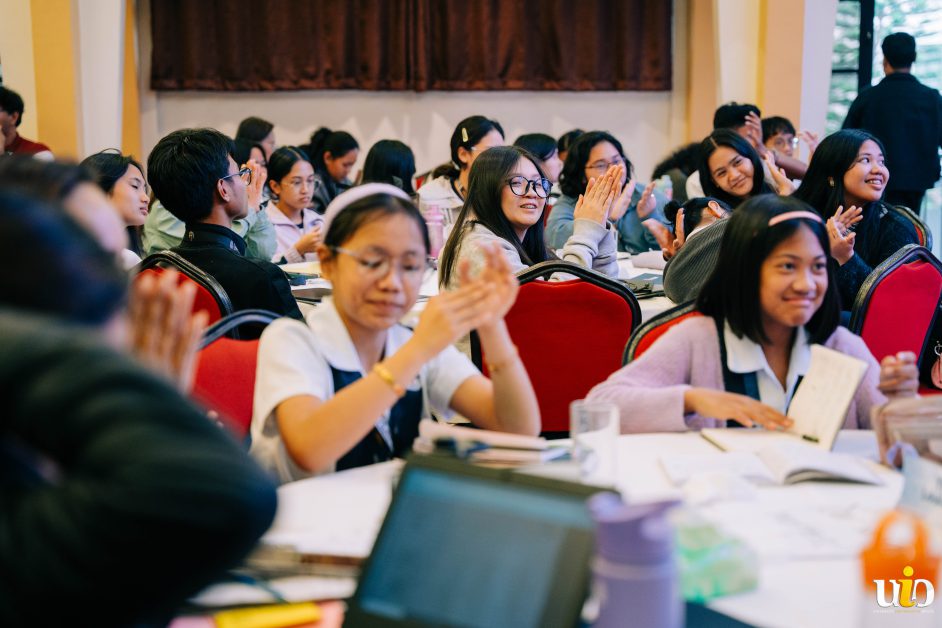
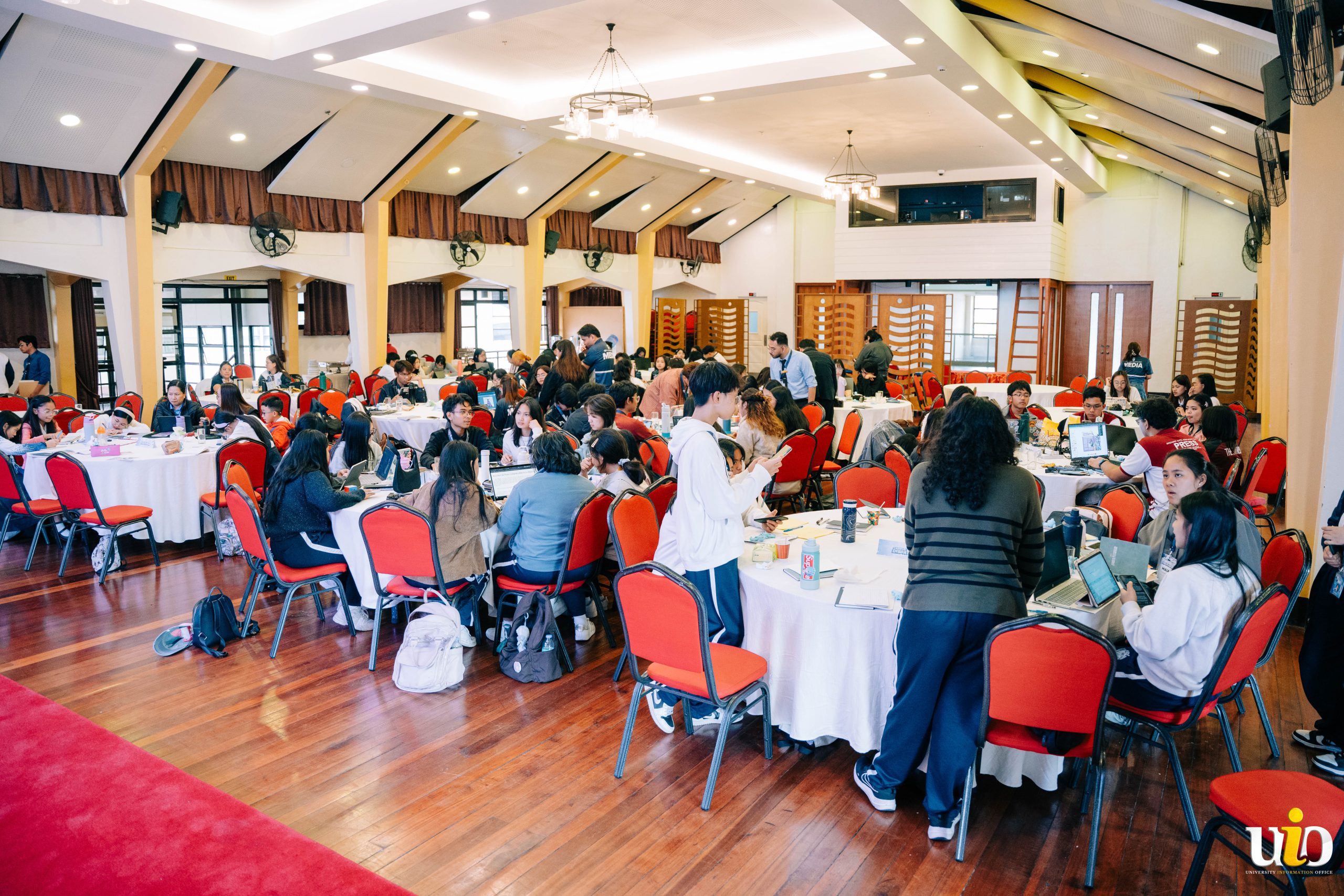
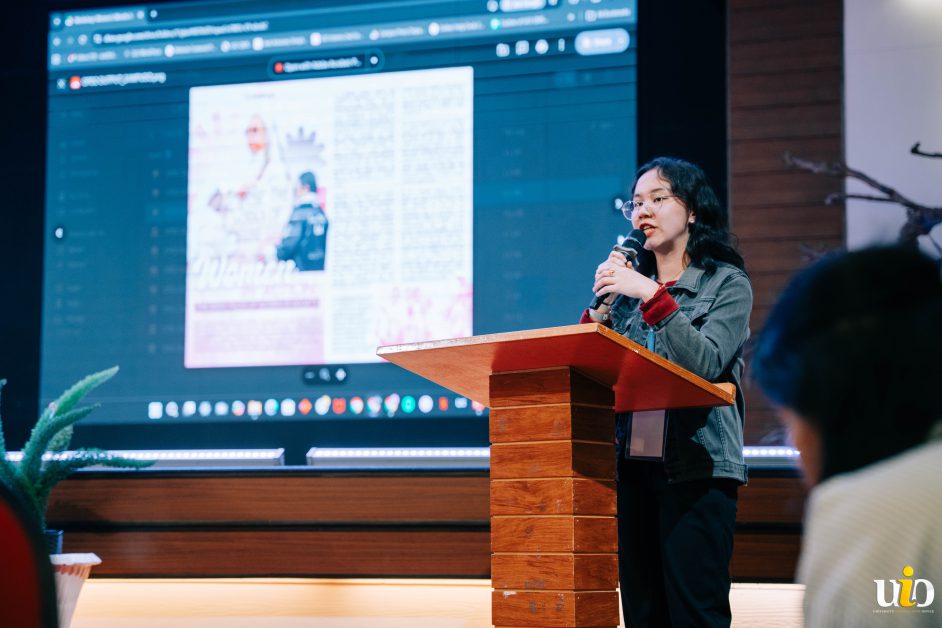
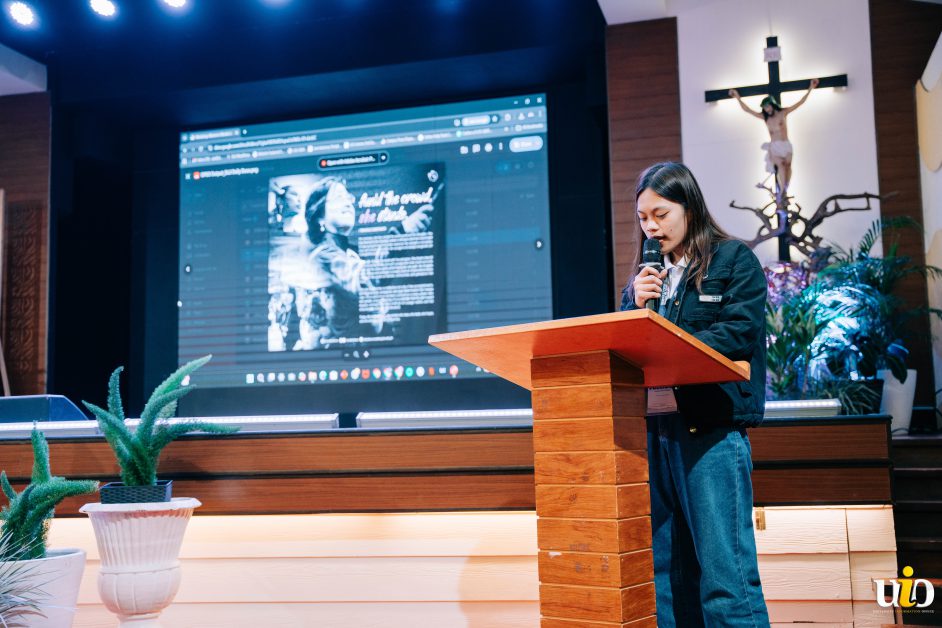
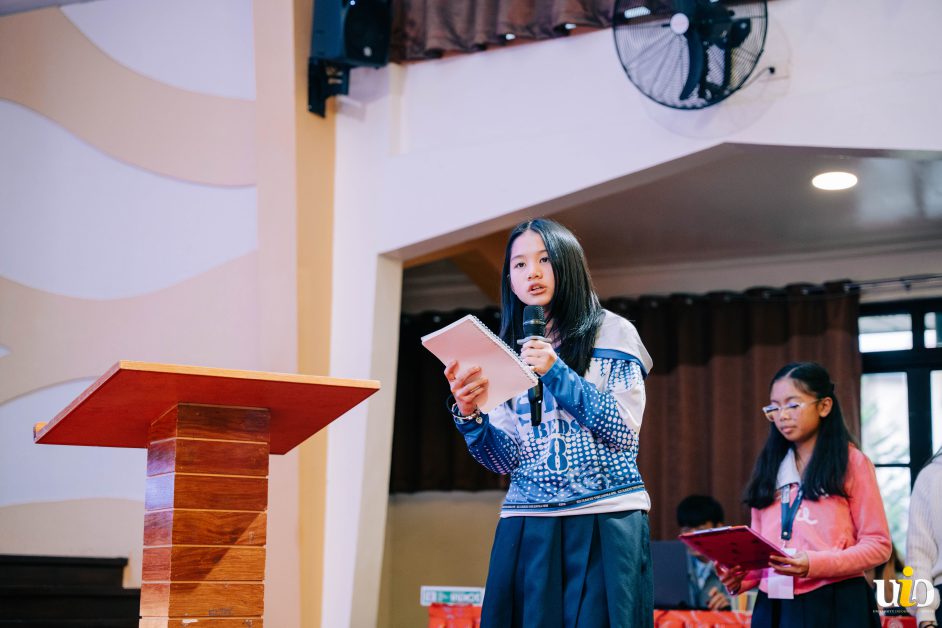
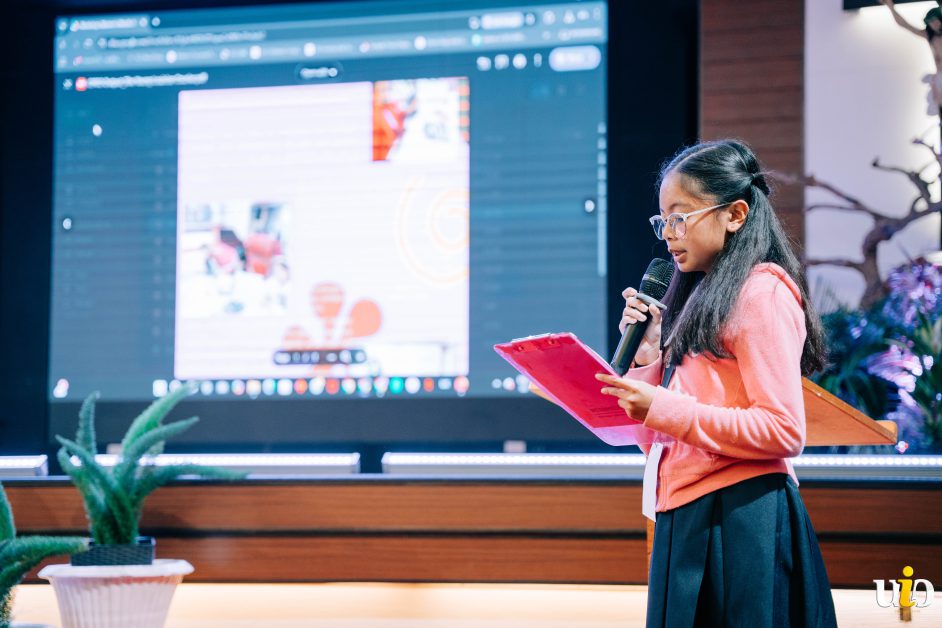
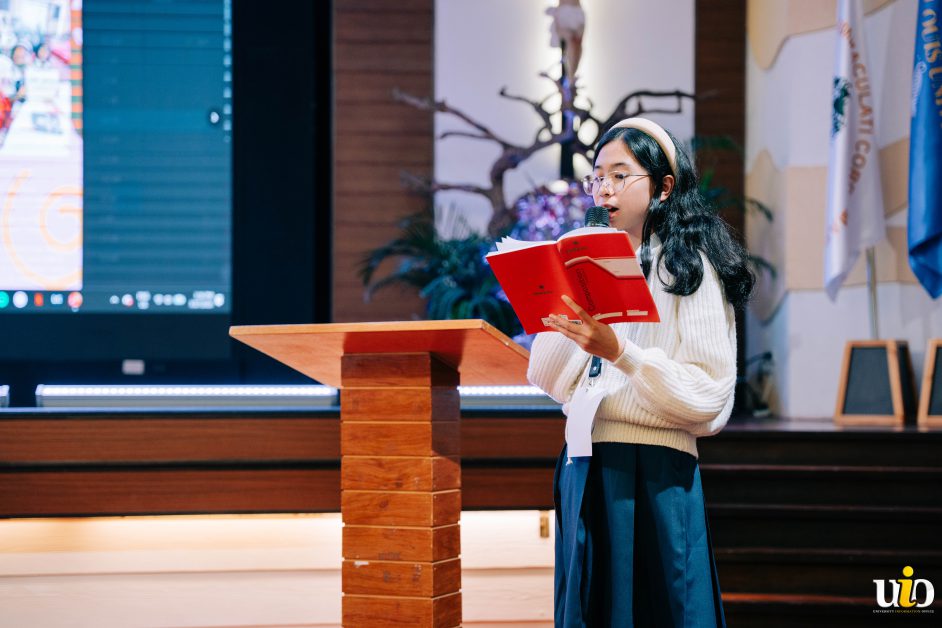
Following this, each group presented their outputs and substantiated how their outputs exemplify their respective publications’ creativity.
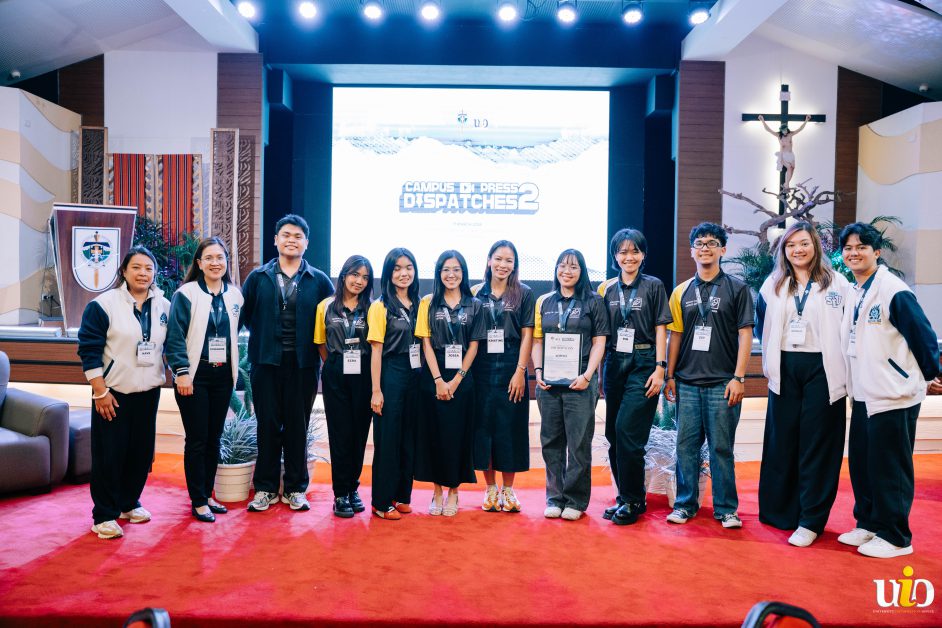
Correspondingly, the UIO team consisted of University Information (UI) Officer, Atty. Johanne Margarette Macob; Writer, Mrs. Sitchon; Public Relations, Media and Communications Assistant, Ms. Lianne Pauline Carreon; and Multimedia Staff, Mr. Emmanuel Gregorio, provided detailed and constructed feedback, providing insight on how to fine tune their content which will be finalized for the upcoming anthology.
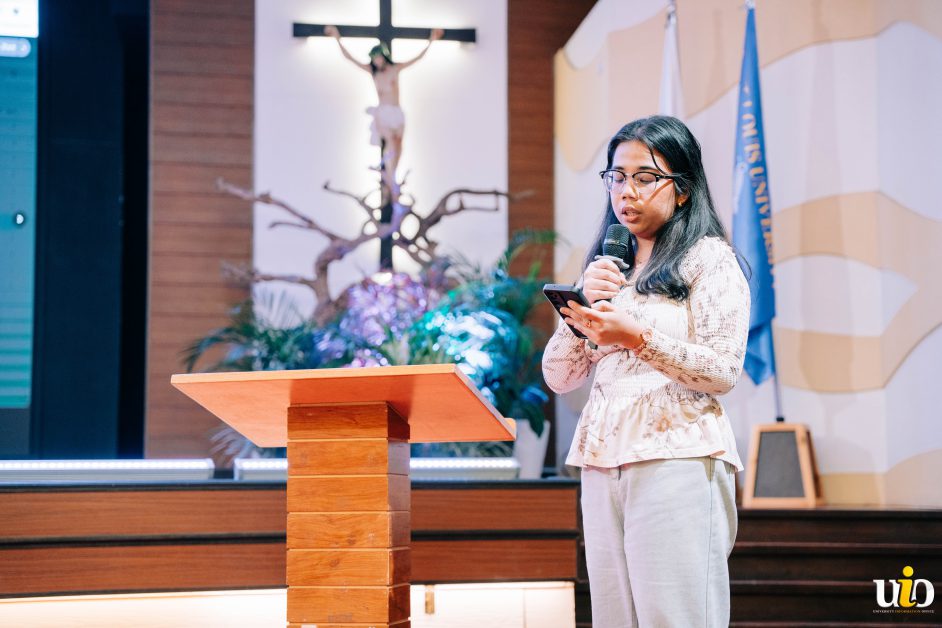
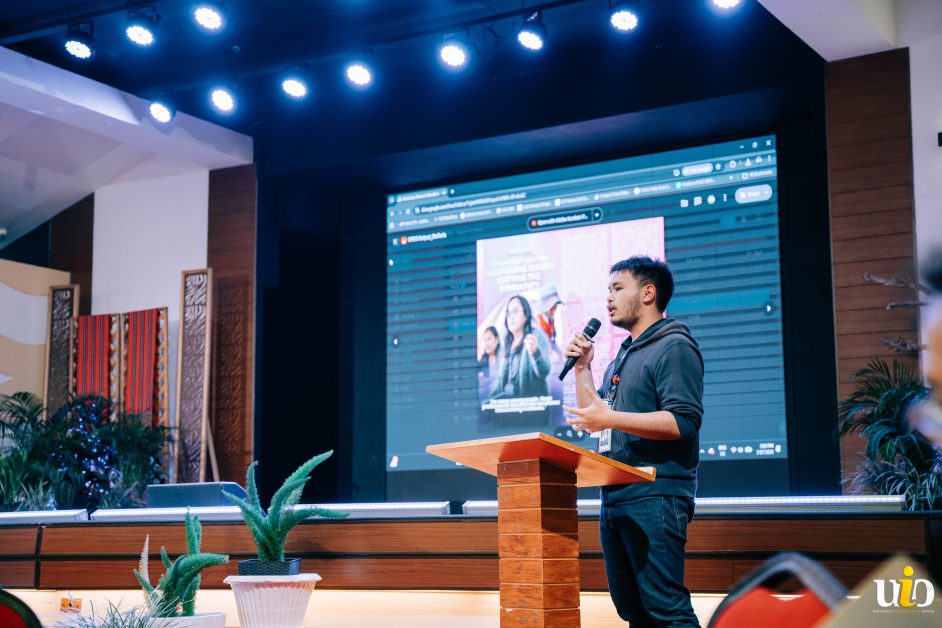
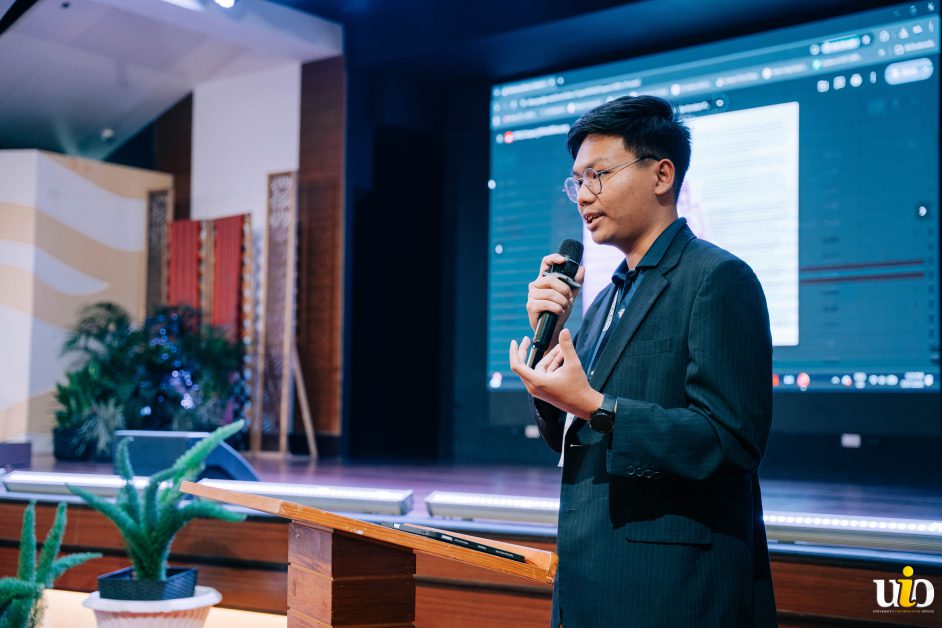
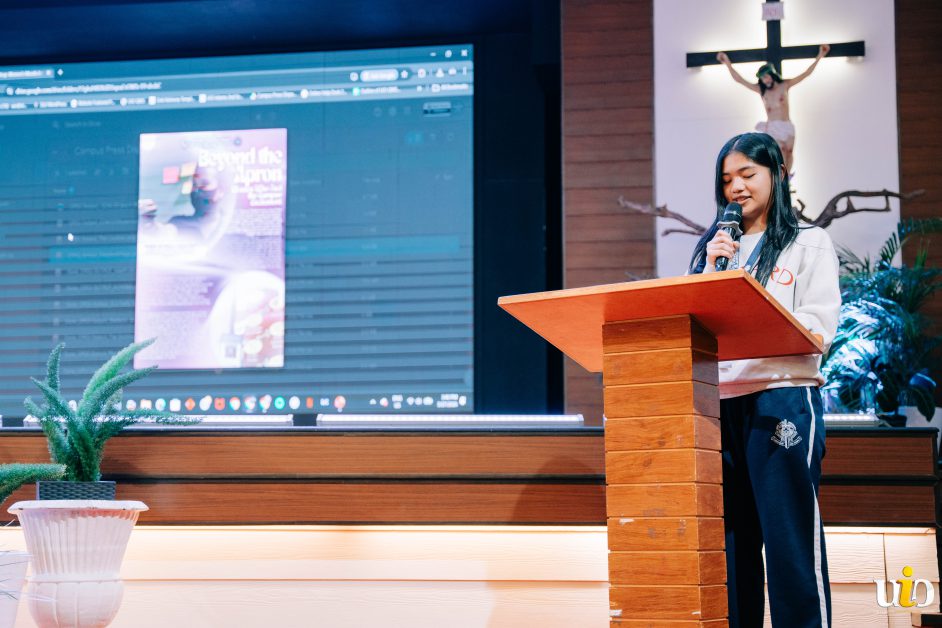
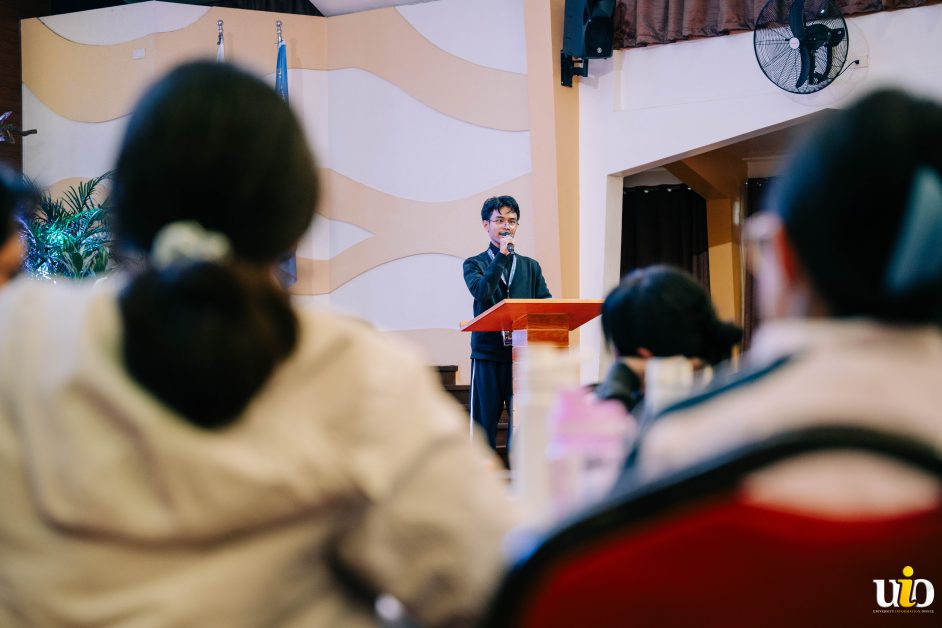
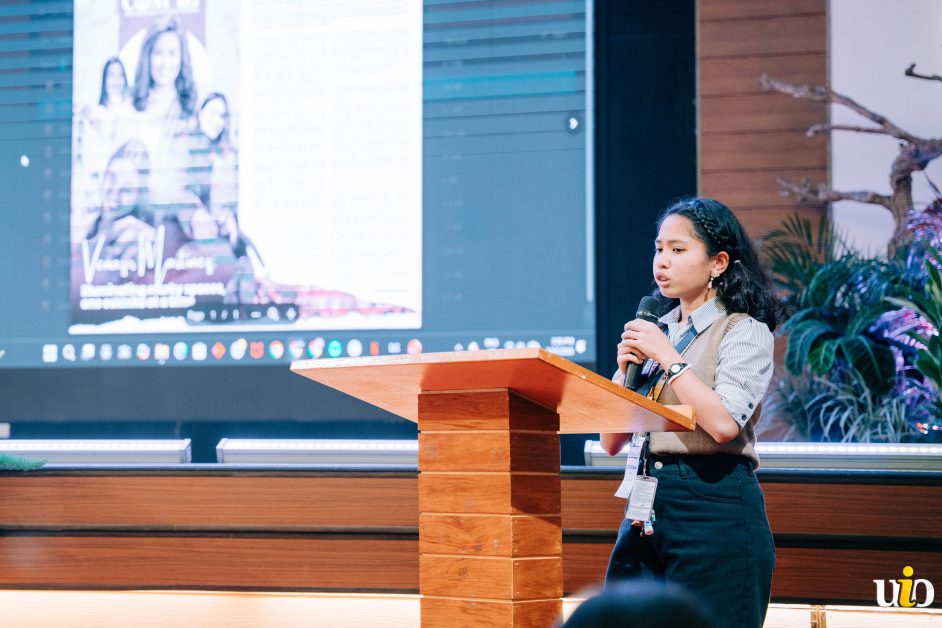
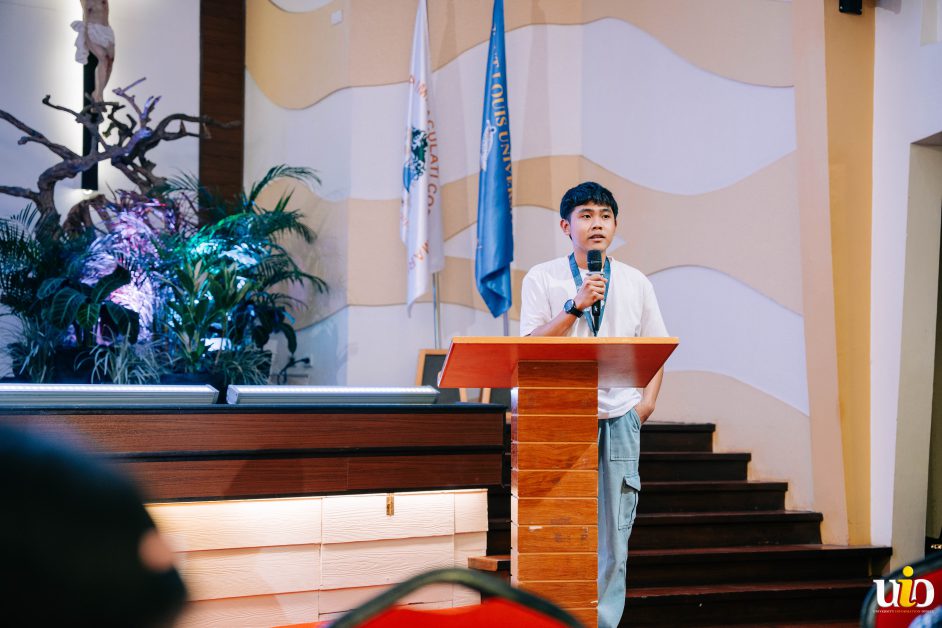
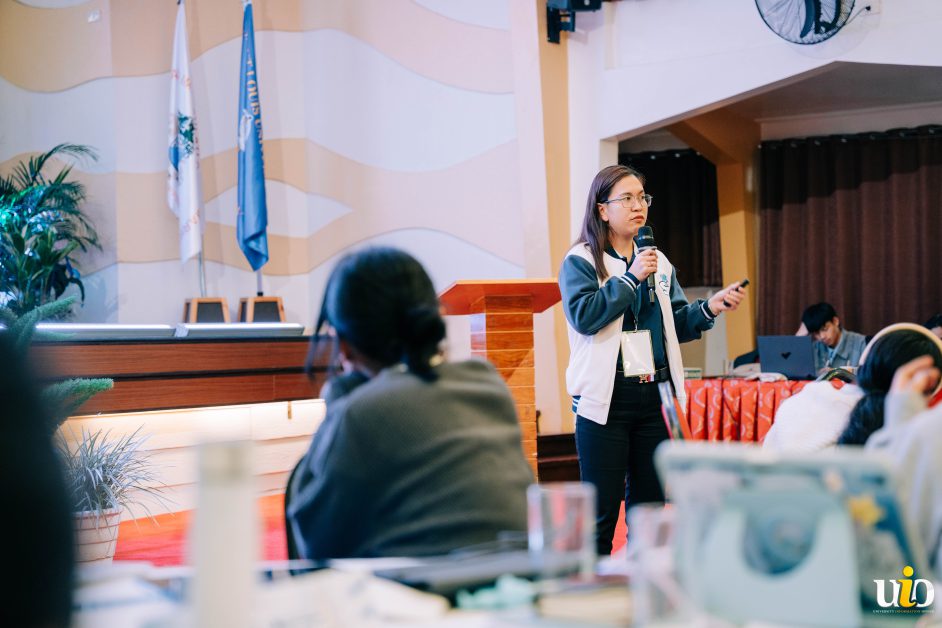
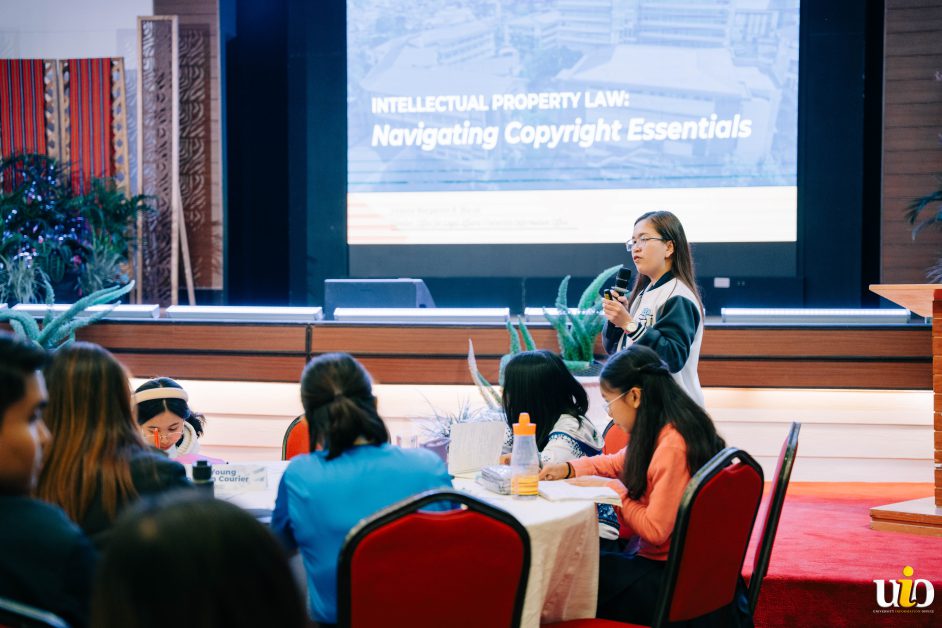
To formally close the event, UI Officer and Director of the Office for Legal Affairs (OLA), Atty. Macob delivered a lecture on “Intellectual Property Law: Navigating Copyright Essentials.” Her pocket session focused on the basic principles on copyright, copyrightable and non-copyrightable materials, as well as benefits of copyright registration.
In highlighting the importance of journalism, even in a University context, Atty. Macob noted, “In moments of calamity, in times of war, and in the midst of crises, people do not turn to trends or entertainment. They turn to the media. They rely on the media for truth, for clarity, and for information they can trust. Because the media does far more than entertain—it informs, it guides, and it helps societies understand the world when it matters most. And in many ways, all of us here share in that responsibility.”
This second Dispatches continued to carry out the University’s mission in producing competent and critical-minded Louisians, as it put its young and budding campus journalists at the forefront, aligned with United Nations Sustainable Development Goals (UN SDGs), specifically SDGs 4 (Quality Education), 16 (Peace, Justice, and Strong Institutions) and 17 (Partnership for the Goals), especially with the partnership with Redlife Manufacturing, Pilot Pens, and Icon Designs. (Article by Kassandra Marie Lucero, UIO Intern I John Aaron Bagni, UIO Intern)