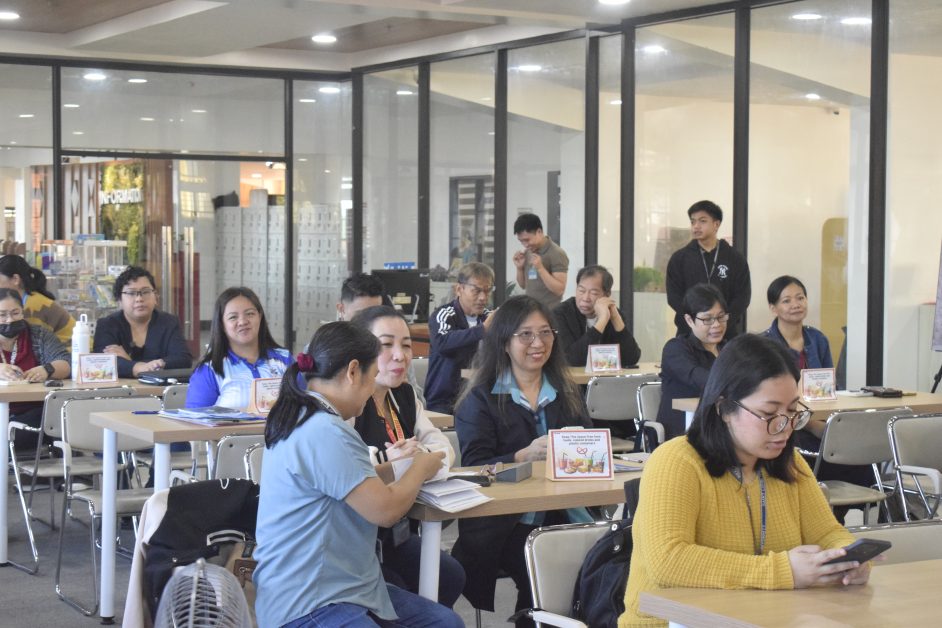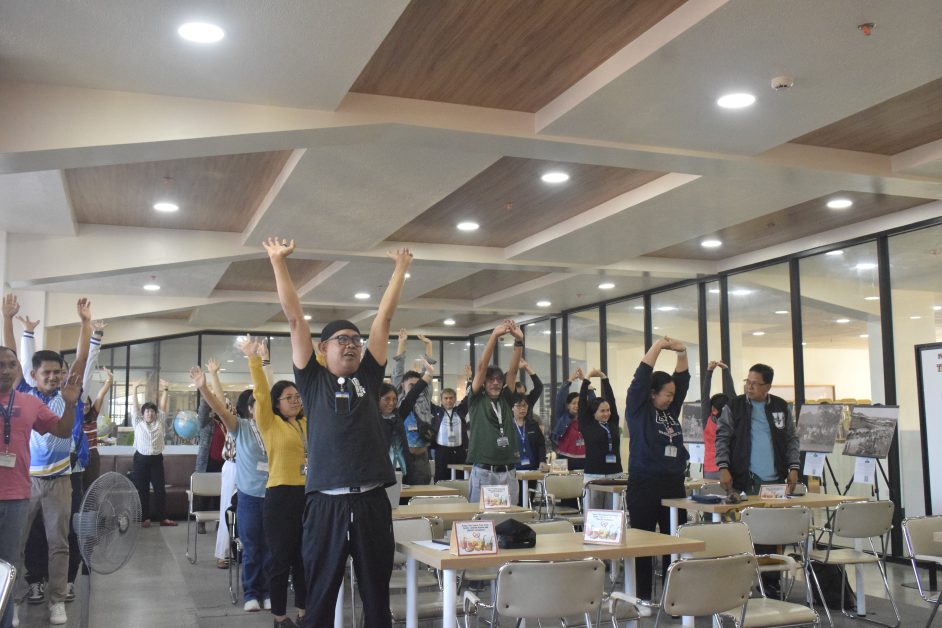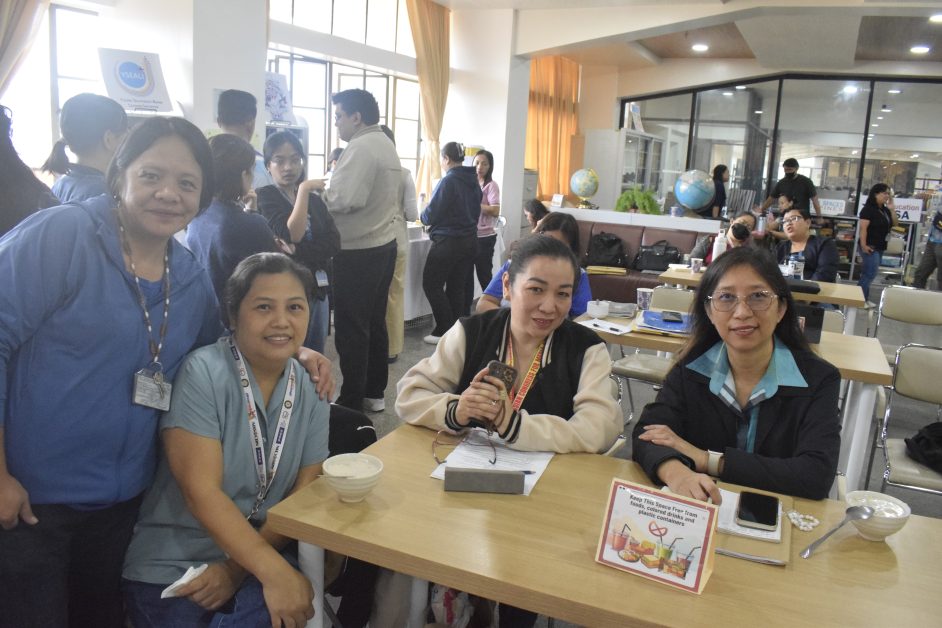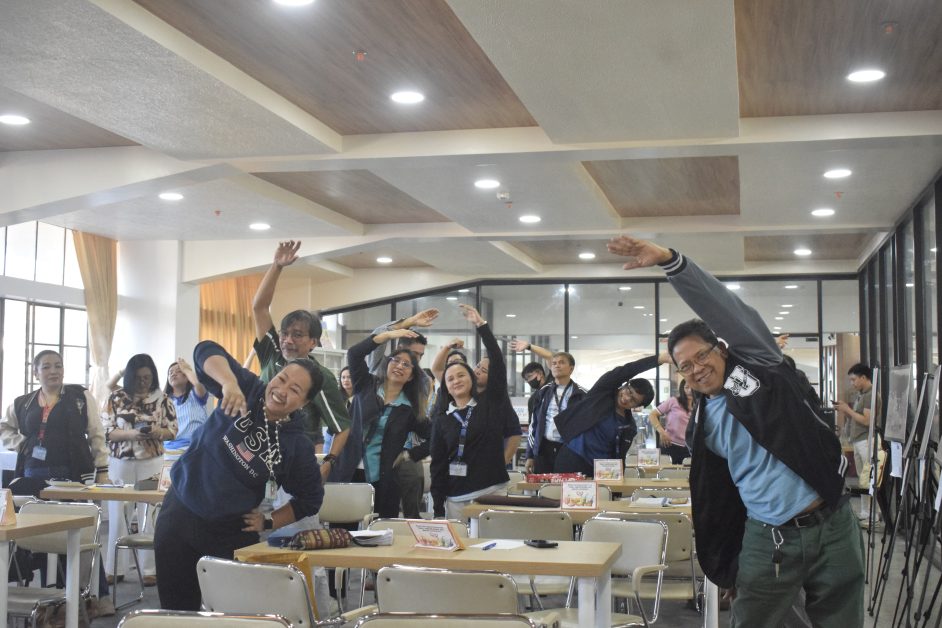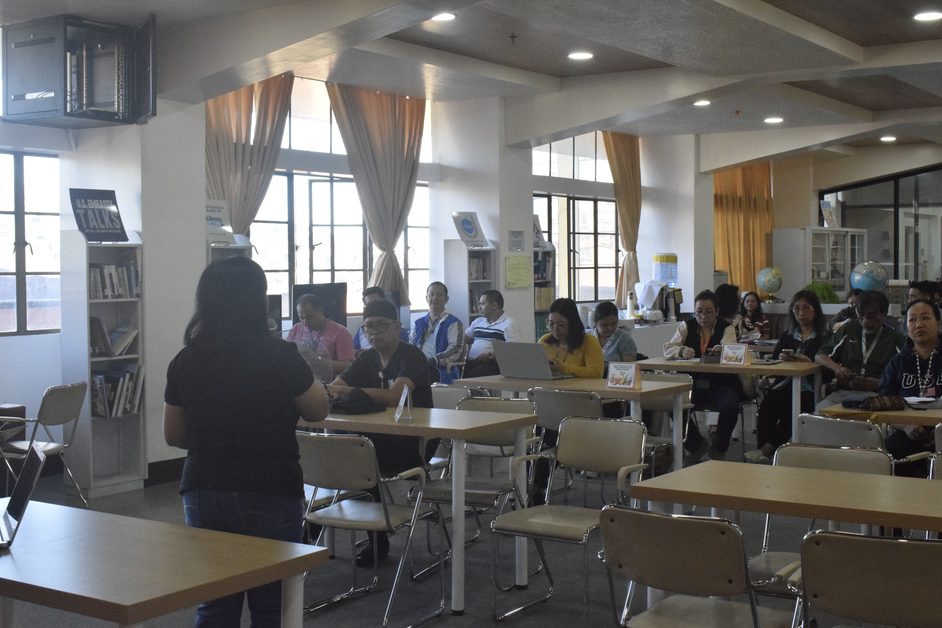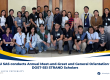
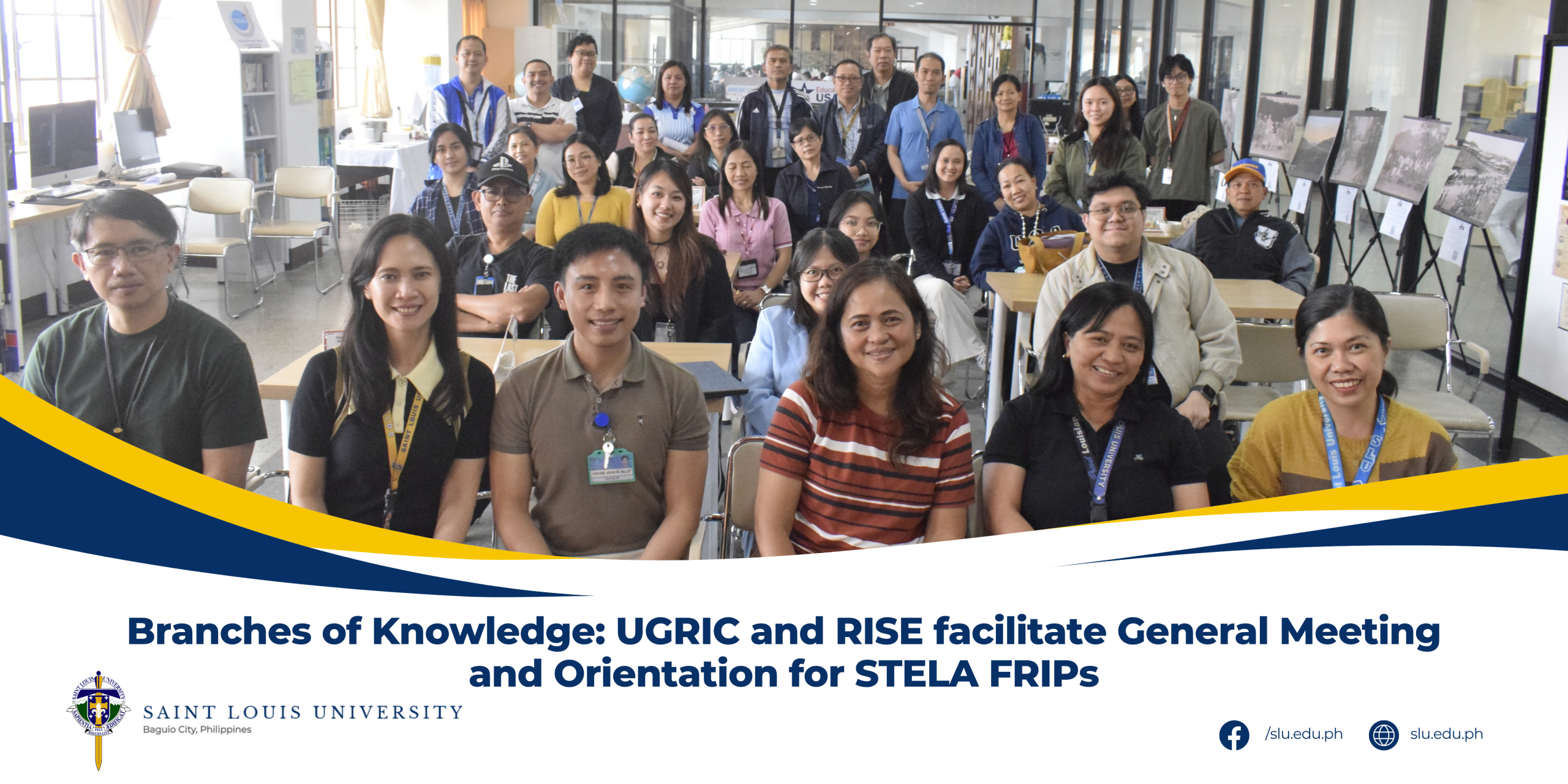
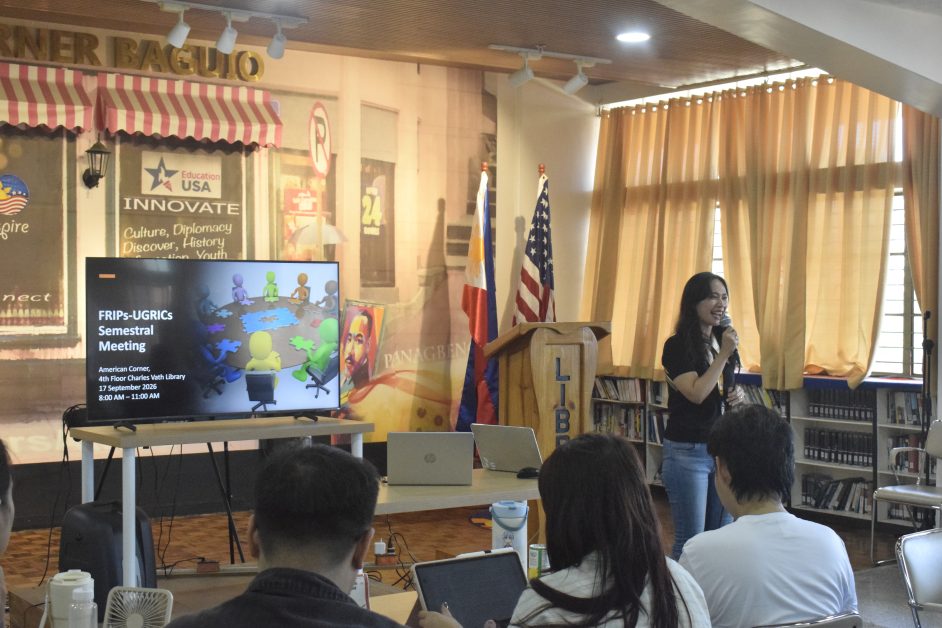
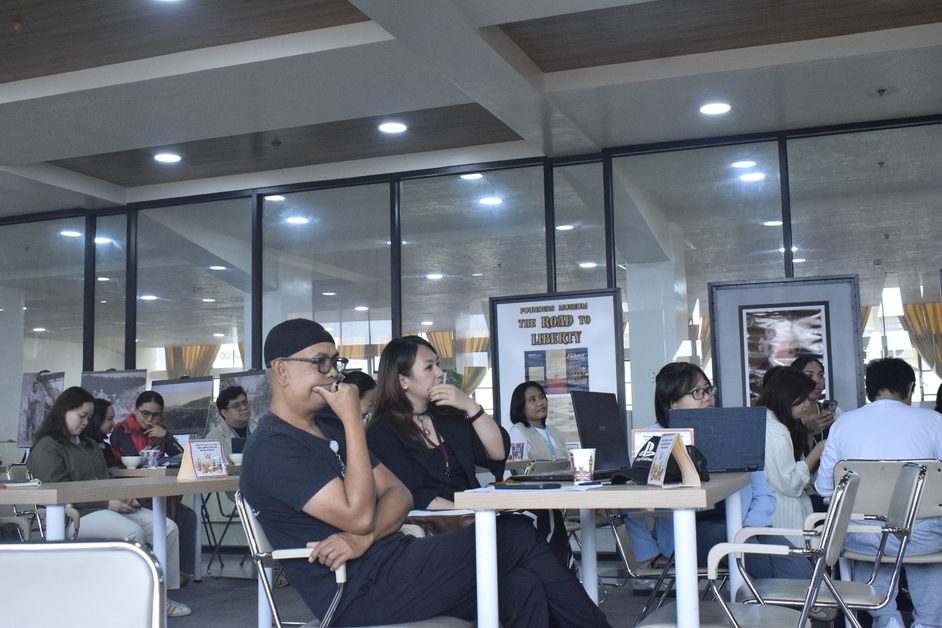
On 17 September 2026, Faculty Research and Innovation Promoters (FRIPs) from the School of Teacher Education and Liberal Arts (STELA), Saint Louis University (SLU) attended the General Meeting and Orientation facilitated by the Undergraduate Research and Innovation Coordinators (UGRICs), Marilyn Balmeo, PhD and Keven John Allit, PhD at the American Corner, 4th Floor of the SLU Libraries, Msgr. Charles Vath Building. Expressing their support for the gathering were officers from the SLU Research Innovation and Sustainability Extension (RISE) Center who also shared their expertise.
RISE Center Director, Richel Lamadrid, DAES led the opening prayer and welcomed the FRIPs with words of encouragement from John 15:5, as they serve as branches that extend the Center’s functions and support.
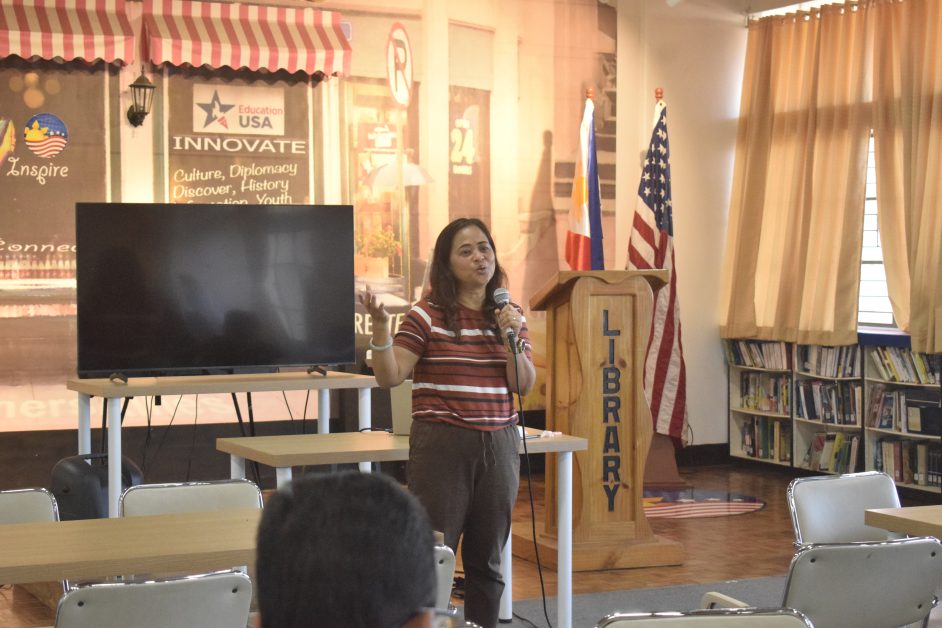
The first speaker of the orientation was Innovation and Tech Transfer Officer Engr. Melissa Boado about Intellectual Property Rights and Technology Transfer. Engr. Boado discussed three types of intellectual property rights: patents, utility models, and industrial designs. She emphasized that intellectual property is important because it protects research and extension projects.
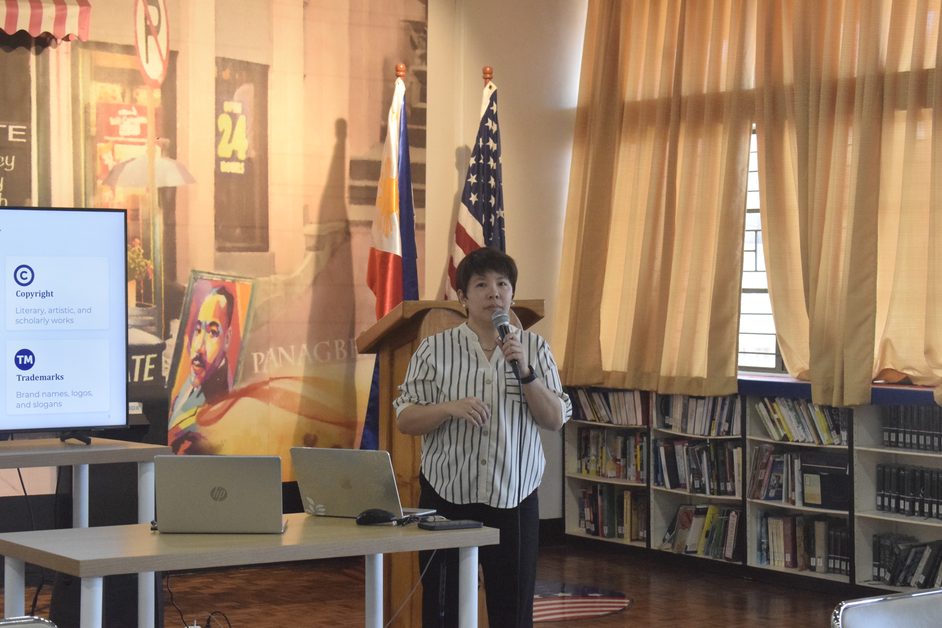
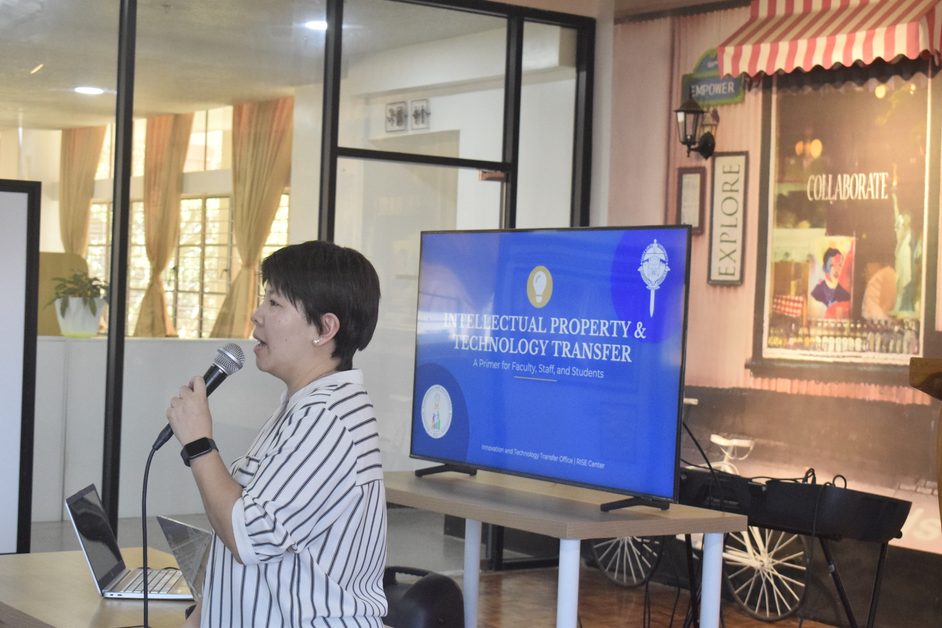
Engr. Boado also discussed the three criteria that must be met before an invention can be granted a patent by the Intellectual Property Office of the Philippines (IPOPHIL): it must be new and not previously disclosed elsewhere; it must be useful or have industrial applicability; and it must not be obvious to a person skilled in that art. She noted that removing the third criterion would make the patent a utility model instead, while removing the second would make it an industrial design. Ending her session, Engr. Boado encouraged the FRIPs to get in the habit of checking their objectives and deciding early whether they wish to pursue an intellectual property application, in order to avoid patentability risks.
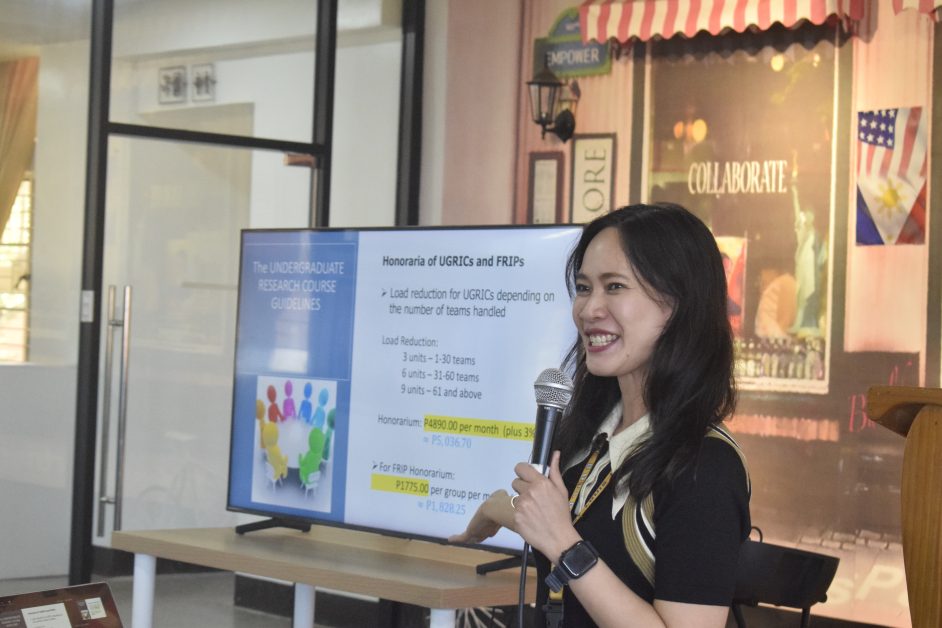
Research Capacitation and Services Officer Laarni Natividad, PhD led the second session where she discussed the updated RISE Guidelines. Dr. Natividad gave an overview about compensation and recognition for FRIPs, covering specifics like honorarium adjustments, incentives tied to research output, and how their work factors into annual evaluations. Dr. Natividad then proceeded with the nature and objectives of the Research 1 course where students will get first-hand experience in the research process from problem identification to journal submission. A separate lecture series will be administered to those enrolled in Research 1, which includes Ethics Review and Related Literature.
Dr. Natividad also emphasized the roles and duties of the FRIPs that include leading the research, assigning additional work, and assigning appropriate tasks to members. In support, the RISE Center will provide training and lectures for faculty promoters.
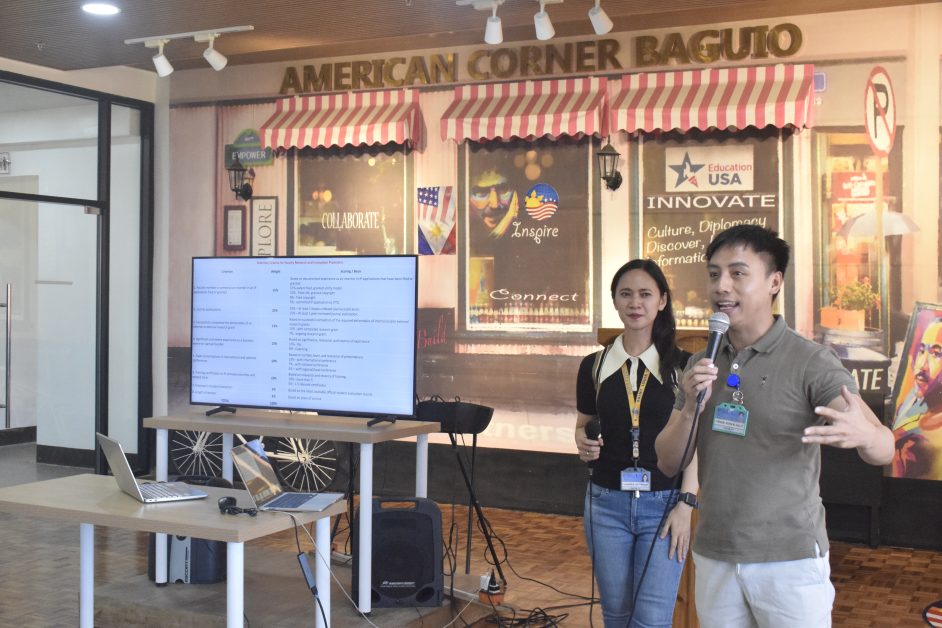
Research Ethics Committee Chair Rainier Moreno-Lacalle, PhD, the third speaker covered two main topics: the REC’s work clause, classification tiers, and ethics clearance mandate; and a discussion of FRIPs’ obligations to the REC once clearance is submitted.
Dr. Moreno-Lacalle explained that for a study to be considered a research paper, it must include an introduction, a methodology, and a data analysis plan. The paper should also be corroborated by a scientific method that includes a step-by-step process. He also presented the elements of an ethical research paper based on the National Ethical Guidelines.
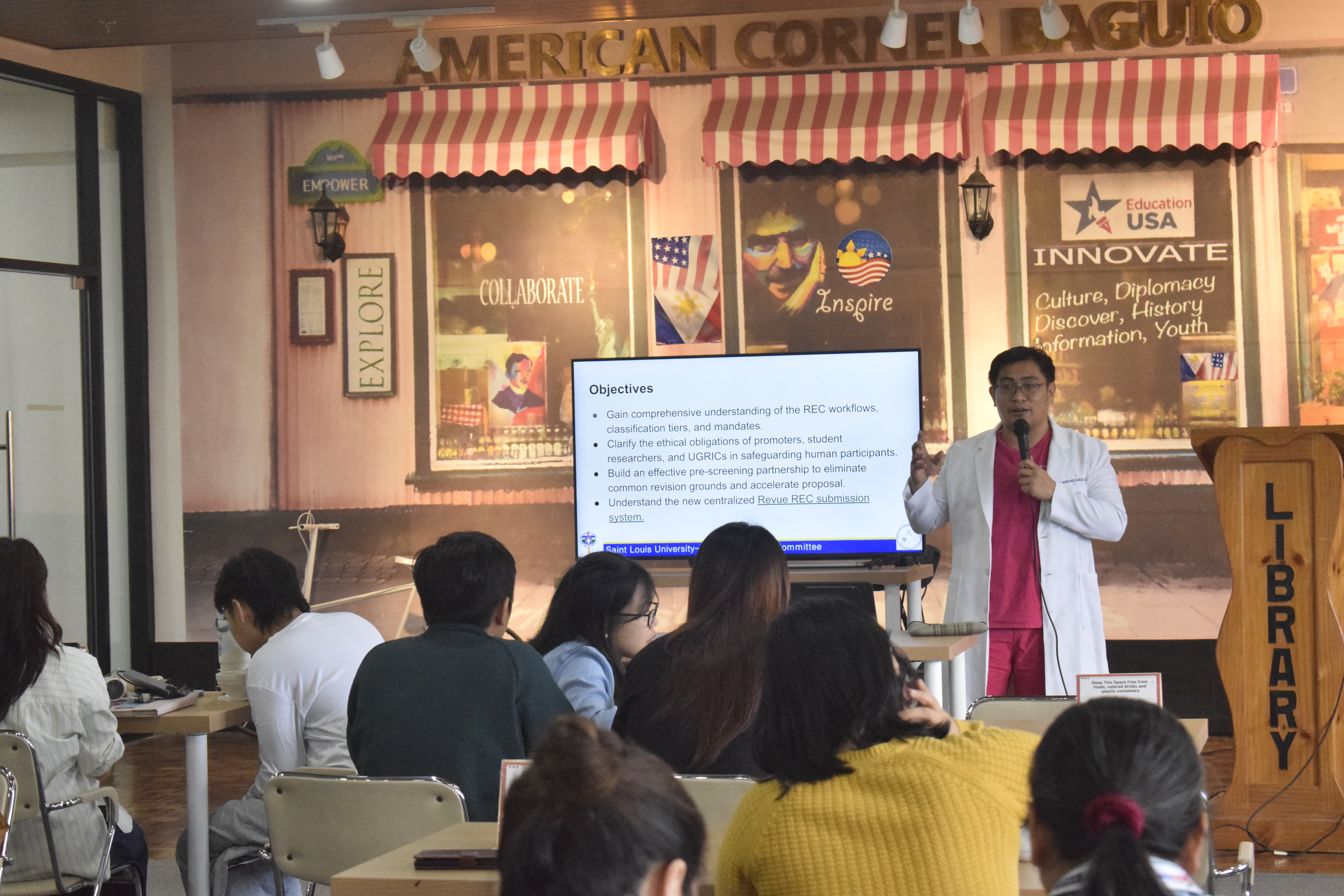
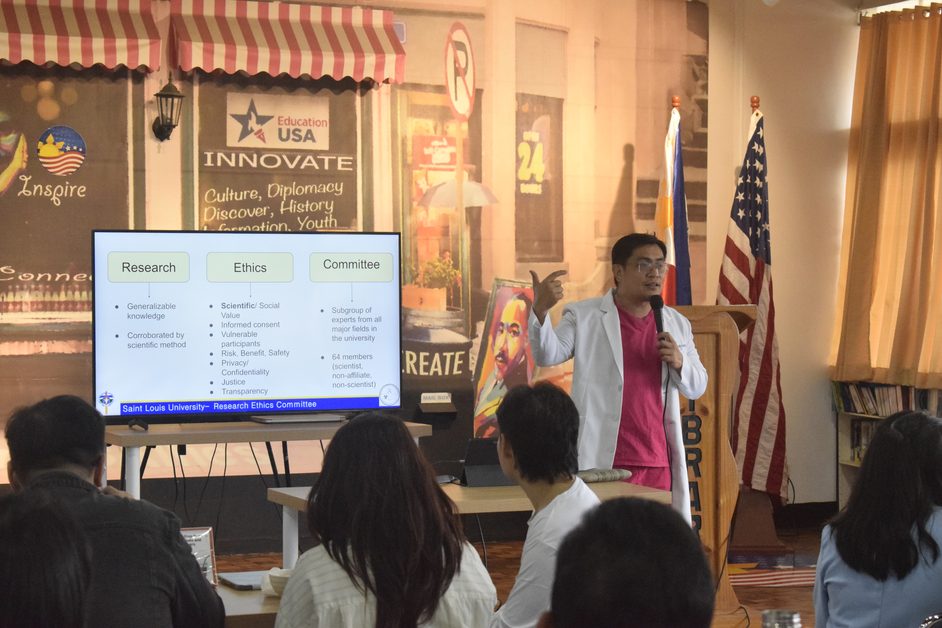
Dr. Moreno-Lacalle also announced the new Institutional Animal Care and Use Committee (IACUC) for research involving animals. He closed his session by encouraging FRIPs to collaborate in promoting ethical research at the university.
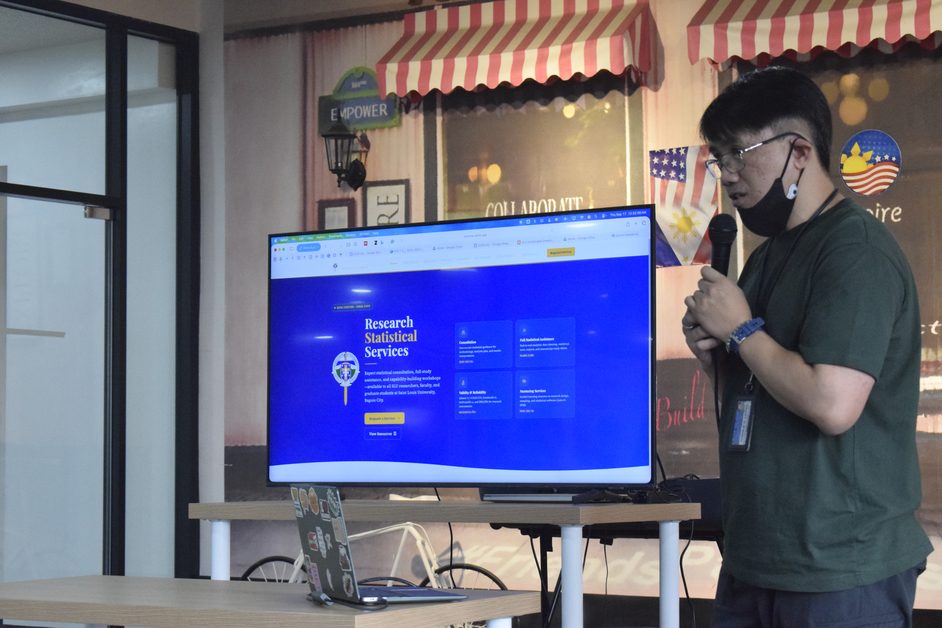
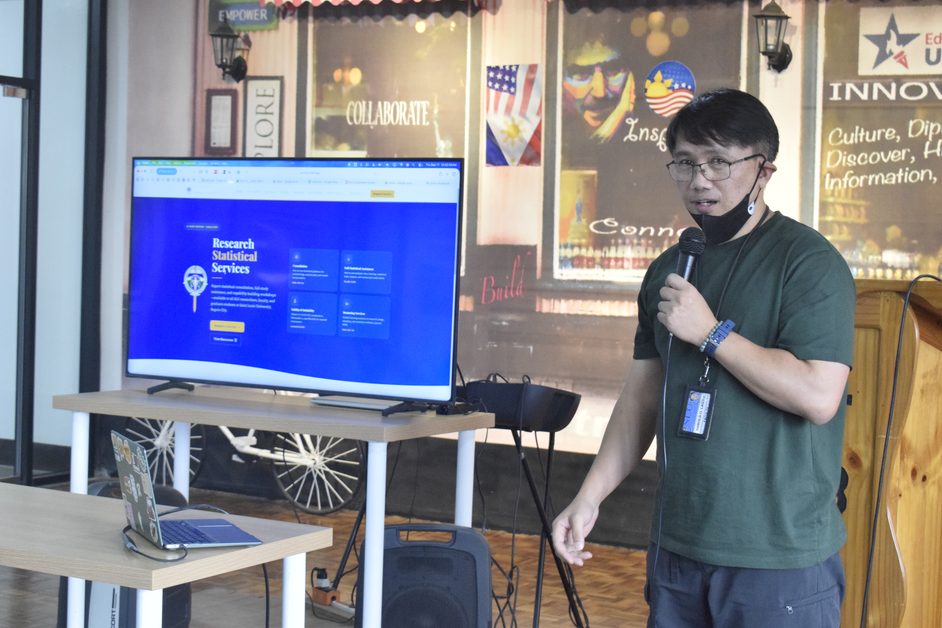
Institutional Studies and Methods Officer Engr. Harold Lago then discussed the Institutional Scientific Research Methodology (ISRM) services offered by the RISE Center. He began by presenting the website currently being developed for ISRM services that will help students access their services online. He then presented the department’s various services.
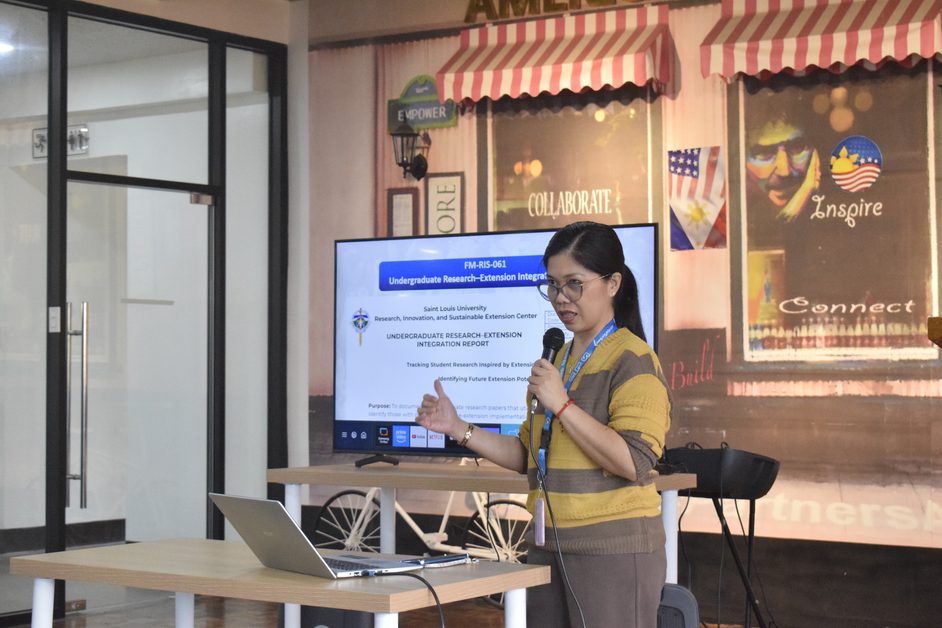
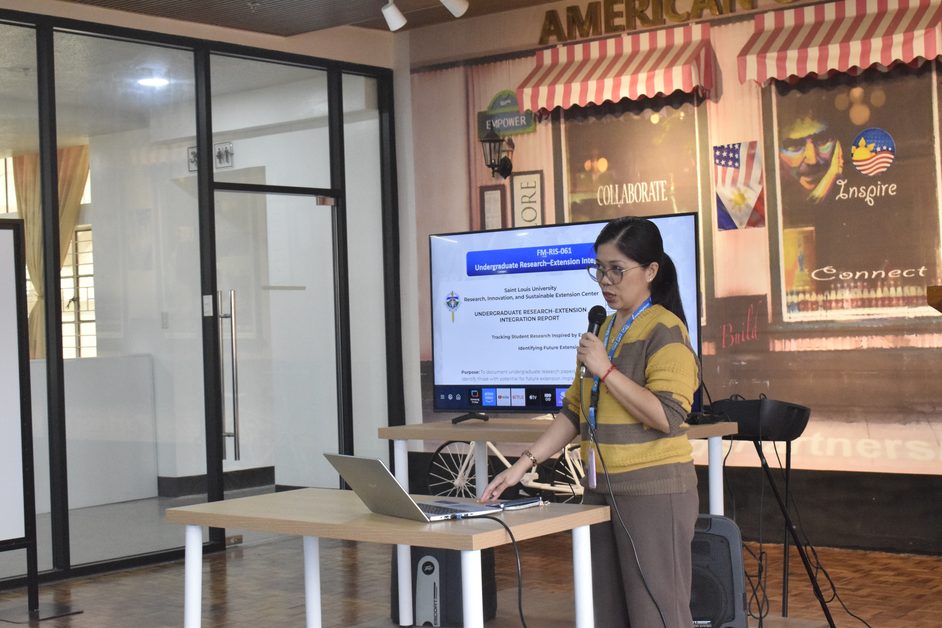
As the Sustainable Research Extension Officer, Jeramie Molino, PhD extended her request for the FRIPs’ help in promoting the Research Action Extension in the university. She introduced the Undergraduate Research Extension Integration Report (FM-RIS-061) that is to be completed by the FRIPs. The template includes two sections: Research Papers Inspired by Extension Programs and Research Papers with Potential for Future Extension. FRIPs are to review thesis topics, match them to an existing extension program, or assess whether they can become one and identify relevant United Nations Sustainable Development Goals, the CICM advocacy, and institutional framework elements. Dr. Molino encouraged FRIPs to identify research-to-extension opportunities and to submit the completed integration report to help coordinate possible extension adoption.
As the last speaker, Mr. Romano Bulatao, Assistant Director of the Office of Student Affairs and Services (OSAS), discussed OSAS requirements and procedures for off-campus activities. Citing Administrative Memo No. 8, Series of 2026, he explained that course-required off-campus activities must be endorsed by the department head and approved by the dean, with consent forms completed before OSAS approval. Research-related off-campus data gathering falls under this same process. He noted that accountability for off-campus research is shared across the university.
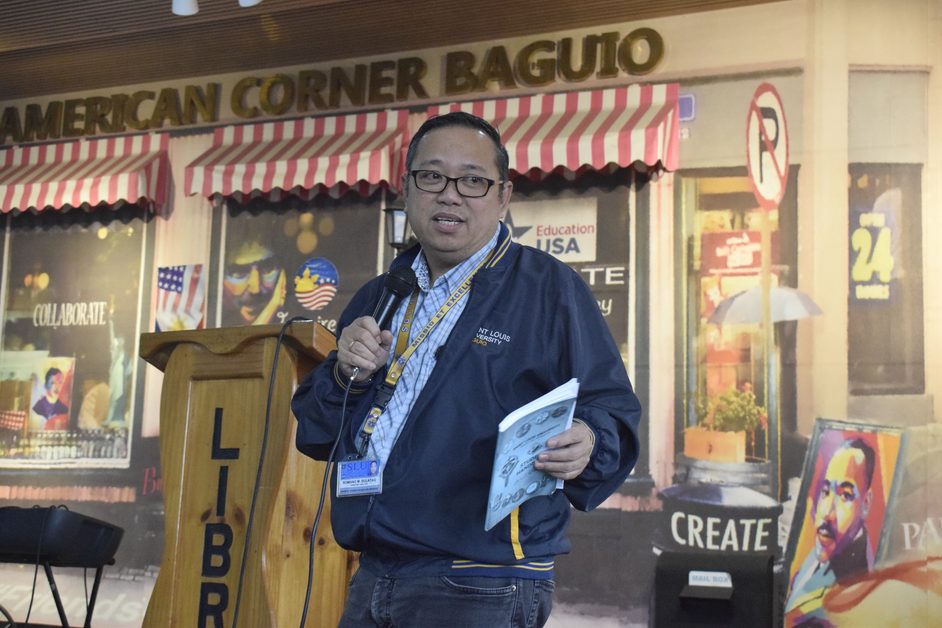
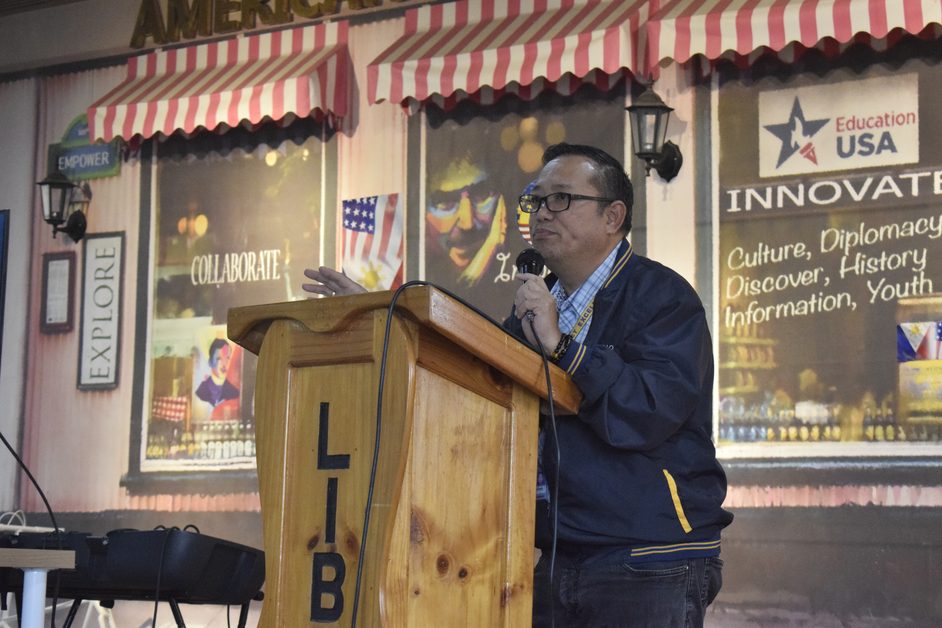
Mr. Bulatao closed by encouraging FRIPs to follow the prescribed process and keep their documentation clear.
The UGRICs of STELA, in partnership with the RISE Center, continue to provide a collaborative space for continual improvement in promoting ethical research and innovation. In turn, the FRIPs of STELA will empower student researchers to accomplish their respective studies with integrity and creativity. (Article by Margareth Galuba, SLU RISE Center Intern | Photos By Joey Glemao, SLU RISE Center Intern).