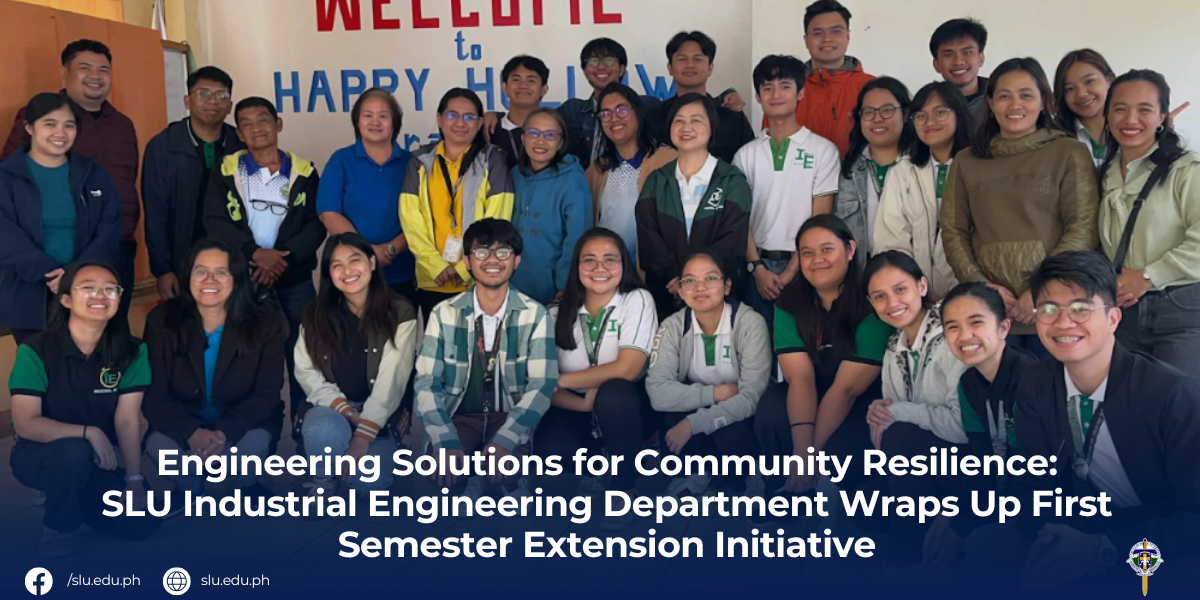
The Saint Louis University (SLU) Industrial Engineering Department of the School of Engineering and Architecture (SEA) has marked a milestone in its extension work, concluding its first semester of initiatives for Academic Year 2025–2026 with projects that strengthen local governance, digital literacy, and disaster preparedness.
Partnering with Barangay Happy Hollow, the department launched a series of seminars, technical assistance programs, and technology-driven solutions that bridged classroom expertise with the needs of grassroots communities. The activities highlight SLU’s commitment to applying Industrial Engineering and Information Systems in building more efficient, transparent, and resilient communities.
Building Digital Capacity
The semester opened on 10 September 2025 with a capacity-building seminar series for barangay officials. Organized with the Philippine Institute of Industrial Engineers – SLU Student Chapter, the event drew faculty, students, and local leaders to the Happy Hollow Barangay Hall.
Engr. Krizelle Rhea Solomon, Senior Industrial Engineer at the Baguio City Buildings and Architecture Office, discussed how mobile apps, digital filing systems, and streamlined communication platforms can enhance transparency and service delivery in local government.
Mrs. Maria Concepcion B. Clemente, Assistant Data Protection Officer at MIT, followed with a lecture on the Data Privacy Act of 2012, offering practical guidelines for handling residents’ information responsibly, especially in social media and community data collection.
Disaster Preparedness Through Engineering
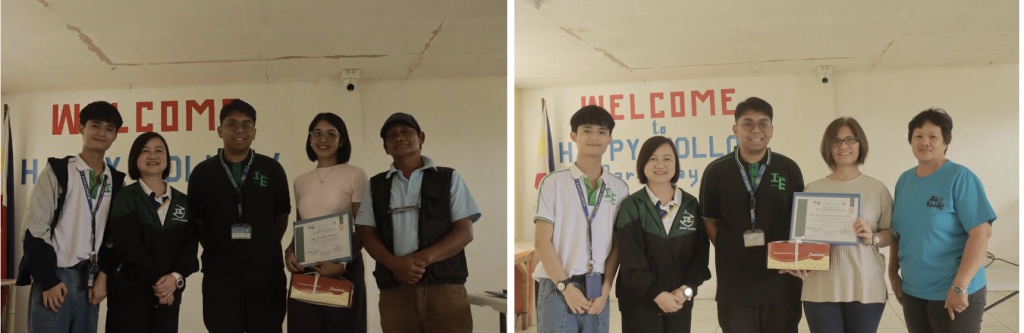
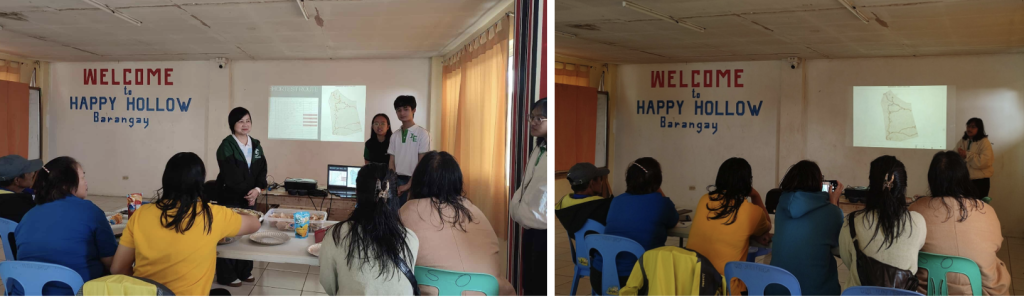
On 8 December 2025, the extension team returned to Happy Hollow to present two community-centered systems designed to improve disaster risk reduction and management (DRRM).
- Barangay Evacuation Maps (BMAPs): Optimized evacuation routes for each purok, generated using Industrial Engineering techniques such as the shortest route method and minimal spanning tree analysis.
- Barangay Disaster Analytics System (BDAS): An Excel-based dashboard that consolidates disaster records into one platform, simplifying monitoring, reporting, and decision-making.
Together, BMAPs and BDAS offer barangay officials a unified approach to disaster response—combining optimized physical pathways with organized digital information. The systems were warmly received, with the council suggesting refinements to tailor outputs to their needs.
Barangay Secretary Ms. Ellen Salibad expressed gratitude to SLU, noting that the department’s scientific solutions significantly enhance their disaster preparedness programs.
Applied Learning, Real-World Impact
Beyond technical outputs, the initiatives underscore the role of Industrial Engineering in community development. By applying optimization tools, process analysis, and dashboard design, SLU faculty and students transformed academic learning into practical solutions for local governance.
For students, the projects provided hands-on experience in applied learning. For barangay partners, they offered tools to streamline processes, organize information flow, and

These initiatives closely align with the United Nations’ Sustainable Development Goals (SDGs). By strengthening disaster preparedness and local governance, they advance SDG 11: Sustainable Cities and Communities and SDG 13: Climate Action, ensuring that communities are safer and more resilient to hazards. The application of engineering methodologies and digital tools reflects SDG 9: Industry, Innovation, and Infrastructure, while the emphasis on transparency and responsible data handling supports SDG 16: Peace, Justice, and Strong Institutions. Collaboration between SLU, barangay officials, and student organizations embodies SDG 17: Partnerships for the Goals, and the integration of applied learning opportunities for students contributes to SDG 4: Quality Education. Together, these efforts illustrate how academic extension work can directly contribute to global sustainability targets while creating tangible local impact.
Prepared by: Krista Mae Ramos , Extension Research Student Leader, SEA-IE Department and Engr. Geraldine Nerona , Extension Program Coordinator, SEA, SLU
Reviewed and Edited by: Jeramie N. Molino, PhD, Sustainable Research Extension Officer, RISE Center