To reinforce academic integrity and enhance faculty competence in research supervision and assessment, Saint Louis University (SLU), through the Research, Innovation, and Sustainable Extension (RISE) Center in partnership with the University Libraries, conducted a Mandatory Turnitin Faculty Training via Zoom. Held on 19, 21, and 26 February 2026, the training provided faculty members with a comprehensive orientation and hands-on experience with Turnitin, a widely used platform for plagiarism detection and academic writing evaluation.
The initiative underscores the University’s commitment to academic excellence and responsible research practices. With a renewed Turnitin subscription for Academic Year 2025–2026, faculty members were encouraged to maximize the platform in evaluating student submissions and upholding academic integrity across disciplines. The training was organized in response to persistent faculty concerns regarding plagiarism detection and the increasing presence of artificial intelligence in academic writing.
During the session, speaker Racquel Estrada highlighted Turnitin’s primary purpose: evaluating the originality of student work. “Turnitin is the platform that we use to check the originality of the documents that are being submitted by our students,” she said. She further explained that the university’s subscription now includes expanded features, such as AI detection, grammar checking, and citation assistance, which support instructors in monitoring and improving academic outputs.
Training Sessions and Key Features
The faculty training was conducted as a three-hour virtual session that combined a lecture, a live demonstration, and guided practice. The first session, held on 19 February, was attended by 186 faculty participants. The second session, conducted on 21 February, drew 287 faculty participants. The final session on 26 February concluded the series with 26 attendees. The faculty represented all 7 schools.
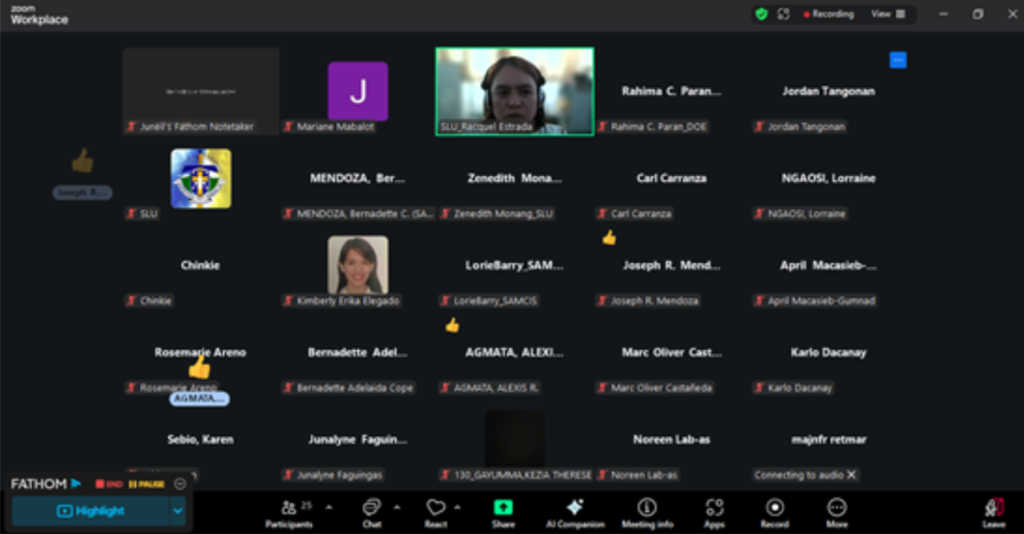
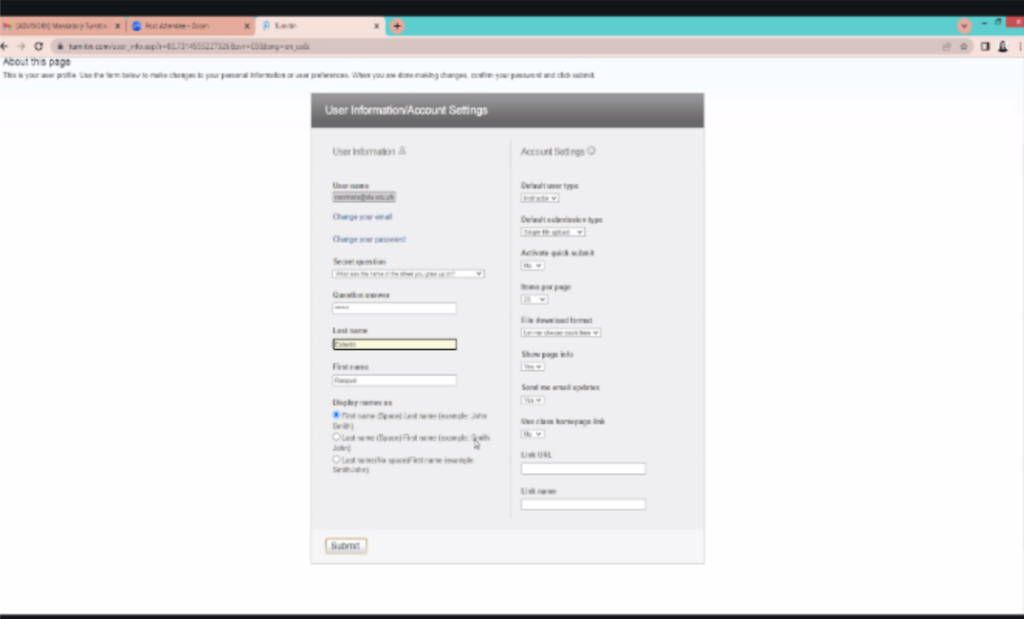
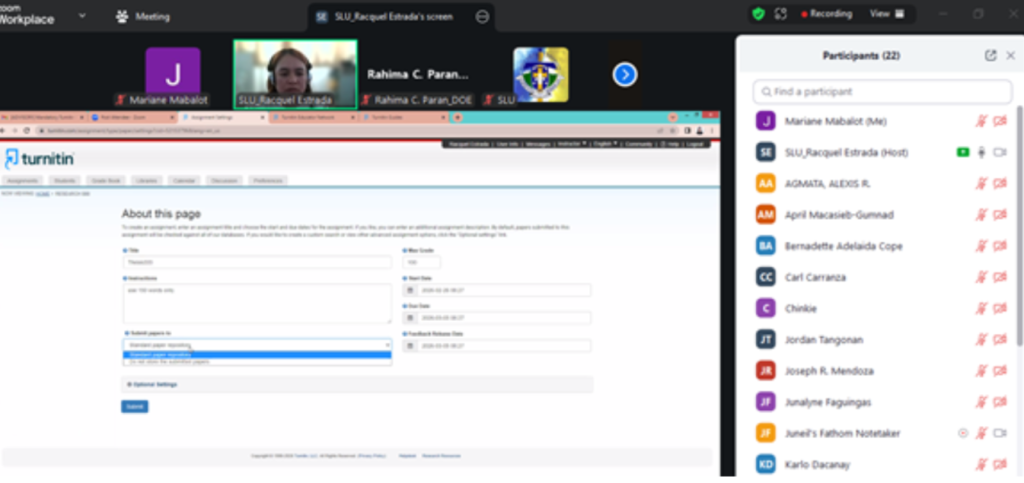
Participants were introduced to the Turnitin instructor platform, including its core features, user roles, and document evaluation tools. The speaker discussed the three system users: administrator, instructor, and student, it outlined their respective responsibilities. A live demonstration walked participants through creating classes, setting up assignments, uploading documents, and interpreting similarity reports. Key system settings that influence similarity checking were also emphasized.
Clarifying Similarity Reports and AI Detection
A significant portion of the seminar addressed common misconceptions surrounding Turnitin’s Similarity Report and AI Detection feature. During a brief interview, Estrada was asked whether the AI detection tool could mistakenly flag human-written text. She clarified that the AI detection tool does not mistakenly flag human-written text and operates independently from similarity checking.
She explained that the Similarity Report is generated by comparing submissions against three primary sources: (1) student papers and documents stored in Turnitin’s repository, (2) published academic materials, and (3) online databases and websites. In contrast, the AI Detection feature analyzes patterns by comparing the submitted document with outputs typically produced by AI tools such as ChatGPT. The speaker further noted that AI detection results may display as 0 when the detected percentage is 20% or lower. She clarified that this does not indicate an absence of analysis but reflects the system’s reporting threshold. This approach does not indicate an error but reflects the system’s reporting design.
With these clarifications, the seminar reaffirmed Turnitin’s reliability in assessing both similarity and potential AI-generated content.
Draft Coach and Software Limitations
The training also introduced Draft Coach, a Turnitin feature integrated into Google Docs that allows both students and instructors to check grammar, citations, and similarity while drafting academic papers. Faculty members were encouraged to guide students in using Draft Coach as a developmental writing tool prior to final submission.
However, certain limitations were also discussed. Estrada noted that these limitations are usually encountered on the students’ side when using Draft Coach. While instructors can run similarity checks multiple times in the instructor platform, students using Draft Coach are limited to 3 similarity checks per document. This restriction encourages careful revision before rechecking. “However, in plagiarism checking, for one document, you can only check that three times only, unlike the doon sa platform ng instructor, na as many as you can, or as many as you want,” she explained. She also noted that Turnitin has limited capabilities for analyzing documents written in Filipino, which may affect similarity results.
Additionally, faculty were informed that similarity percentages may change when documents are edited prior to resubmission. Estrada explained that even without revisions, results from multiple checks may vary. “Ang reason ng Turnitin is every second may mga ina-upload sila na mga articles na pangga-galingan ng similarity checking. Kaya wala talagang pare-parehas ang result,” she said. Even without revisions, results from multiple checks may vary due to ongoing additions to Turnitin’s database, making identical similarity scores unlikely.
Accessibility and Faculty Experience
When asked about the platform’s accessibility across age groups, the speaker acknowledged that some faculty members aged 45 and above may initially experience hesitation due to limited exposure to digital technologies. “Dahil sa technology gap. Kulang sila sa technology skills,” she shared. She added, “Noon walang computer, kaya ikaw mismo yung mag-aaral.” She emphasized, however, that consistent use and institutional support can help bridge this technology gap and improve user confidence.
Sustaining Academic Integrity Initiatives
The speaker shared that SLU first subscribed to Turnitin in 2022 and has renewed its subscription this year for another three-year term, reflecting the institution’s sustained investment in academic integrity initiatives. This continued investment reflects the university’s long-term commitment to academic integrity, ethical scholarship, and quality research.
Overall, the Mandatory Turnitin Faculty Training strengthened faculty understanding of originality checking, similarity interpretation, and AI detection. By standardizing Turnitin use across departments and equipping educators with essential digital tools, SLU continues to foster a culture of accountability, responsible scholarship, and academic excellence that aligns with United Nations Sustainable Development Goals 4 (Quality Education), 12 (Responsible Consumption and Production, and 17 (Partnership for the Goals). (Article and Photos by SLU RISE Center)