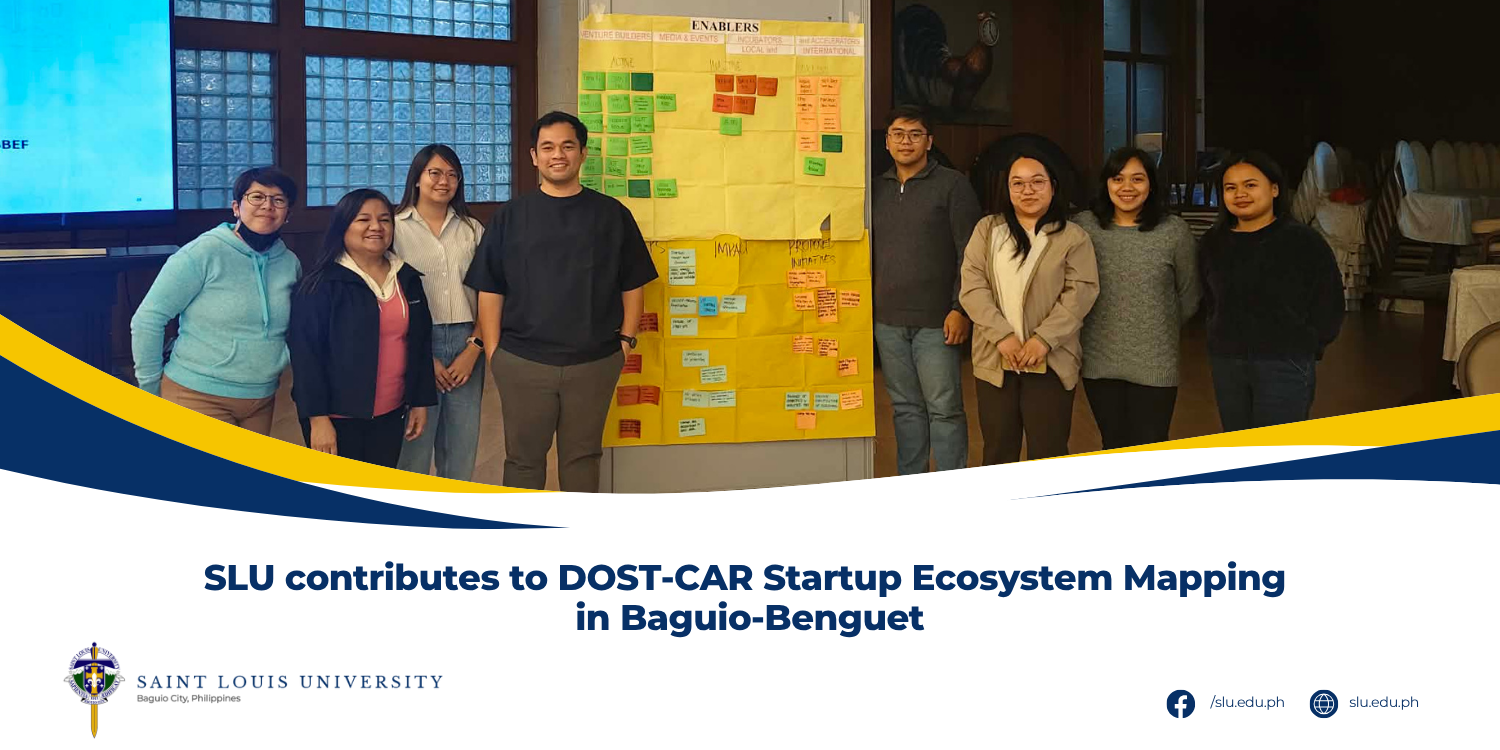
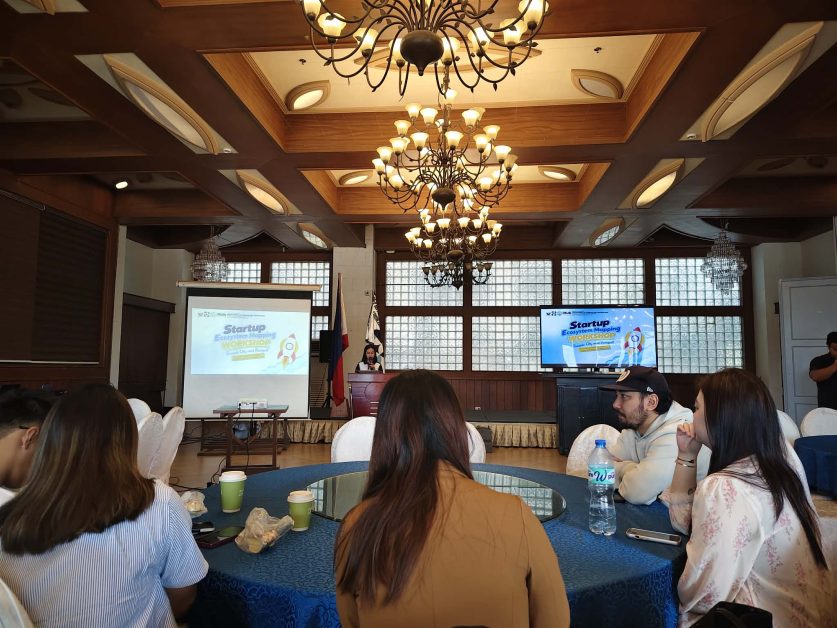
Saint Louis University (SLU), through its Innovation and Technology Transfer Office (ITTO) of the Research, Innovation, and Sustainable Extension (RISE) Center, took part in the Department of Science and Technology – Cordillera Administrative Region’s (DOST-CAR) Startup Ecosystem Mapping activity for Baguio City and Benguet on 10 September 2026 at Paragon Hotel and Suites, Baguio City.
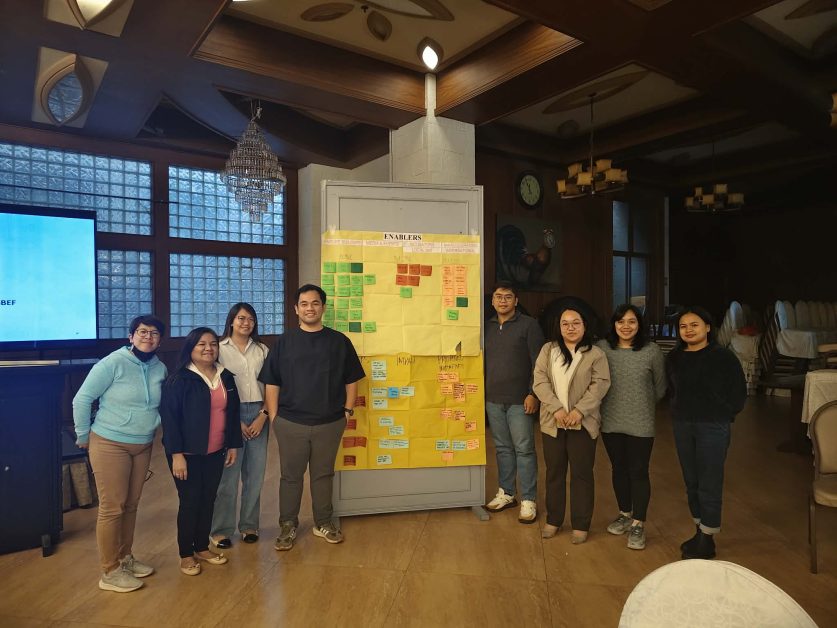
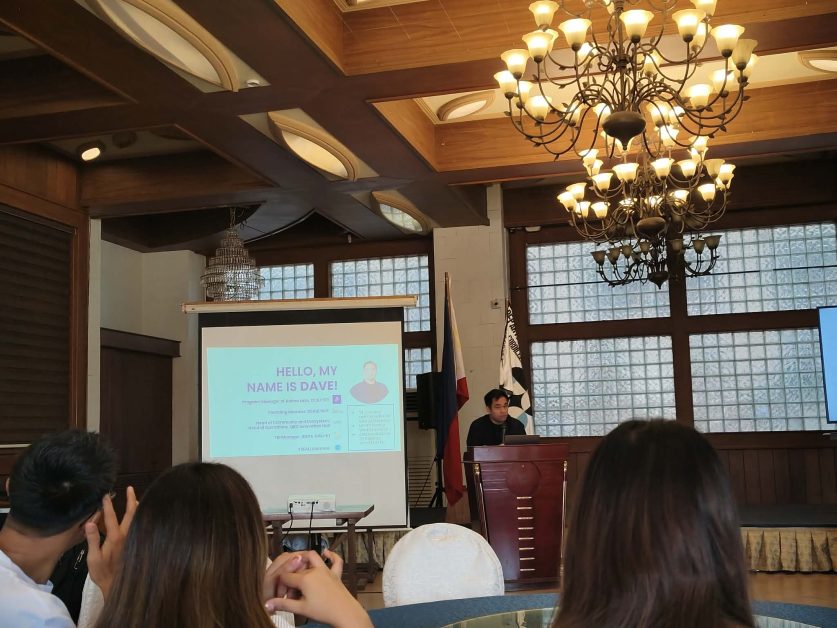
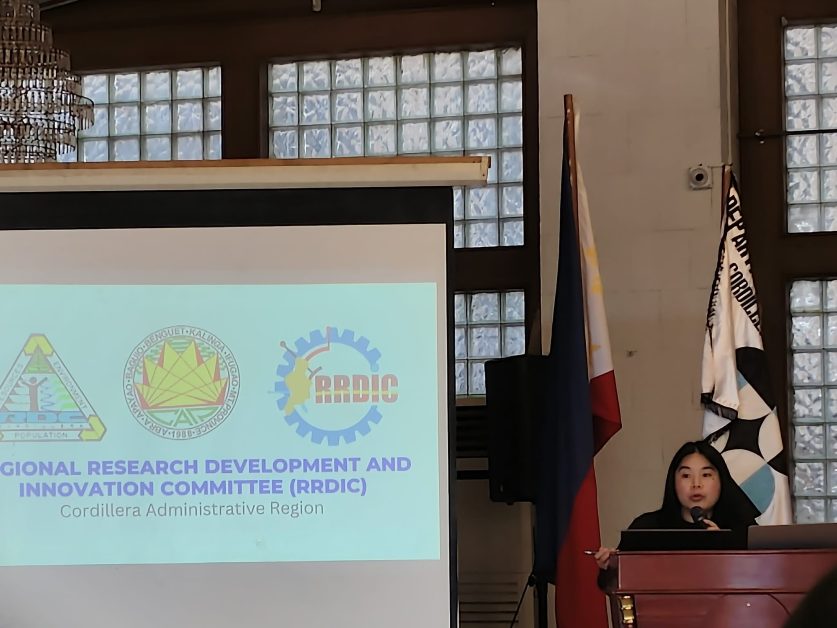
Conducted under the DOST-CAR Innovation Hub (iHub) Program, the activity brought together stakeholders involved in supporting startups, entrepreneurship, innovation, and technology commercialization.
The initiative sought to develop a clearer picture of the startup ecosystem today by identifying programs, organizations, institutions, resources, support mechanisms, and key individuals contributing to startup development in the region.
De La Salle University (DLSU) Manila- Animo Labs Program Manager Dave Del Rosario facilitated the activity by bringing his experience to the table that provided the guidance needed to accomplish the activity.
From the years 2022 through 2025, Baguio’s startup community was classified as Level 2: Foundational. This means the City has existing hubs, a startup consortium, and various enablers with appreciable access to resources that drive startup growth.
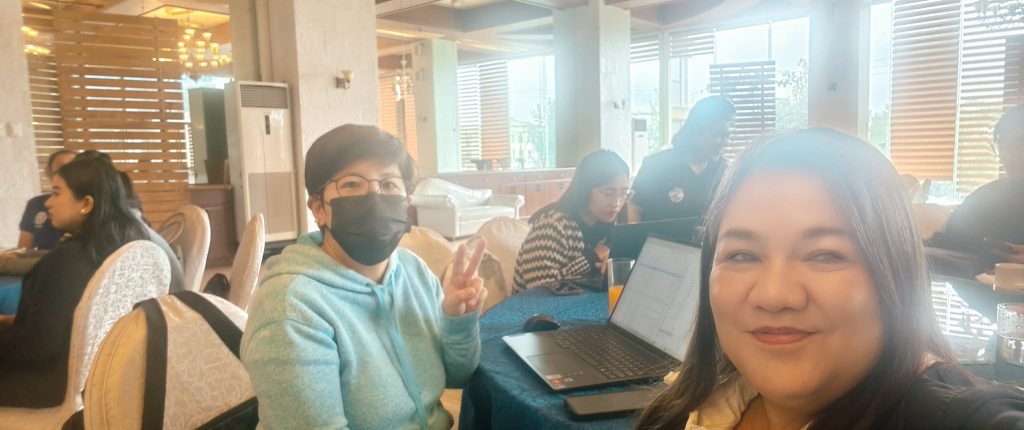
Representing SLU, Engr. Melissa May Muñoz Boado of the ITTO, and Engr. Maria Corazon Ocampo, former Technology Business Incubator Manager of Convergent Resilience Technology Business Incubator (ConRes TBI), contributed to the mapping of ecosystem resources across five key sectors: academe, ecosystem enablers, corporations, government, and investors. The exercise provided an opportunity to identify institutions and resources that can potentially support startups at different stages of development.
Beyond identifying existing resources, the activity also encouraged stakeholders to surface gaps and opportunities within the Baguio-Benguet startup ecosystem. DOST-CAR intends to use the results as a basis for identifying priority interventions, strengthening collaboration among ecosystem stakeholders, and developing more responsive programs for startups and technology innovators across the Cordillera.
The Baguio-Benguet activity serves as the first leg of DOST-CAR’s planned startup ecosystem mapping activities across the region, providing a foundation for understanding the distinct strengths, needs, and opportunities of local innovation communities.
A timely step for ConRes TBI
For SLU, the activity came at an opportune time as the university moves toward the planned revival of its own technology business incubator.
The ecosystem mapping provided a practical starting point for this effort. By understanding who the region’s innovation actors are, what resources they can provide, and where gaps remain, SLU can position a revitalized ConRes TBI not as a stand-alone university initiative, but as an active node within the wider Cordillera innovation ecosystem.
For ConRes TBI, participation in the mapping exercise therefore represents more than an engagement with a regional initiative. It marks an important foundation and a practical step toward rebuilding the university’s innovation support infrastructure and reconnecting it with the ecosystem that startups and innovators need to thrive. Opportunities that create meaningful impact for the region.
As DOST-CAR continues the mapping across the Cordillera, the initiative has the potential to reveal not only where the region’s startup resources are located, but also how these resources can be better connected.
Article by: Melissa May M Boado
Photos by: Maria Corazon D Ocampo