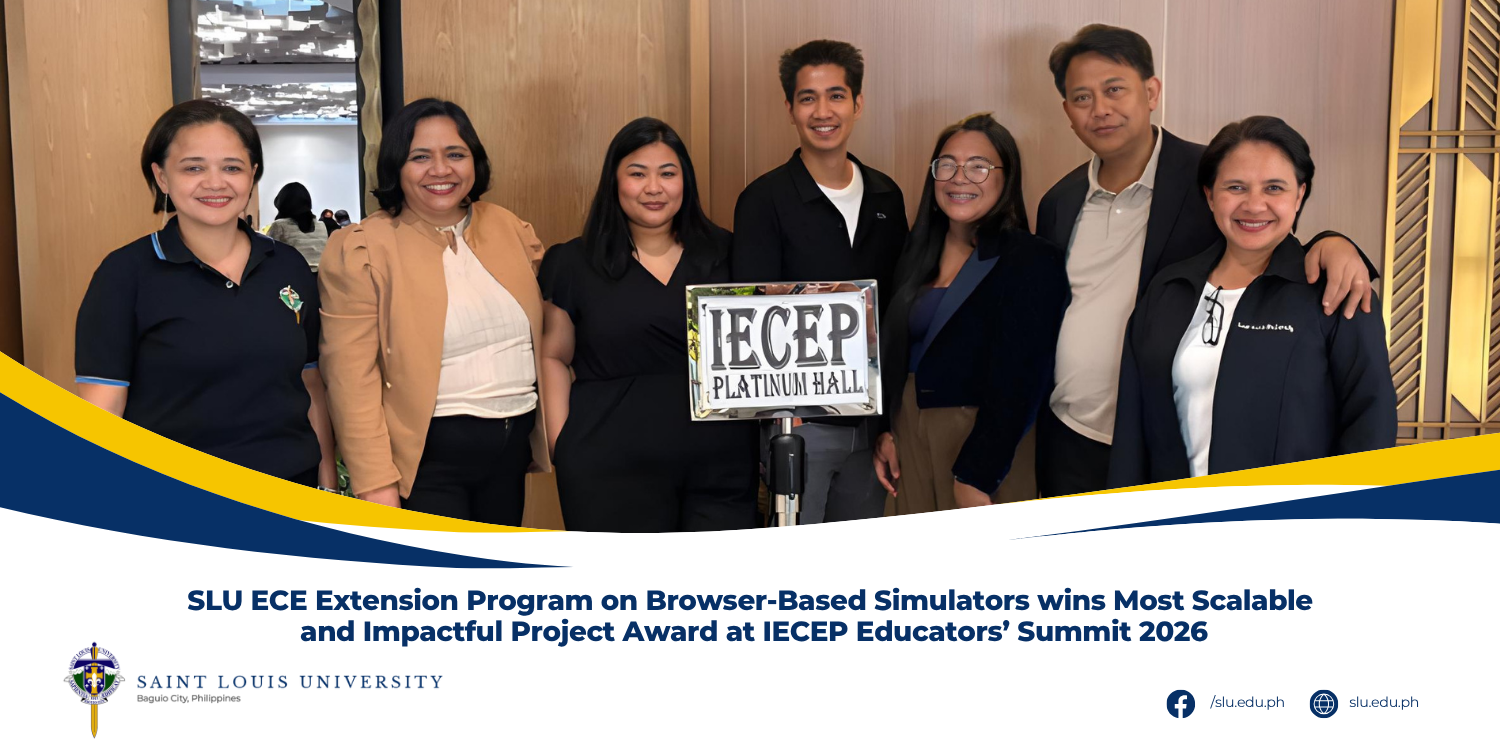
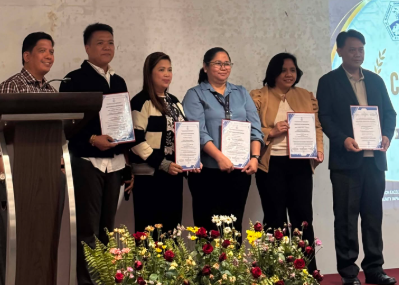
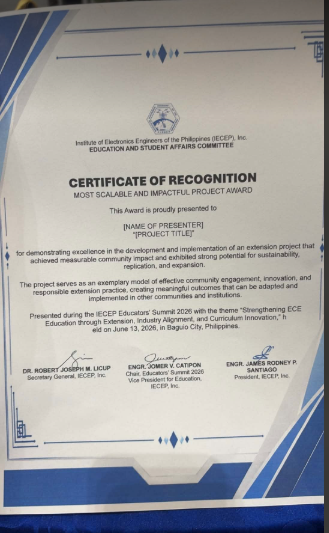
Saint Louis University’s Electronics Engineering (SLU ECE) team from the School of Engineering and Architecture (SEA) received the Most Scalable and Impactful Project Award at the National Extension Conference for Electronics Engineering Educators, held as part of the IECEP Educators’ Summit 2026 on 13 June 2026, at the Hotel Supreme Mall and Events Center in Baguio City.
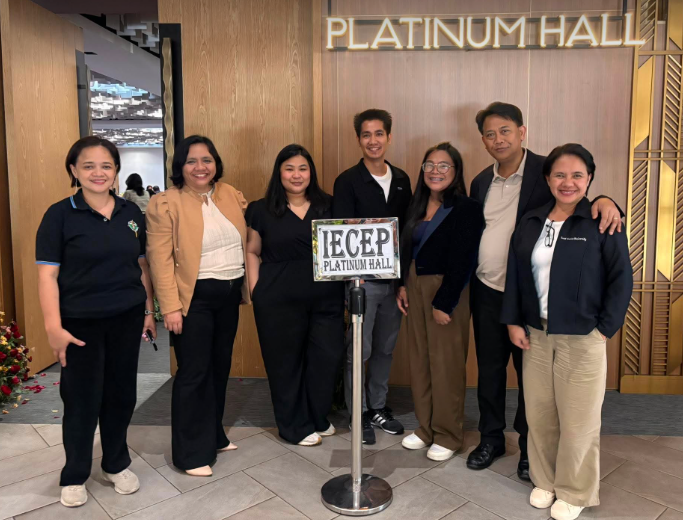
Organized by the Institute of Electronics Engineers of the Philippines (IECEP), Inc., through the Office of the Vice President for Education, the summit carried the theme “Strengthening ECE Education through Extension, Industry Alignment, and Curriculum Innovation.” It brought together educators, academic leaders, industry practitioners, and members of the Professional Regulatory Board of Electronics Engineering to exchange extension practices and discuss opportunities for curriculum enhancement.
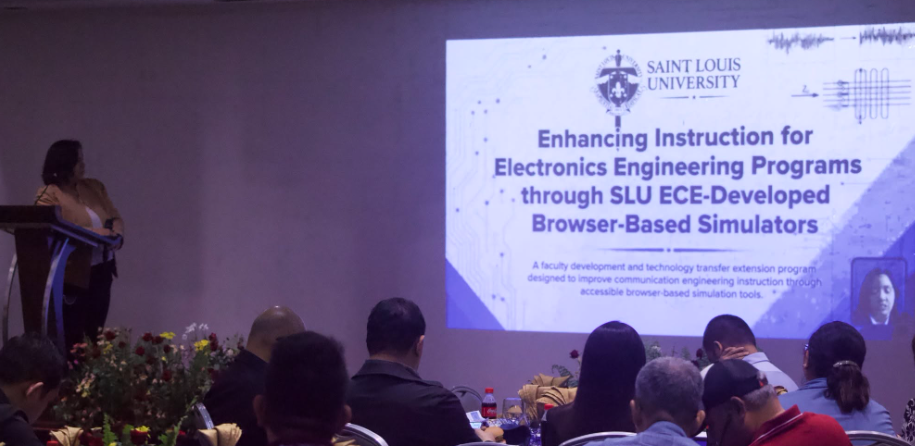
Engr. Joe Arthur Agustin and Engr. Florence Leslie Campolet represented SLU and presented the project, “Enhancing Instruction for Electronics Engineering Programs through SLU ECE-Developed Browser-Based Simulators.” The recognition highlighted the initiative’s potential for wider adoption and its contribution to strengthening Electronics Engineering instruction.
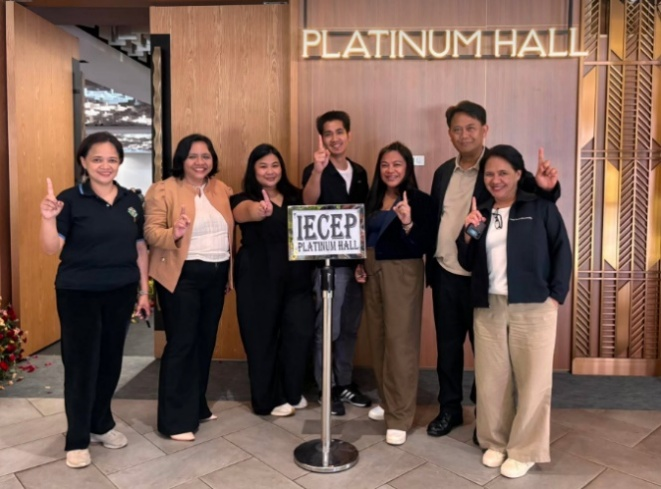
The award brings national recognition to SLU ECE’s efforts to translate locally developed instructional tools into an extension initiative grounded in faculty needs. Through continued training, collaboration with partner institutions, and systematic assessment, the team aims to broaden the use of its browser-based simulators and strengthen their contribution to Electronics Engineering education.
Extension Program Overview
The extension program supports faculty in teaching complex concepts in Transmission Lines and Coding and Modulation Techniques through browser-based simulation tools. Its partner institutions are the University of Baguio, the University of the Cordilleras, and Saint Mary’s University in Nueva Vizcaya. . The initiative aims to help faculty integrate the tools into lecture discussions, problem-solving activities, and laboratory exercises aligned with course objectives.
A needs assessment identified several instructional challenges, including insufficient visualization materials, difficulty connecting theory to practical applications, and difficulty relating mathematical calculations to the behavior of physical signals. These findings guide the program’s approach, which combines access to the simulators with practical training, teaching resources, and continuing support
Training feedback offered encouraging insights into the tools’ perceived instructional value. Participants noted that the simulators helped visualize transmission-line principles, demonstrate voltage variations along a line, and illustrate differences among digital modulation techniques. They also identified ways to use the modules to supplement lectures and support laboratory activities.
To assess longer-term outcomes, the program’s impact assessment plan for Academic Year 2026–2027 proposes collaborative syllabus reviews, classroom observations, faculty interviews, and reviews of instructional materials.
SDGs Alignment
The SLU ECE extension program strongly aligns with SDG 4: Quality Education by providing browser-based simulators, hands-on training, user manuals, and sample lesson plans, the initiative expands access for faculty and students to high-quality Electronics Engineering learning resources. This supports Target 4.3 on equal access to affordable, quality tertiary education, with Indicator 4.3.1 measuring participation in formal and non-formal education and training.
The program also strengthens technical and ICT-related competencies by using digital simulation tools to teach Transmission Lines and Coding and Modulation Techniques. This contributes to Target 4.4, which seeks to increase the number of youth and adults with relevant technical and vocational skills, as measured by Indicator 4.4.1 on ICT skills.
In addition, the initiative builds faculty capacity through training sessions, self-paced tutorials, and instructional materials that support the effective integration of simulators into lectures and laboratory activities. This aligns with Target 4.c on increasing the supply of qualified teachers, with Indicator 4.c.1 measuring the proportion of qualified teachers.
Beyond education, the project supports SDG 9: Industry, Innovation and Infrastructure by promoting locally developed educational technology and engineering-education innovation. Through the development and dissemination of browser-based simulators, SLU ECE contributes to Target 9.5, which encourages the enhancement of scientific research and technological capabilities, as reflected in Indicator 9.5.2 on researchers per million inhabitants. (Article and Photos by IECEP CAR, SLU ECE Department)