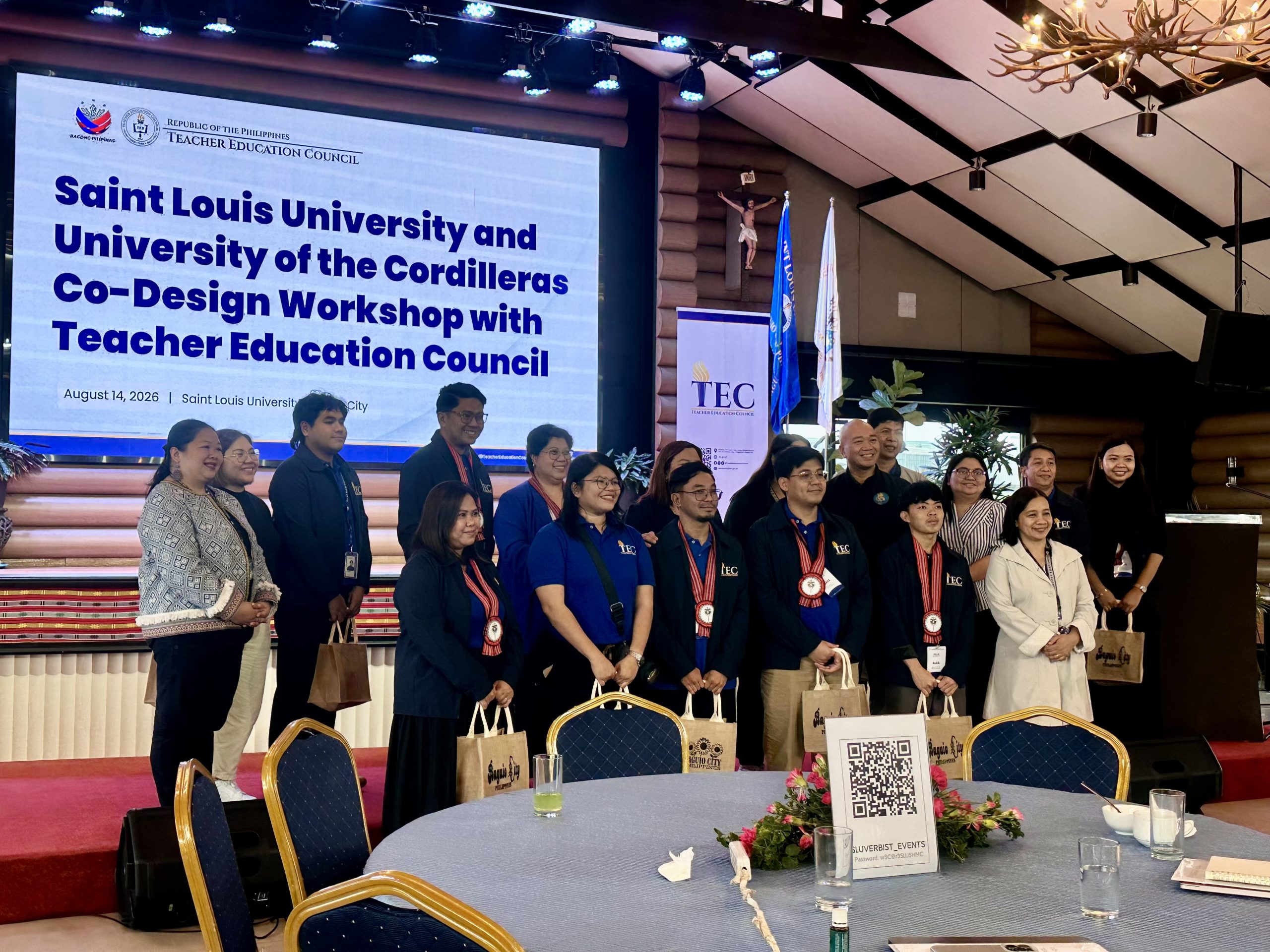
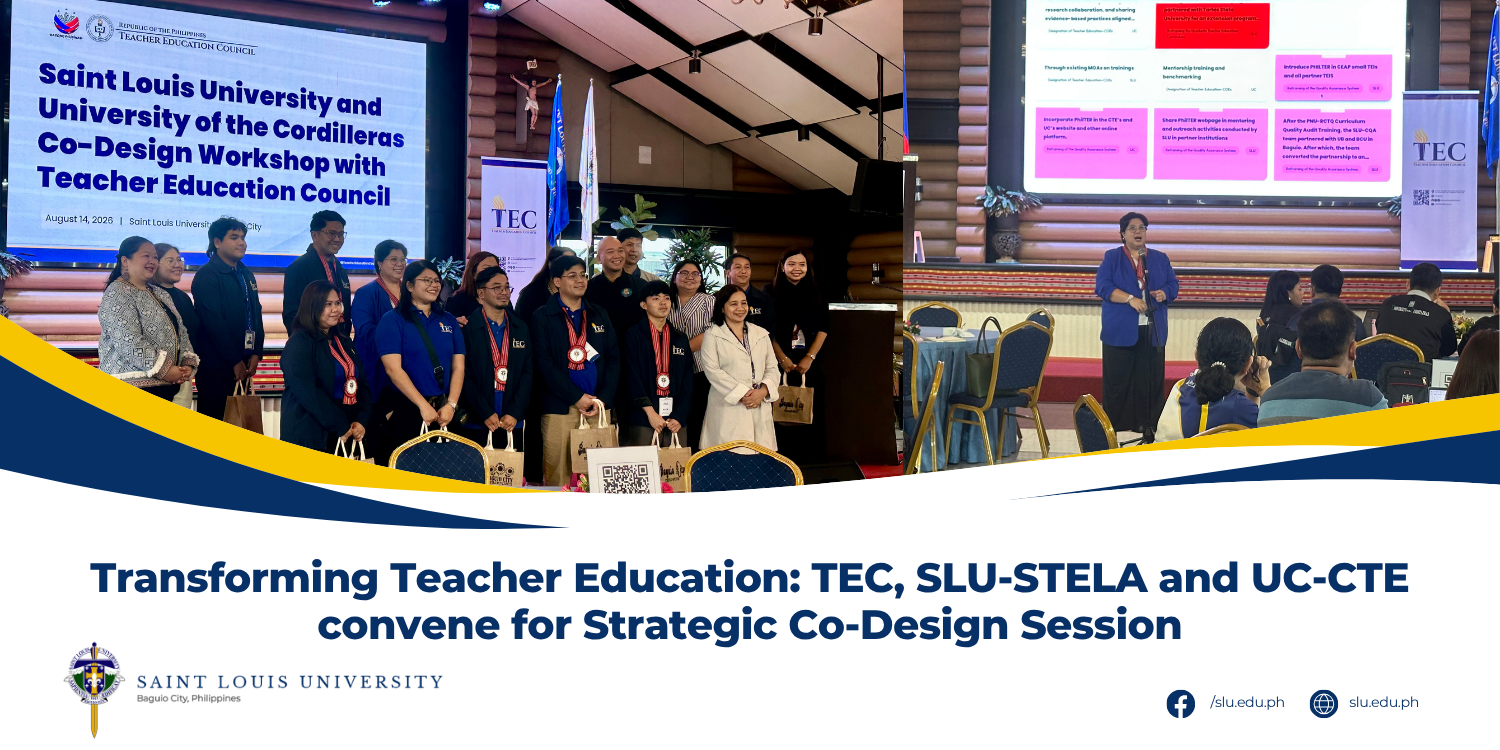
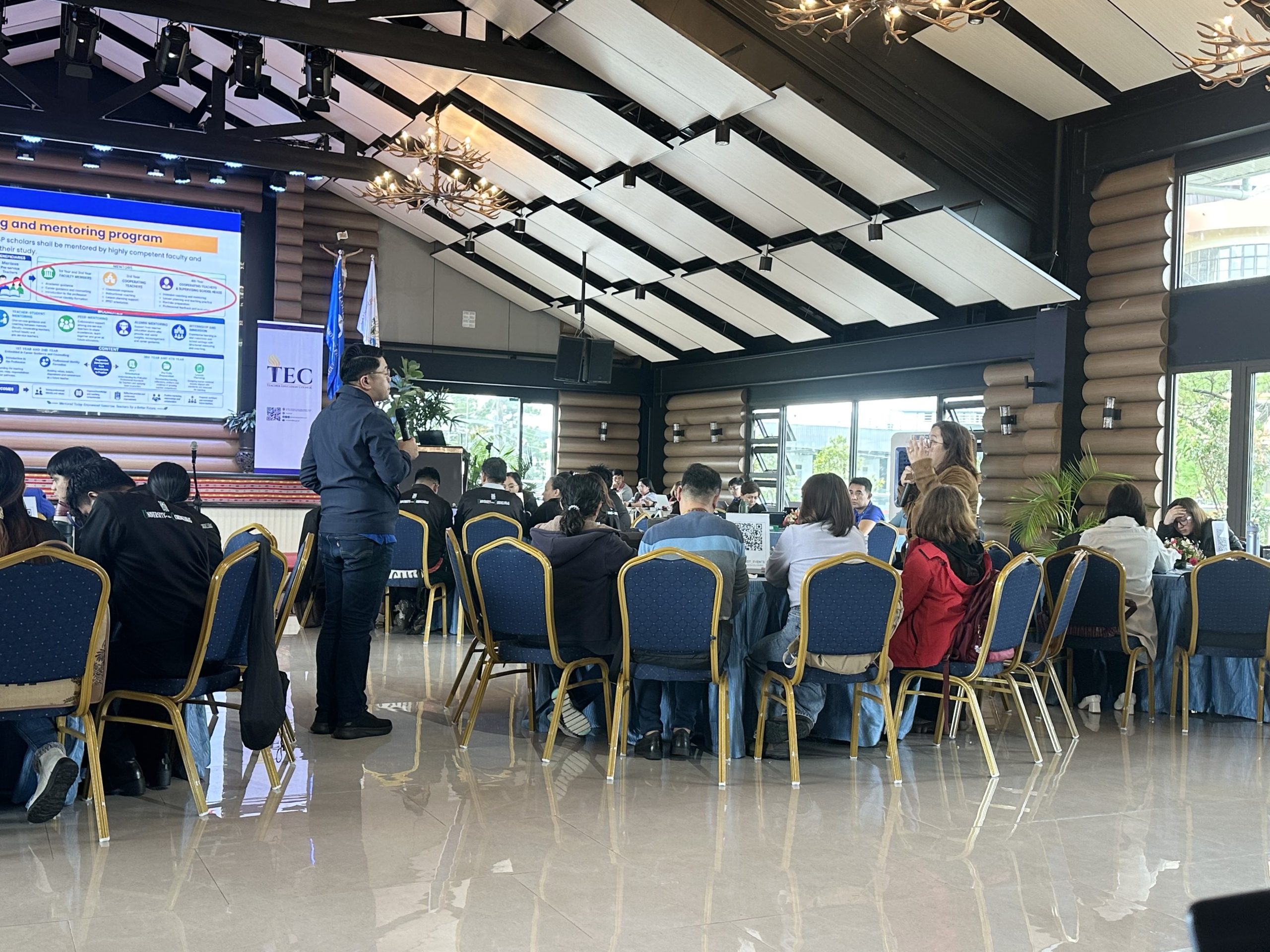
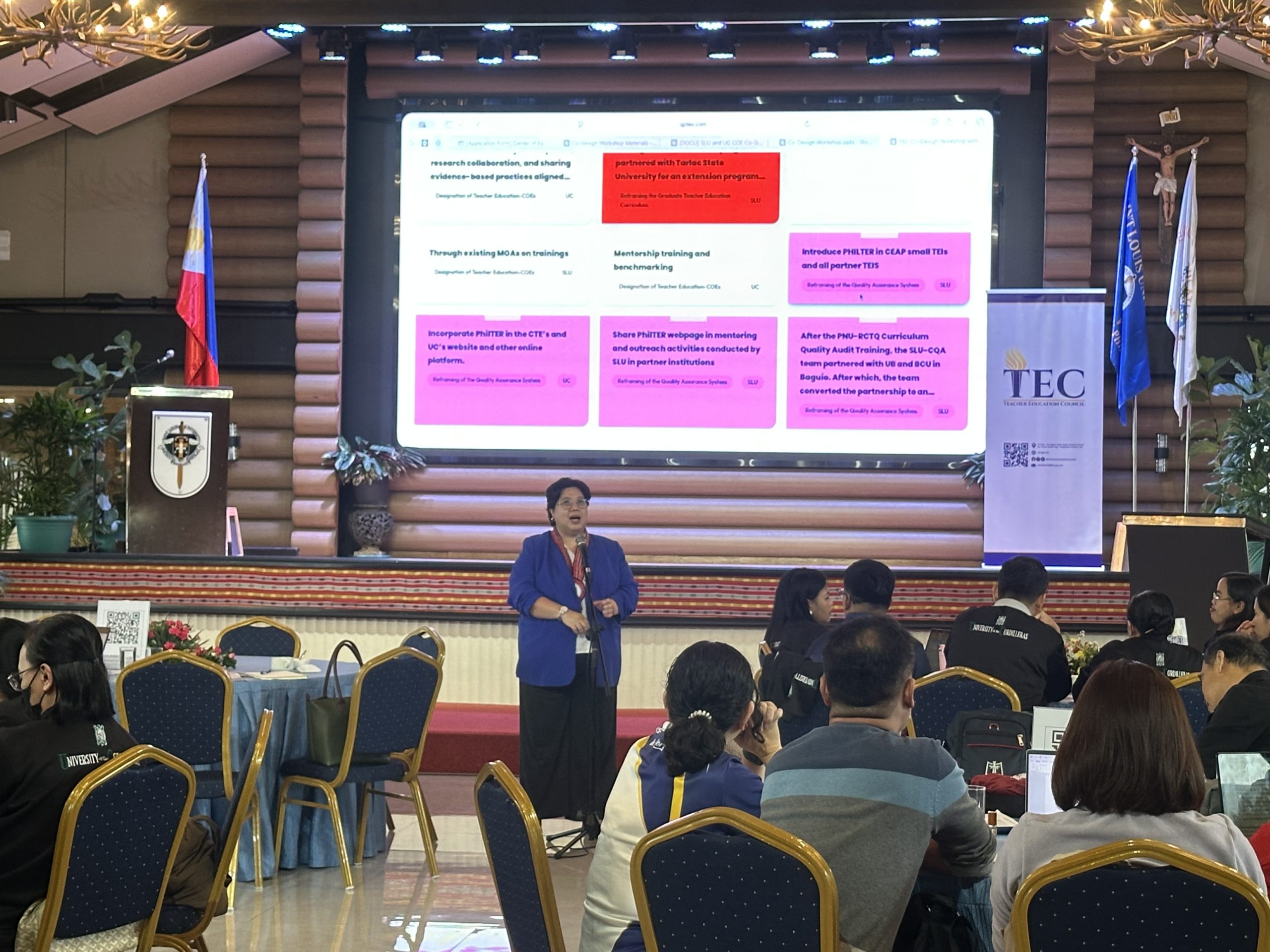
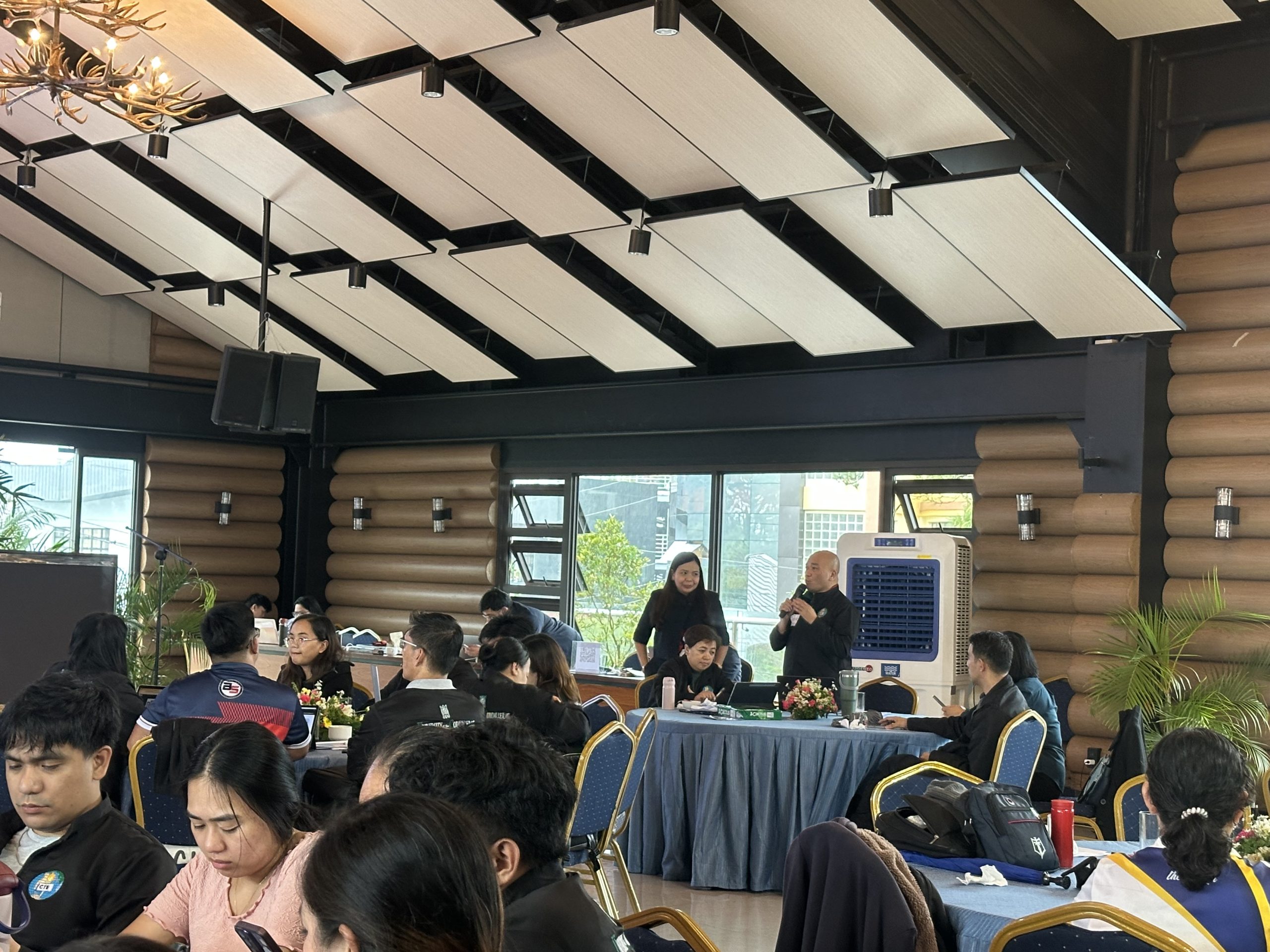
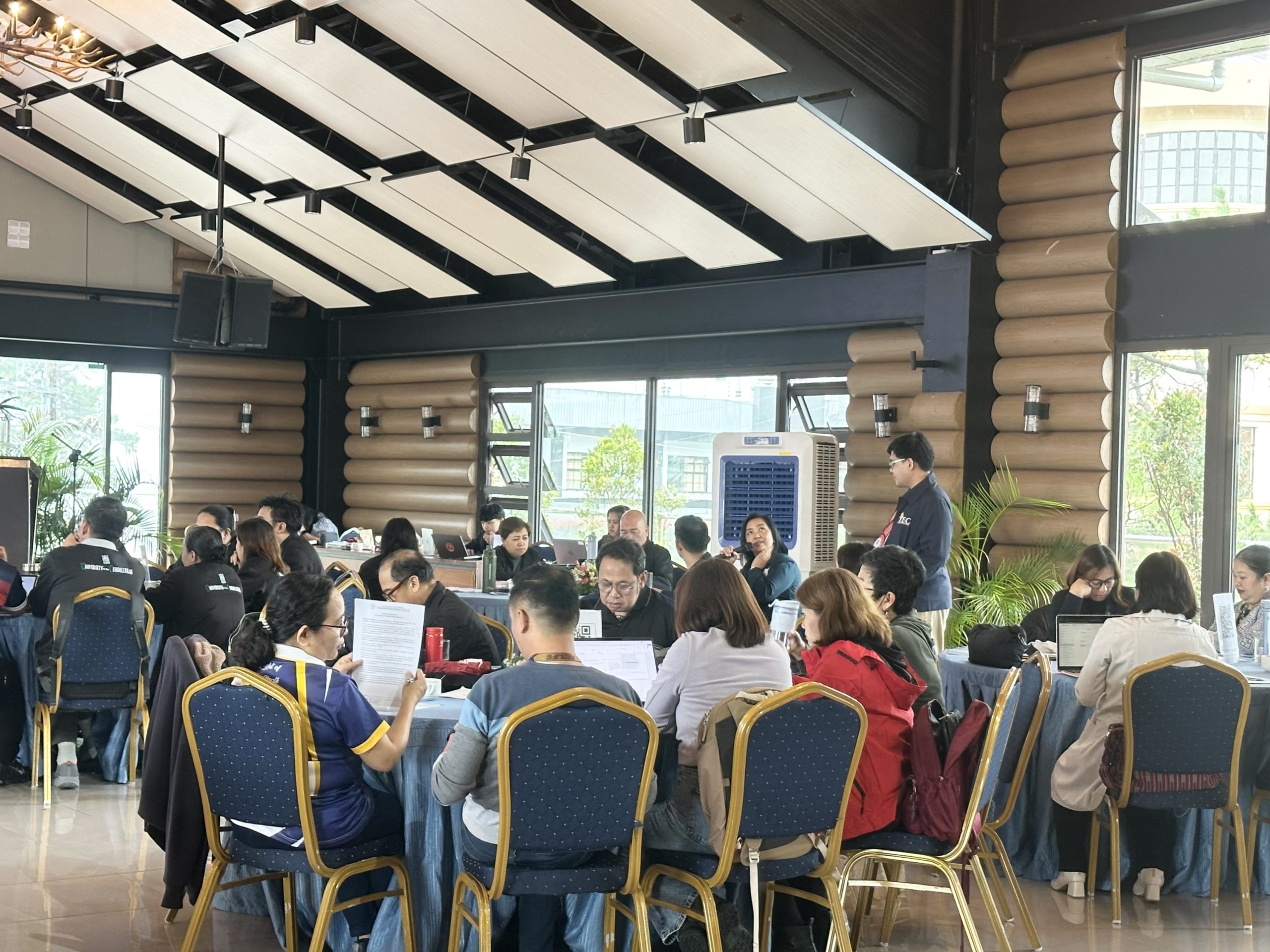
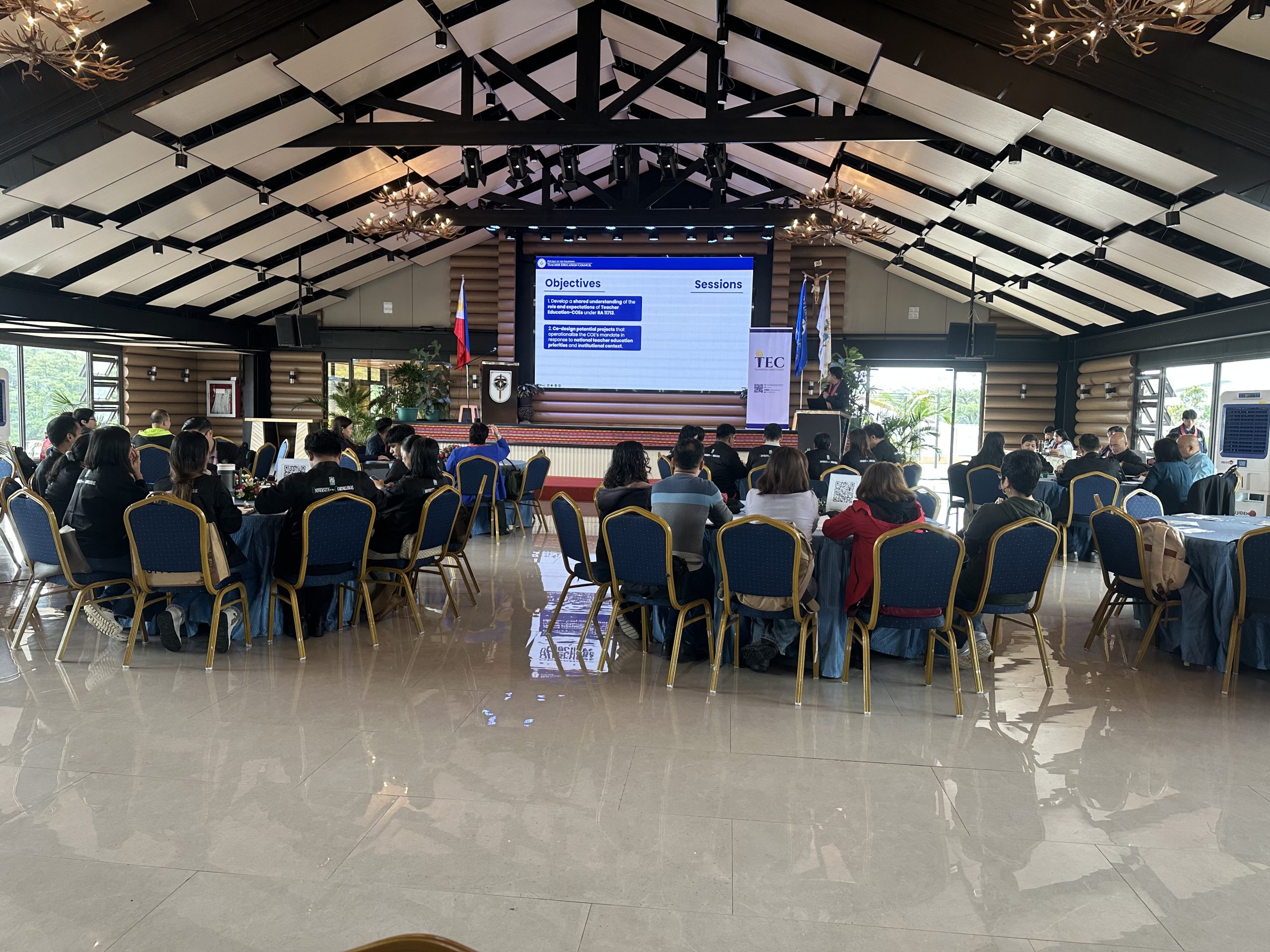
Representatives from the Teacher Education Council (TEC), Saint Louis University–School of Teacher Education and Liberal Arts (SLU-STELA), and the University of the Cordilleras–College of Teacher Education (UC-CTE) convened at SLU’s Fr. Theophile Verbist, CICM Hall on 14 August 2026 for a Strategic Co-design Session aimed at redefining the landscape of teacher education.
The gathering brought together TEC Executive Director Jennie V. Jocson, PhD; SLU-STELA Dean Mary Pauline E. Namoca, PhD, along with Bernadette L. Soliba, PhD, Head of the Professional Education Department, and Dennis M. Daw-as, PhD, Head of the Physical Education Department; and UC-CTE Dean Ramir S. Austria, PhD.
The session highlighted that designated Centers of Excellence (COEs) bear a systemic responsibility and accountability for driving regional and national educational reform. Bearing the COE badge, SLU and UC teacher education departments are expected to deliver quality and innovative teacher education programs, conduct responsive and collaborative research, develop curricular and instructional resources, provide mentoring and technical assistance to other Teacher Education Institutions (TEIs), strengthen regional and national networks, support quality assurance and accreditation, and develop programs that respond to teacher workforce needs.
Alignment with the 2035 Teacher Education Road Map
The discussions directly aligned with the 2035 Teacher Education Road Map, a ten-year strategic framework designed to resolve teacher shortages, qualification mismatches, specialization and workforce requirements, teacher preparation gaps, and transition from pre-service to professional practice. Grounded in four primary pillars (building an enabling teacher education ecosystem, strengthening pre-service education, supporting career-long professional development, and advancing internationalization), the roadmap encourages COEs to leverage workforce data to target critical fields such as Early Childhood Education, functional literacy, inclusive education, Senior High School pathways, teacher supply and deployment, equity and access, professional development, curriculum innovation, research, and policy development.

Reframed Teacher Education Curriculum, Alternative Pathways, and Workforce Responsiveness
In light of the Reframed Teacher Education Curriculum, the TEC stated that curriculum guides are already available, with full implementation pending the release of the Policies, Standards, and Guidelines (PSG). The TEC also articulated that the new curriculum is context-driven, content-intensive, outcome-based, transformative, and technology-supported. Consequently, COEs were encouraged to familiarize themselves with the documents and start preparing for its full implementation.
To directly address regional workforce needs, the TEC urged SLU and UC to coordinate program offerings to minimize duplication. Strategic arrangements presented include dual diploma programs, double-logo degrees, joint delivery, and partnerships with other TEIs. Alternative pathways, such as developing diploma and certificate tracks that recognize existing qualifications or competencies and examining mechanisms for prior learning and TESDA qualifications, can be developed to expand entry routes into the teaching profession and modernize professional upskilling. Crucially, these alternative routes can directly address supply gaps in high-priority disciplines, such as Early Childhood Education (BECEd), Special Needs Education (BSNEd), and Values Education.
Scholarship, Research, Quality Assurance, and TEI Profiling
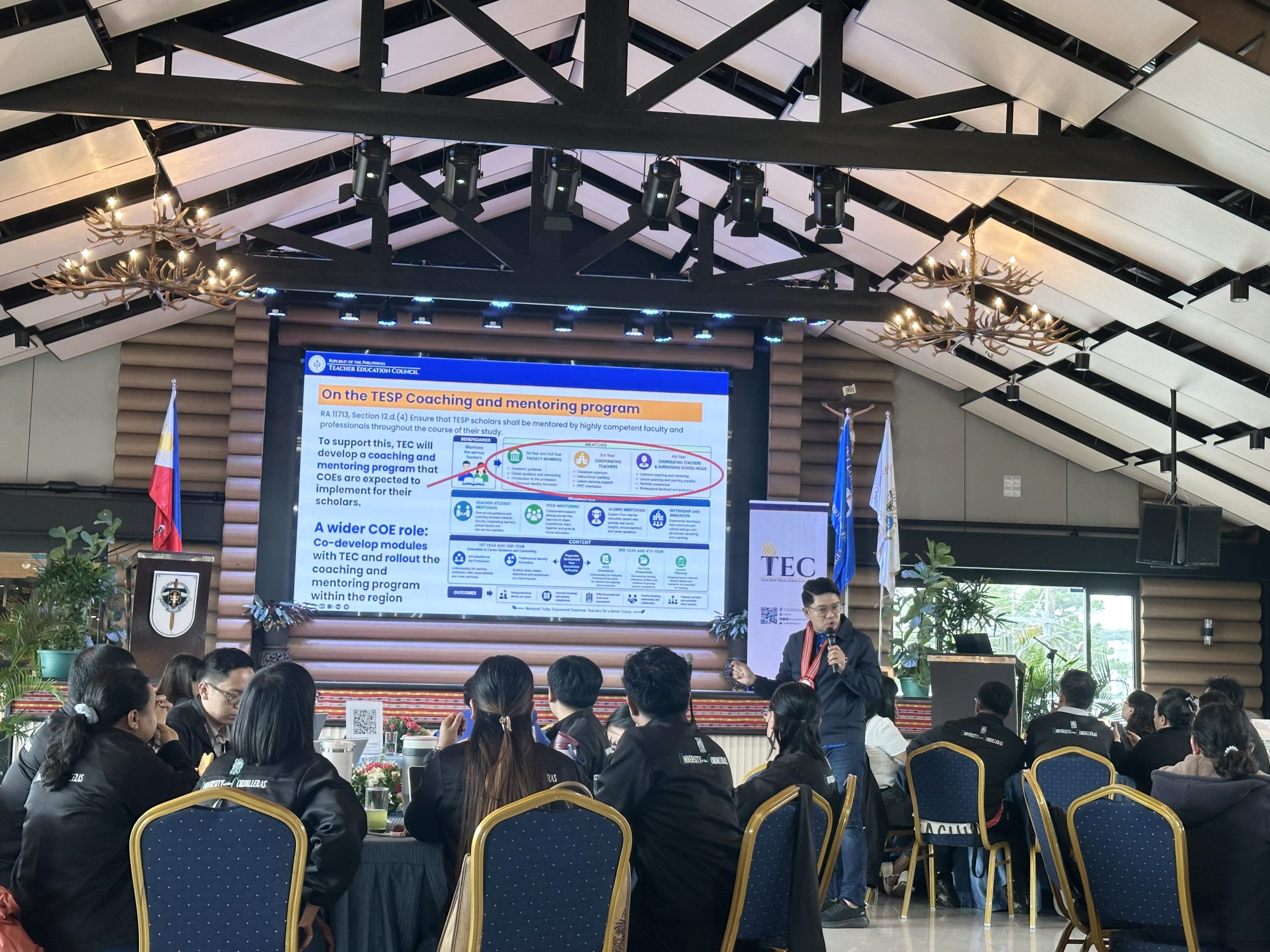
To address teacher workforce needs, SLU and UC should support the Teacher Education Scholarship Program (TESP). Beyond recruitment, these institutions are expected to provide structured mentorship and academic tracking for scholars bound by return-service agreements in basic education. Indicative annual support for private institution scholars is estimated at ₱260,000–₱300,000, pending final guidelines.
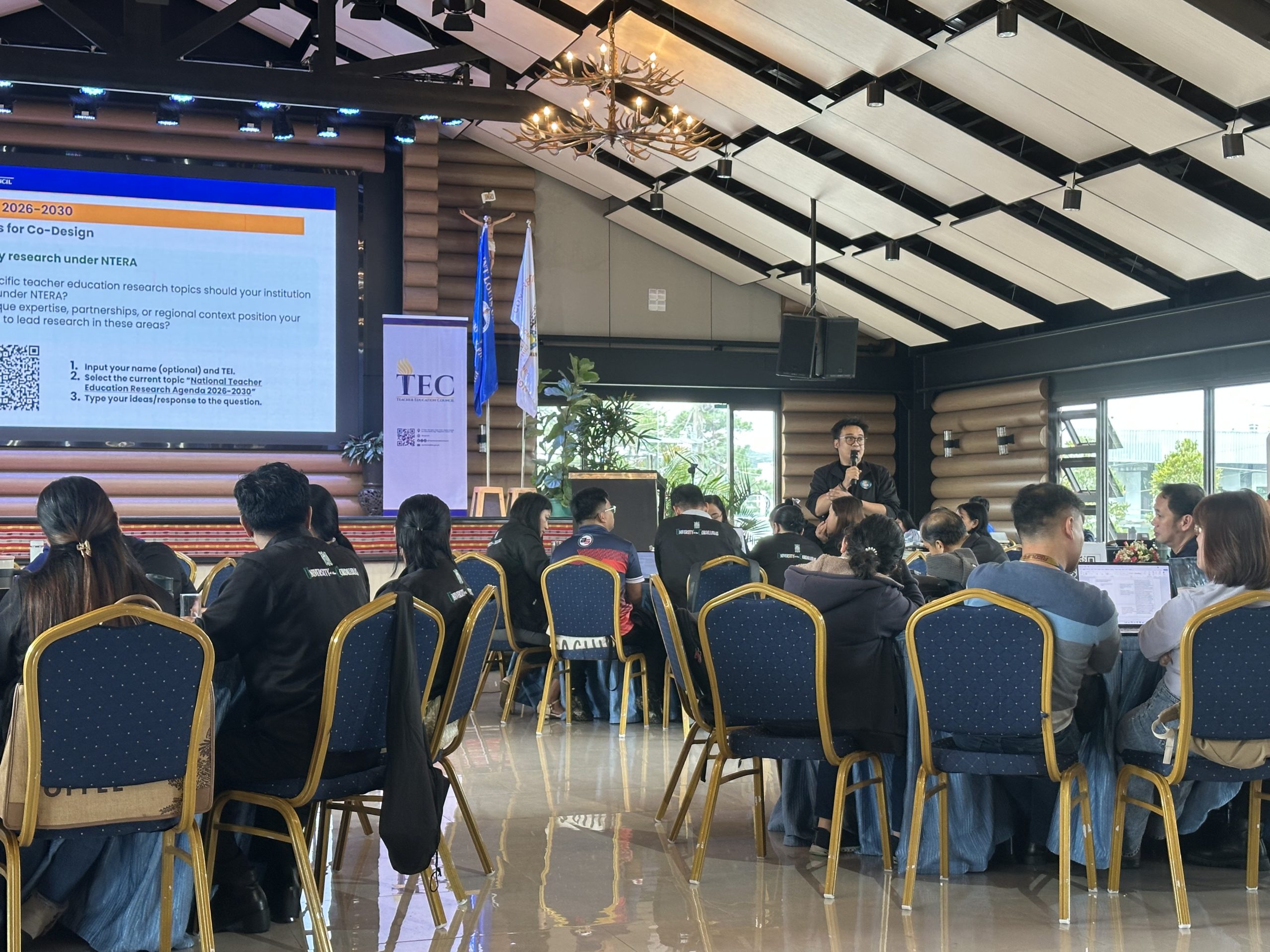
As research is a core responsibility of COEs, both institutions were tasked with aligning their institutional priorities with the National Teacher Education Research Agenda (NTERA) 2026–2030. Key areas include governance, equity, inclusive and context-responsive education, transformative teacher education, digital health and wellbeing, and life and climate resilience. Moreover, both institutions were encouraged to build on the Research in Teacher Education (RITE) outputs and prepare for RITE 3 in 2027 by institutionalizing graduate tracer studies.
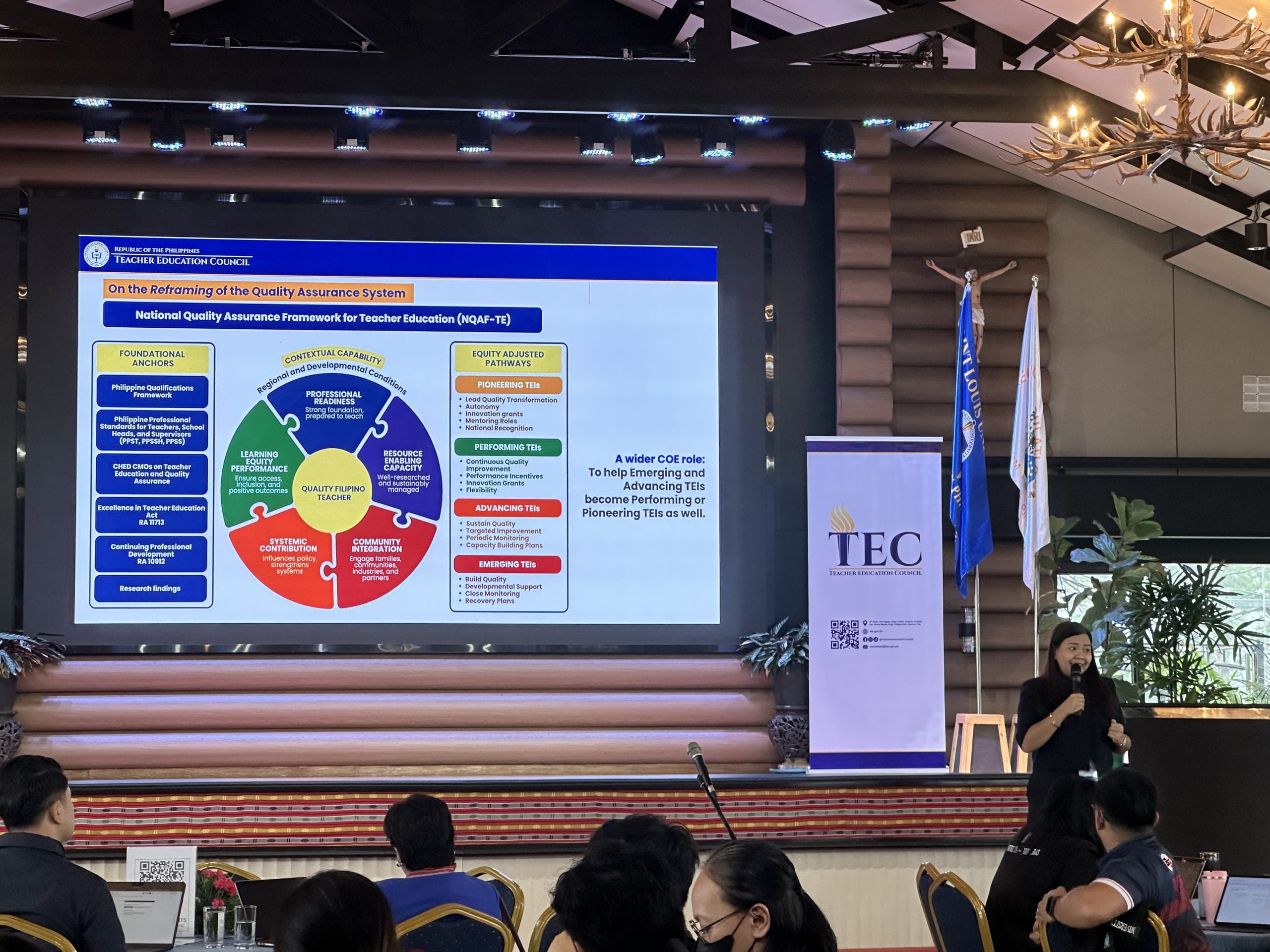
Regarding quality assurance, the TEC introduced its Reframed Quality Assurance Framework, anchored on learner equity performance, resource-enabling capacity, community integration, and systemic contribution. Additionally, an immediate concern for 2026 is achieving comprehensive TEI profiling in the Cordillera Administrative Region (CAR) to validate operational institutions and feed into the National Teacher Education Registry.
Regional Networks, Partnerships, and Replicable Practices
The TEC emphasized that COEs must leverage existing partnerships and linkages to drive systemic improvements across the education sector. Identified areas for collaboration include joint research, curriculum development, student and faculty mobility, capacity building, quality assurance, community engagement, and disaster-response initiatives. Institutional practices were also identified as potential models; however, the TEC cautioned against hastily labeling these innovations as “best practices.” COEs were encouraged to thoroughly document and back their successful programs with evidence, packaging them into clear, scalable models for adaptation.

Funding Support from the TEC
To champion these educational reforms, the TEC announced financial support for the COEs, with potential additional funding based on proposed initiatives and requirements. In light of this, COEs were urged to utilize the funding strategically and create project proposals that clearly identify an educational problem, demonstrate strategic alignment, produce measurable outputs, ensure long-term sustainability, show potential for replicability, contribute to the region, and align with national teacher education priorities.
Aligned with United Nations Sustainable Development Goals 4 (Quality Education) and 17 (Partnerships for the Goals), the co-design session concluded with a clear consensus: the COE designation is more than a badge of honor; it carries a mandate to transform the teacher education system. To truly serve as regional COEs, SLU and UC are charged with acting as resource institutions, research hubs, innovators, mentors, and partners to drive a systemic, evidence-based, and sustainable educational landscape. (Article by Ruth B. Payaket and Johnell B. Desalit | Photos by STELA)