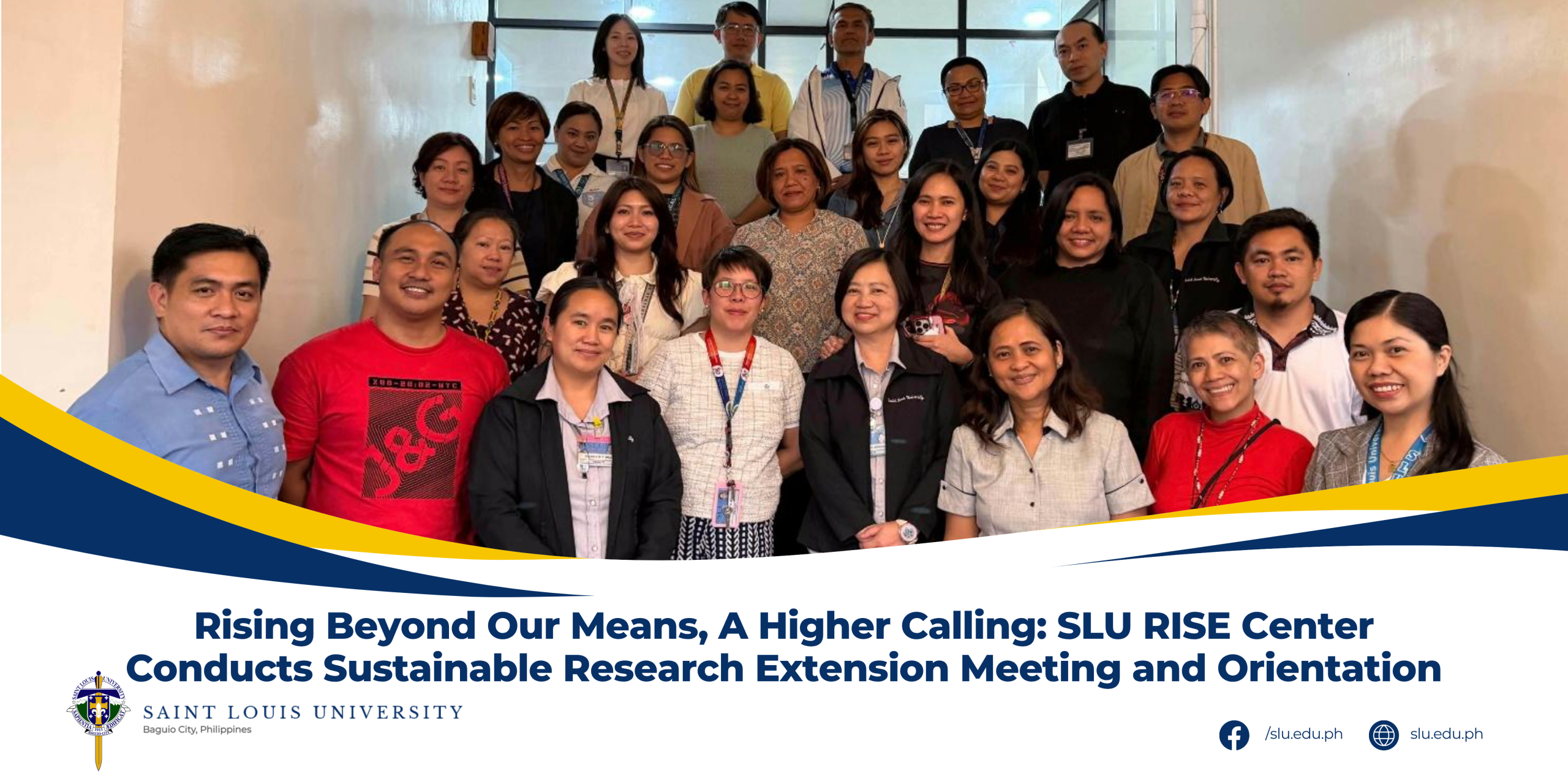
In fostering transformation rooted in missionary spirit to benefit communities, the Sustainable Research Extension Unit of the Saint Louis University (SLU) Research, Innovation, and Sustainable Extension (RISE) Center opened a Needs Assessment cycle across its departments through its first meeting and orientation for the Academic Year 2026-2027 on 14 September 2026 at the American Corner, Msgr. Charles Vath Library Building, SLU Main Campus.
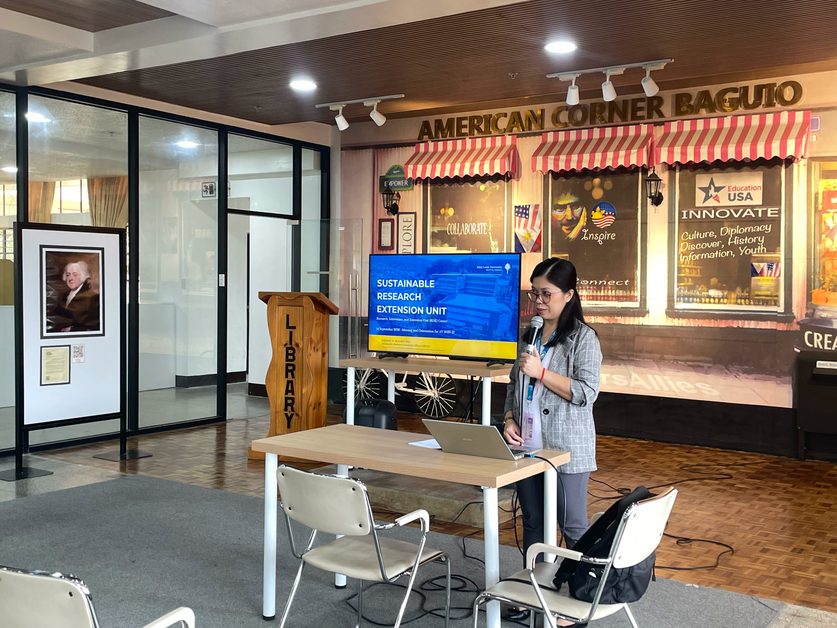
In collaboration with current Extension Program Coordinators (EPCs) and lead faculty, the meeting brought together faculty representatives from each department and school to prepare for the upcoming needs assessment and impact assessment cycle. The session was facilitated by Jeramie Molino, PhD, Sustainable Research Extension Officer, who set the tone for the semester’s extension work ahead.
Starting with Gratitude and Reflection
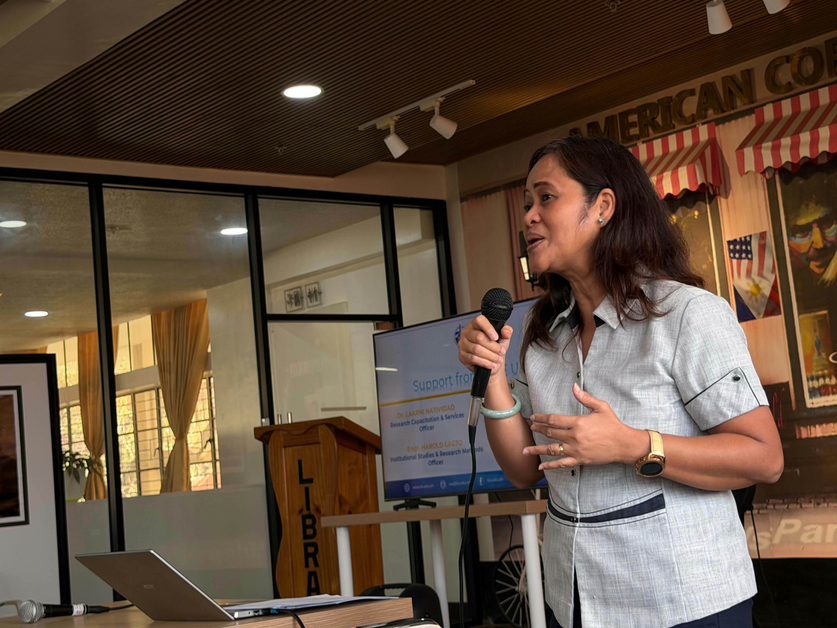
The gathering officially began with a prayer led by Richel Lamadrid, DAES, RISE Director, expressing gratitude and reflection. In her opening remarks, she thanked the participants for their attendance and drew inspiration from the “Parable of the Talents,” citing Matthew 25:21.
She reminded the EPCs that their commitment to extension work transcends institutional compliance or the fulfillment of professional duties. “Being an EPC sets us apart,” she said, “because we are called to use our God-given time, resources, and skills to uplift others. Burying our talents leads to stagnation, but investing them creates a ripple effect of growth and lasting impact.”
Her message emphasized that extension work is not merely a responsibility but a higher calling to serve humanity, a mission rooted in faith, stewardship, and purpose.
Welcome and Recognition of Faculty
The RISE Center welcomed and honored the Extension Program Coordinators, Lead Faculty for Needs Assessment, and RISE Officers who are advancing the University’s extension mission. Teams currently conducting Impact Assessments from the School of Teacher Education and Liberal Arts (STELA), School of Engineering and Architecture (SEA), and School of Nursing, Allied Health, and Biological Sciences (SONAHBS) were recognized, with completion expected by October 2026 and final reports due by November.
Departments in their final, second, or third year of implementation were also acknowledged, along with new initiators from SEA Architecture and faculty who are beginning Needs Assessments this September.
The session also introduced the RISE Officers who continue to guide these efforts: Laarni Natividad, PhD (Research Capacitation and Services), Engr. Harold Lagto (Institutional Studies and Methods), Engr. Melissa Boado (Innovation and Tech Transfer), and Rainier Moreno, PhD (Research Ethics Committee Chair).
This spirit of dedication and forward planning set the stage for the next part of the program, where the University’s broader vision for extension work was shared.
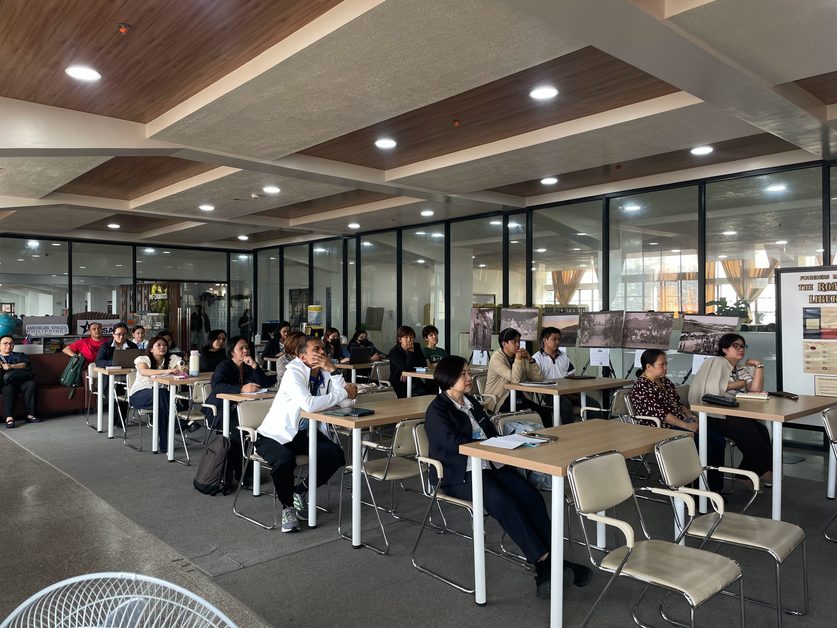
Hearing Words of Wisdom
Vice President for Academic Affairs, Felina P. Espique, PhD delivered the University’s expectations for the next five years as conveyed by University President Rev. Fr. Gilbert Sales, CICM, PhD through her message read by Dr. Molino. The message emphasized the vision to strengthen the CICM Missionary DNA of SLU calling on every school to design and implement attainable extension programs that address real societal challenges.
He highlighted how each unit can contribute according to its strengths: SEA can build resilient communities; the School of Medicine (SOM) and SONAHBS can address community health; the SLU Sacred Heart Medical Center (SLU SHMC) can advance cutting-edge healthcare; STELA can strengthen foundational literacy and support indigenous and vulnerable communities through its social sciences programs; the School of Law (SOL) can enhance access to justice; and the School of Accountancy, Management, Computing, and Information Studies (SAMCIS) can lead in artificial intelligence, digital inclusion, and inclusive entrepreneurship.
The President’s message reaffirmed the University’s commitment to missionary service and continuous investment in innovation, impacting one community after another.
RISE and Extension Milestones
The session spotlighted how extension work sparks partnerships, research, and real-world impact across departments and schools. Building on this momentum, Needs Assessments from Dalupirip, Pinsao National High School, Lourdes Extension, and Sitio Toplac revealed clear community needs—and ready collaborators across disciplines. At the same time, Impact Assessment teams from different schools are now working on data gathering and planning for research and publication.
A key milestone in this journey was the ECE Department’s paper presentation held in June 2026, showcasing the fruits of their extension work, while the published research by Industrial Engineering undergraduates demonstrated how extension can inspire scholarly output. Complementing these achievements, an extension-inspired innovation portfolio further demonstrated that extension can drive research, publications, and innovation.
Paperwork to Progress
Dr. Molino continued the meeting by guiding participants through the forms, templates, and requirements essential for their extension programs. This segment covered the key documents EPCs need to accomplish, from Needs Assessment and proposal drafting to implementation, monitoring, impact assessment, reporting, research, and publication. Dr. Molino emphasized that these forms are more than paperwork; they serve as tools for accountability, documentation, and tracking progress.
A key highlight was the Rapid Rural Appraisal, which coordinators are encouraged to bring back to their communities, sharing results with residents to prioritize and communicate needs effectively. Dr. Molino also assured participants that the RISE Center will serve as their mentor and advisor throughout the process. This reflects RISE’s commitment to rigorous protocols that ensure smooth implementation, accountability, and meaningful community impact.
Roles Meet Responsibilities
Dr. Molino outlined the responsibilities of EPCs, who lead their department’s initiatives and build small teams to carry them out. EPCs assign tasks and monitor members’ progress and attendance. She stressed that well-documented extension projects are essential for accreditation, as they streamline the review process. Dr. Lamadrid then added further insights on planning, ethics clearance, and the institutional support needed to sustain each school’s extension program.
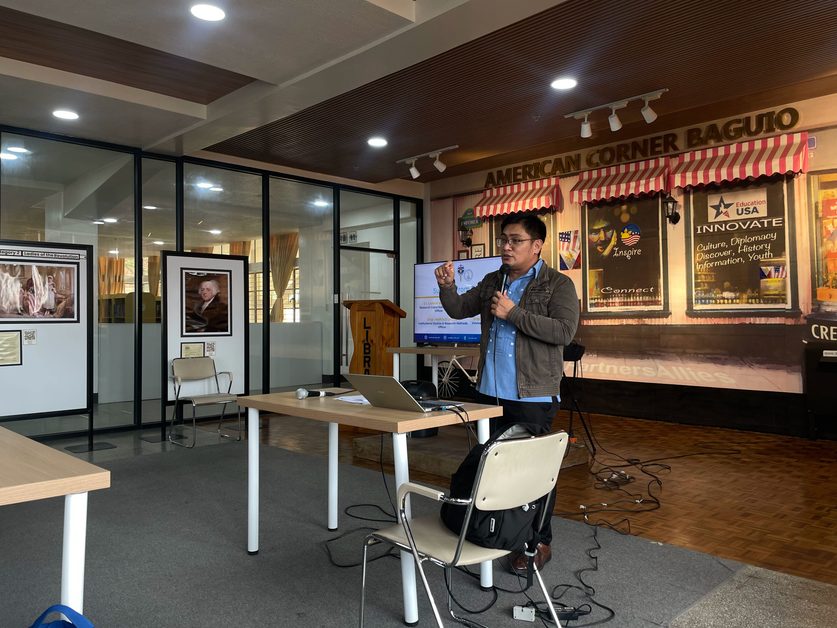
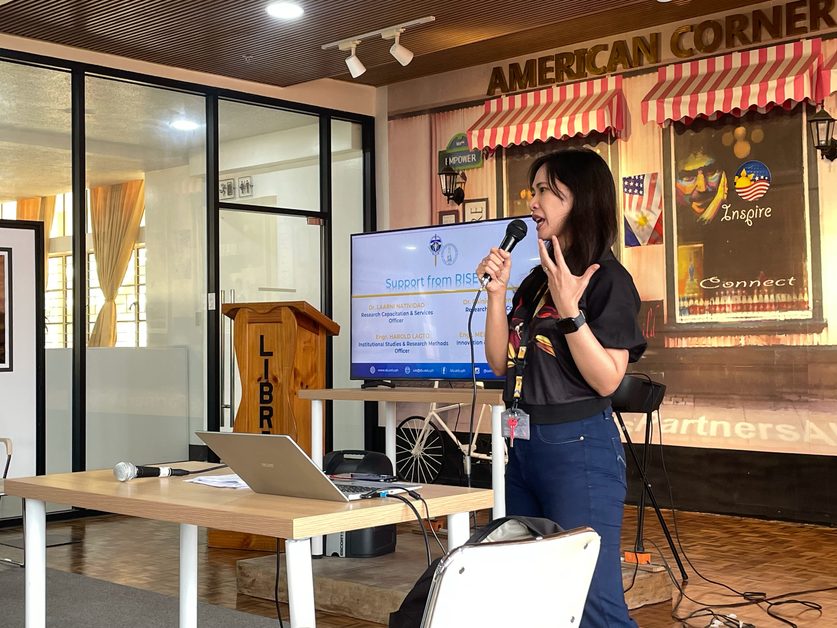
Building on this, officers from the center’s various units outlined how their work connects directly to extension. Dr. Moreno-Lacalle opened by highlighting how the REC works closely with Extension to ensure every program meets ethical standards. Following this, Dr. Natividad detailed how the Research Capacitation and Services unit partners with Extension and helps identify grant opportunities suited to ongoing research, a critical funding link for extension-based projects.
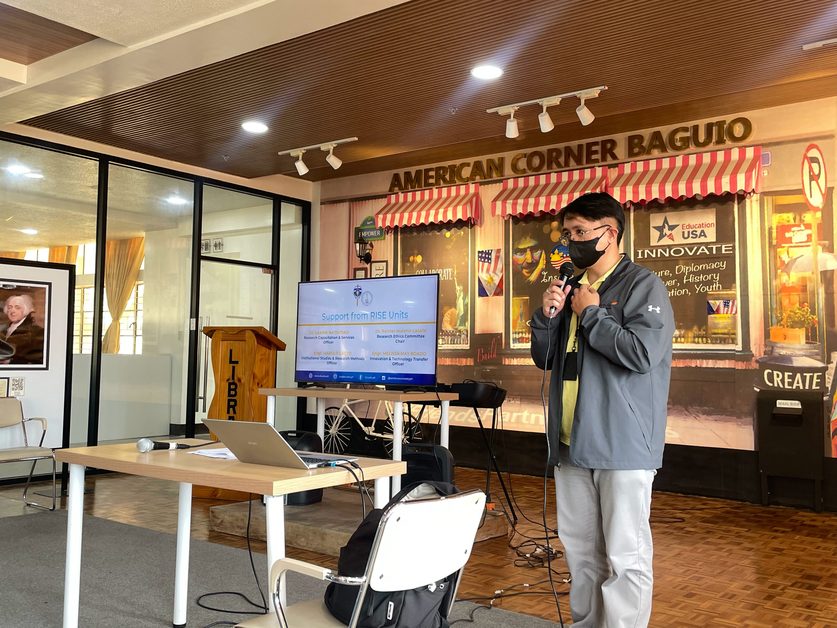
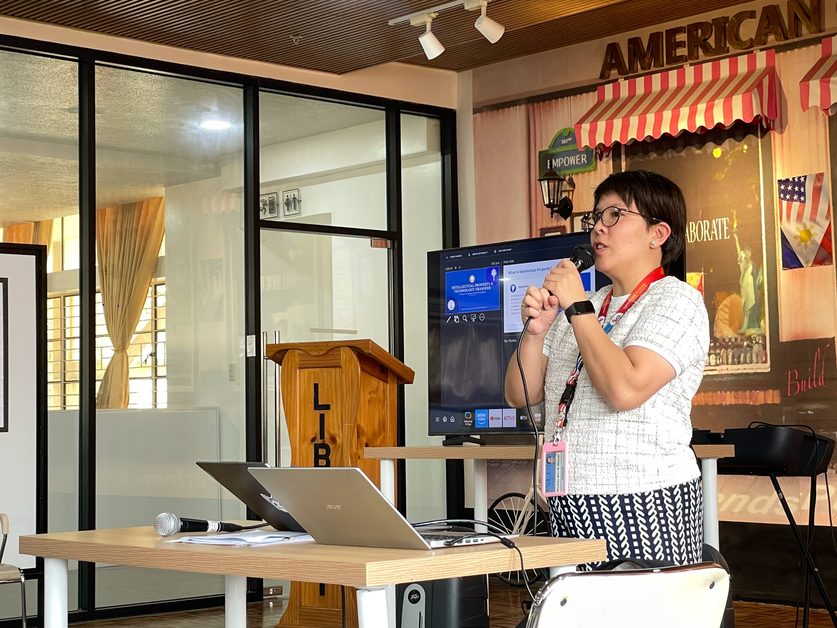
Turning to research design, Engr. Lagto, Institutional Studies and Methods Officer, presented the Research Methods and Institutional Studies unit’s services, underscoring content-validity tools as essential to sound extension research. Rounding off the discussion, Engr. Boado, Innovations and Technology Transfer Officer, discussed the Innovations and Technology Transfer unit’s role in protecting intellectual property and enabling technology transfer from extension outputs.
Knowledge of Experience
Nearing the end of the meeting, several EPCs took the floor to share the best practices they’ve developed through their community extension work, offering firsthand lessons that reveal just how central their coordination role is to making extension succeed on the ground. Engr. Geraldine Nerona, EPC of the Industrial Engineering Department, SEA, drew on her experience as a coordinator since 2019 to share that no implementation is ever perfect, especially once a project moves outside the university, making it essential to build strong, lasting community connections that carry a project through its rough patches.
Echoing this ground-level focus, Ma’am Lorraine Cerezo, EPC of the Psychology Department, STELA, offered a best practice of her own: developing a proposal means developing its tools in tandem, and coordinators must learn to assess their programs from an outside perspective. She added that sustaining this practice requires coordinators to draw on six domains of knowledge and skill, namely mindfulness, stress, distress tolerance, mental health, and knowledge.
Turning to partnership-building, Rocillyn William, PhD, EPC of the Biology Department, SONAHBS, named communication within the team and with partners as her core best practice, noting that partners are not just partners, but people from whom the team learns as it also teaches, with the shared goal of eventual independence rather than simply finishing a project.
In a similar vein, Ms. Ma. Araceli Tambol, Lead Faculty for Needs Assessment and Impact Assessment for the Benguet Coffee Project 2.0, SAMCIS, also shared best practices and updates on the team’s preparations to welcome partners from Japan this coming November.
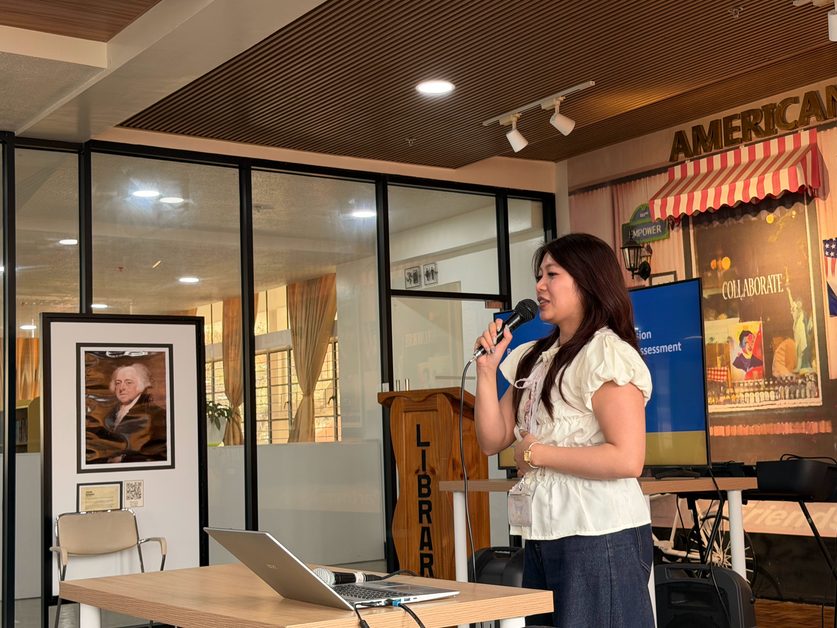
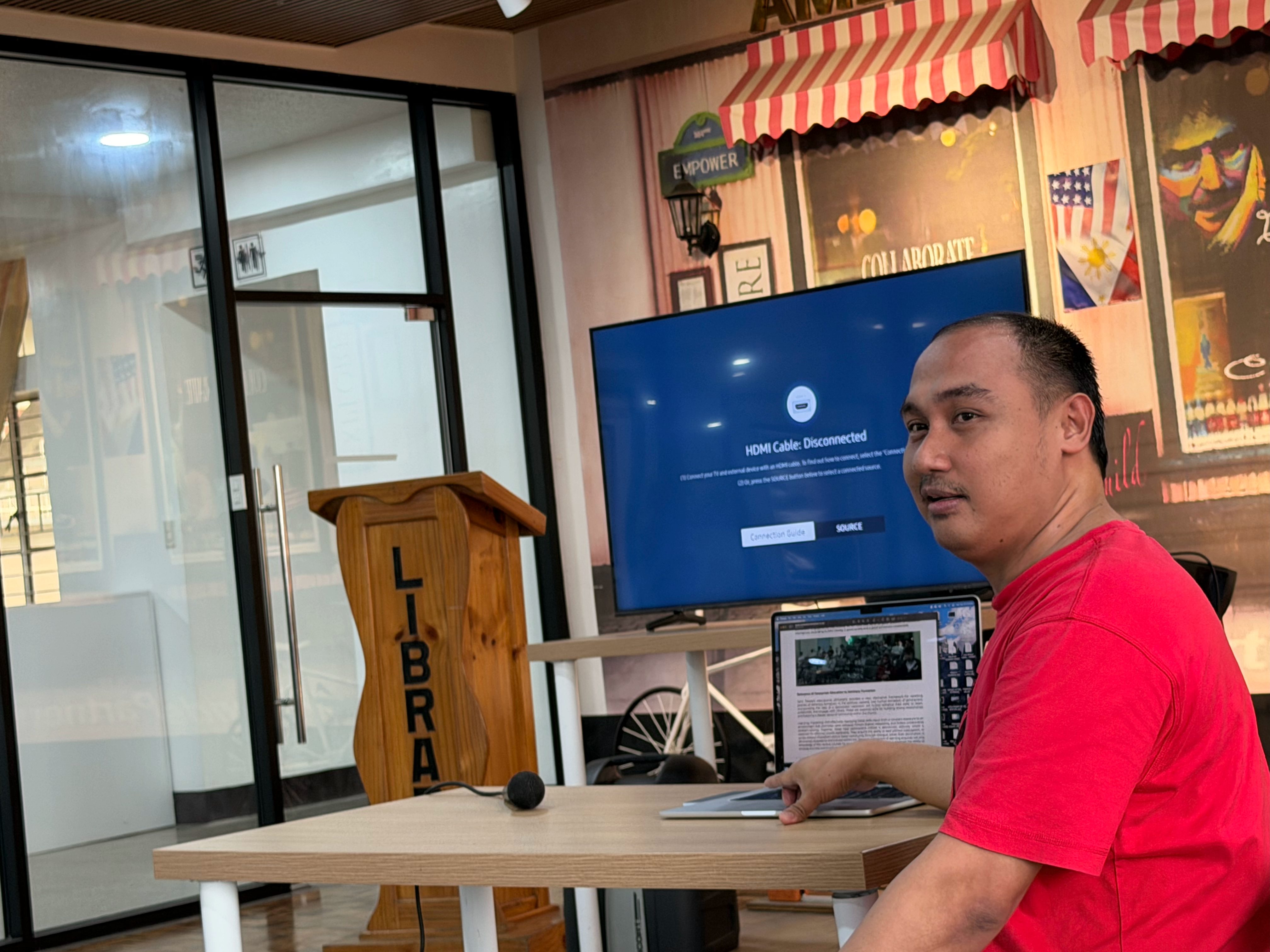
Closing the sharing, Mr. Nikky Garo, EPC of the Philosophy Department, STELA, underscored documentation as a best practice in itself, presenting a photobook from their most recent project as evidence that their EPCs aim not only for publication, but for innovation as well.
Across these discourses, a common thread emerged: sustainable extension work is built not on any single skill, but on a blend of practices, community trust, thoughtful proposal design, open communication, resilience amid paperwork, and consistent documentation, each reinforcing the other to carry a project from initial planning to lasting community impact.
A Call Carried Forward
The meeting and orientation reaffirmed what extension work at SLU is meant to be: talents invested for transformation, not paperwork completed for compliance. Identifying a problem is not enough; extension work must lead to action. Needs and Impact Assessments should translate into evidence-based responses that guide teachers, strengthen student support, address community needs, and inform decision-makers.
Taken as a whole, the RISE Center’s initiatives align with several UN Sustainable Development Goals, most notably SDG 1 (No Poverty), SDG 3 (Good Health and Well-Being), SDG 4 (Quality Education), SDG 8 (Decent Work and Economic Growth), SDG 9 (Industry, Innovation and Infrastructure), SDG 10 (Reduced Inequalities), SDG 11 (Sustainable Cities and Communities), SDG 16 (Peace, Justice and Strong Institutions), and SDG 17 (Partnerships for the Goals).
Through its network of Extension Program Coordinators, Needs and Impact Assessments, and cross-unit collaboration among research, ethics, and innovation officers, the event affirmed extension as SLU’s mechanism for advancing these goals, turning community engagement into measurable, lasting development outcomes. (Article by Margareth Galuba, RISE Center Intern and Jeramie N. Molino | Photos by Joey Glemao, RISE Center Intern)