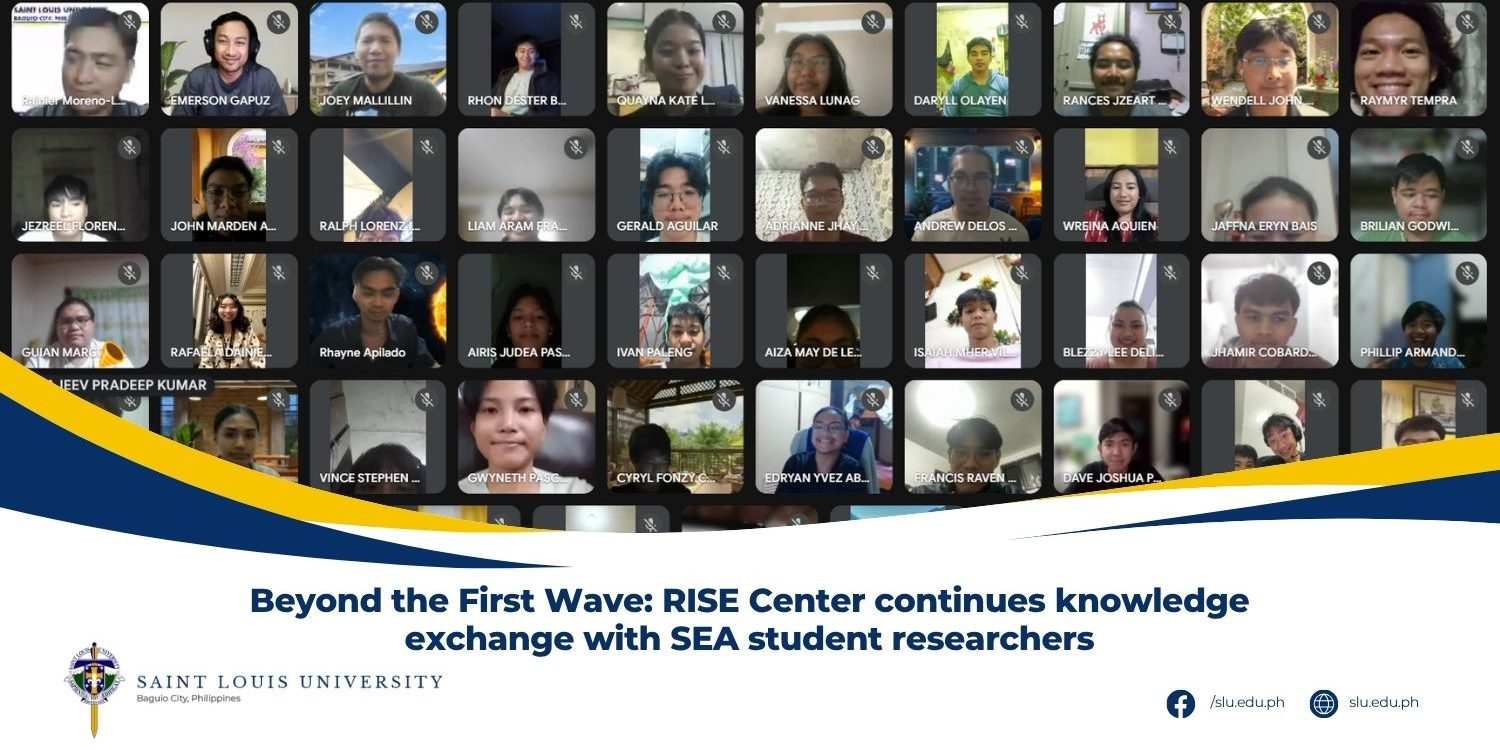
On 3 and 10 October 2026, Saint Louis University’s (SLU) Research Innovation and Sustainable Extension (RISE) Center, conducted the second and third parts of the lecture series online for student researchers from the School of Engineering and Architecture (SEA).
The second lecture was given by Engr. Harold Lagto, the Institutional Studies and Research Methods Officer on 03 October, while the third lecture was delivered by Chair of the Research Ethics Committee (REC) Rainier Moreno-Lacalle, PhD on 10 October 2026.
Both lectures were facilitated by SEA Undergraduate Research and Innovation Coordinators (UGRICs) Engr. Emerson Gapuz and Engr. Joey Mallillin.
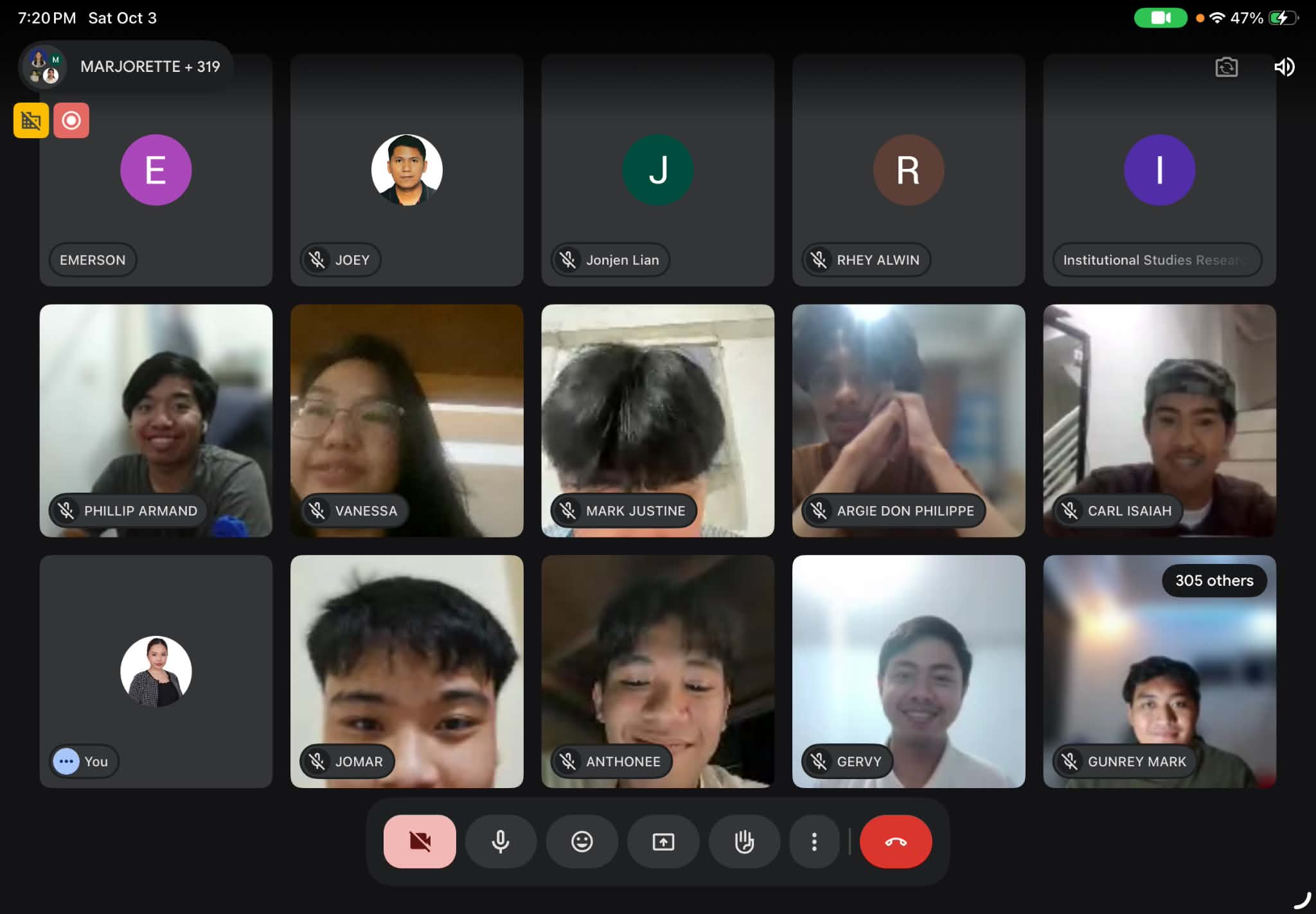
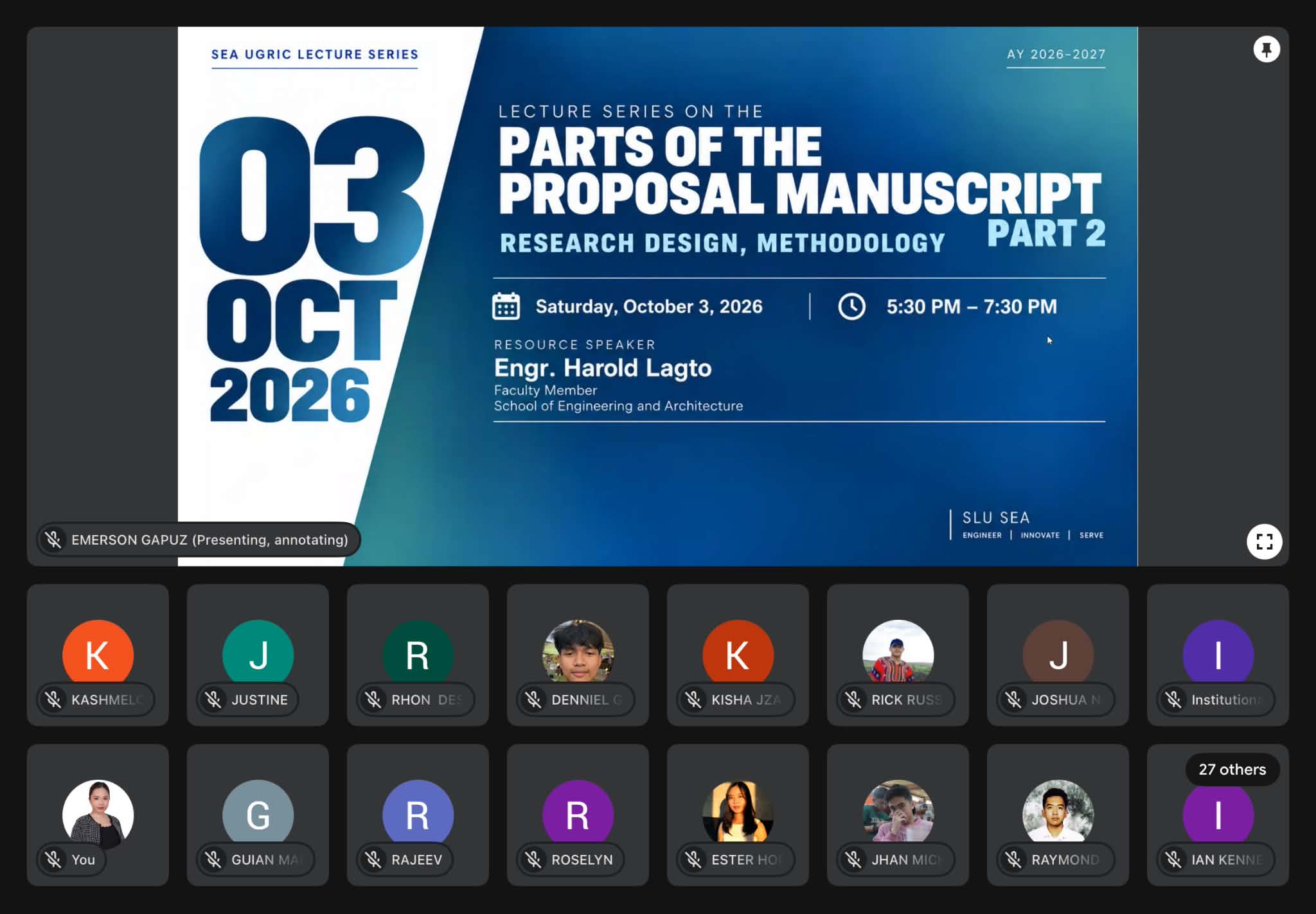
Lecture Two: 03 October
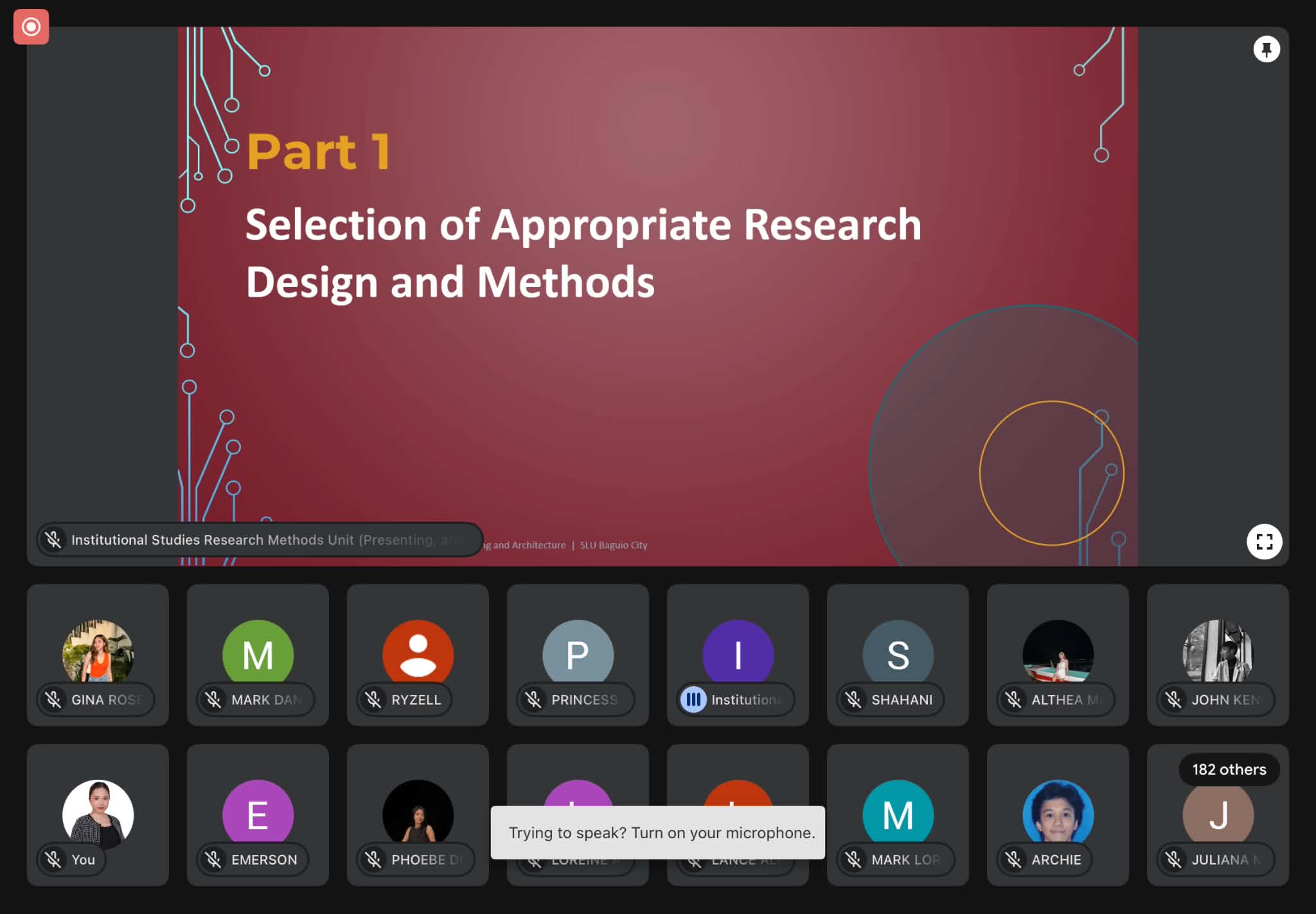
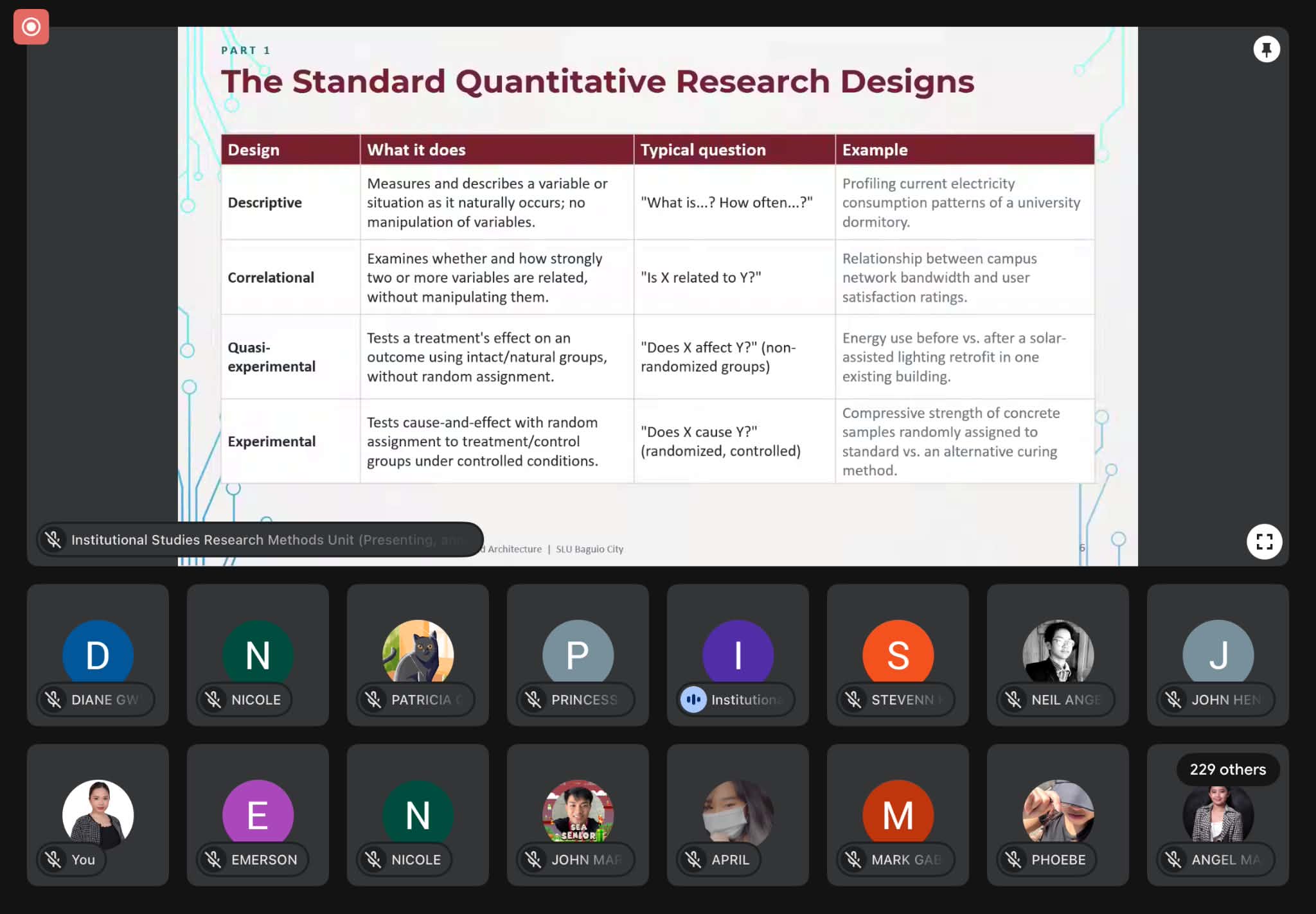
The second lecture began with “Research Design and Methodology” that aimed to enhance the writing skills of SEA student researchers. Engr. Lagto began by discussing the “Selection of Appropriate Research Design Methods” and continued on to “Research Design Family and the Design & Development Family.” The second part encompassed “Data Requirements and Sources,” specifically delving into Technical or Physical Sources and Human or Institutional Sources.
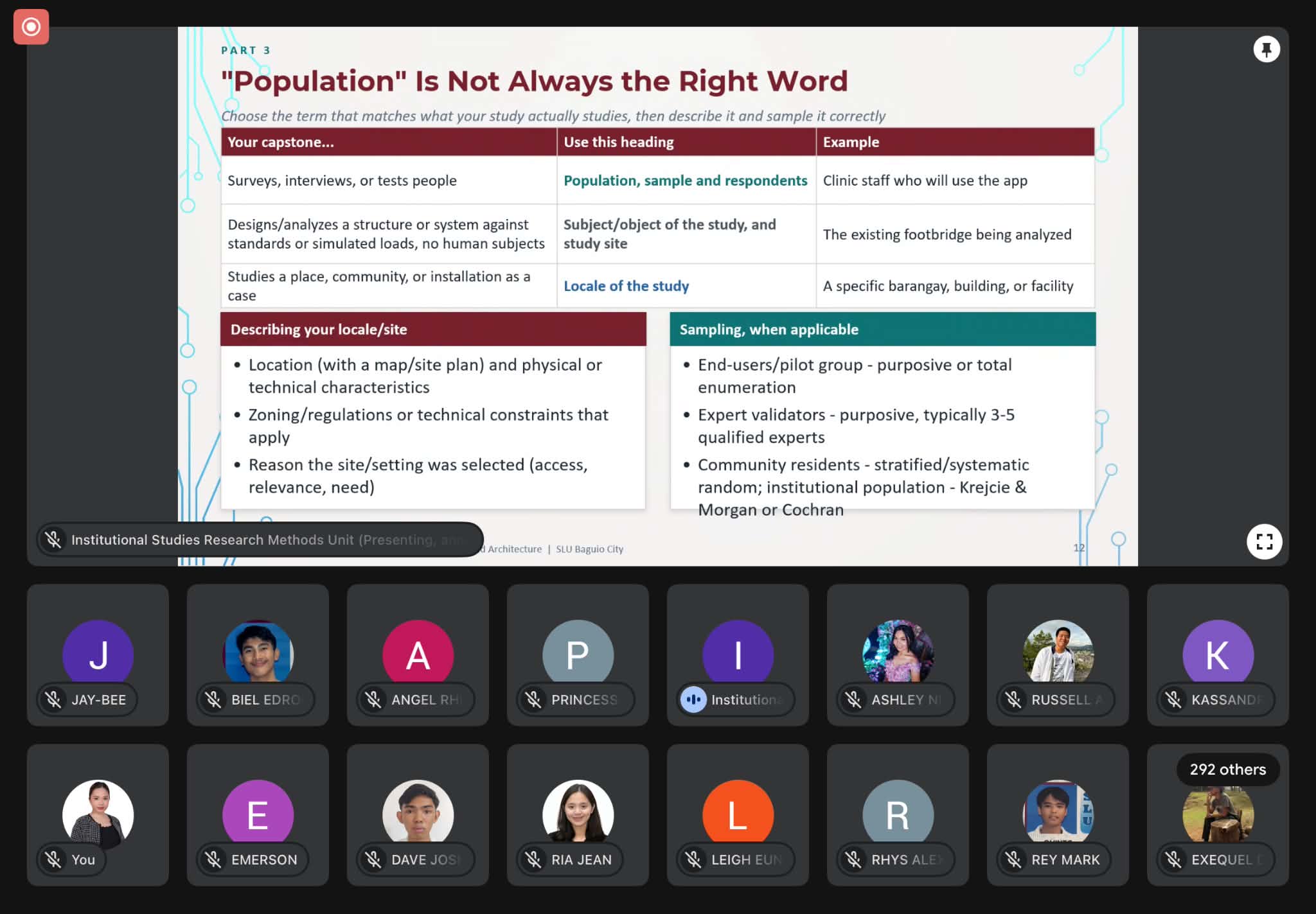
The third part of the session centered on the “Population and Locale of the Study, If Applicable.” Engr. Lagto added “if applicable” because some Capstone projects do not involve human population or participants; thus, an early distinction is important. He continued his discussion by noting that “population” is not always the right term. Three categories of terms were presented for use by student researchers.
Engr. Lagto then discussed part four, which was on “Data Gathering Tools and Procedures.” The topic went in-depth on “Validating Instruments and Gathering Procedure” and “Instrument Type or Sensors” and emphasized that when choosing instruments, student researchers must ensure that the tools they use match the data listed.
To help student researchers apply these points to their projects, Engr. Lagto demonstrated how to prepare their data for analysis using Excel and also the free software, Jamovi, which can automatically update data corrections.
Engr. Lagto proceeded with the fifth part of his discussion on “Experimental Setup, if Applicable” that included four elements that every setup must define: the Independent Variable, the Dependent Variable, the Controlled Variable, and the Treatment & Replications. The final discussion in this section covers the Apparatus, Environment, and Validity Threats.
Part six of Engr. Lagto’s discussion covered the “Treatment and Analysis of Data.” He started with the two analysis tracks for Engineering, including a discussion of Statistical Analysis, in which the RISE Center plays a role, as well as Engineering or Technical Analysis. He also presented the Assumptions- First Decision Path, a framework for statistical analysis, as guidance. He ended part six by discussing Engineering-Specific and Qualitative Analysis reported in APA style.
The seventh part of the discussion was on “Management of Multidisciplinary Environments” and the rationale for capstones that cross disciplines. The discussion includes the typical multidisciplinary pairings as well as practices that prevent most conflicts.
For the last part, Engr. Lagto presented Project Management approaches to anchor every milestone to a calendar week. He shared a work breakdown and timeline, a Simple Risk Register, and a Budget table to track risks before they become crises.
He concluded the comprehensive session by presenting the key takeaways, leaving SEA student researchers with enough information to navigate their research process.
Lecture Three: 10 October

Rainier Moreno-Lacalle, PhD, Chair of the Research Ethics Committee (REC), delivered the third lecture in the series. He succinctly broadened the RISE Center’s initiative, where he presented discussions on defining research ethics, the process of submitting to the REC, and common questions asked as part of the continuing lecture series. The same discussions above were delivered to the SEA research participants on 10 October.
The UGRICs of SEA, Engr. Gapuz and Engr. Mallillin facilitated Q&A sessions after the discussions.
Empowering SEA student researchers
By empowering engineering and architecture students with rigorous research design, robust data validation, and strict ethical oversight, this capacity-building initiative directly supports SDG 4: Quality Education by enhancing technical competence and academic excellence. Furthermore, equipping future engineers to design methodologically sound, reproducible, and multidisciplinary capstone projects aligns with SDG 9: Industry, Innovation, and Infrastructure by fostering evidence-based technological solutions to real-world challenges. Ultimately, integrating structured project management with ethical clearance processes reinforces SDG 16: Peace, Justice, and Strong Institutions by promoting transparency, accountability, and ethical integrity in scientific research. (Article and photos by Margareth Galuba & Joey Glemao – RISE Center Interns)