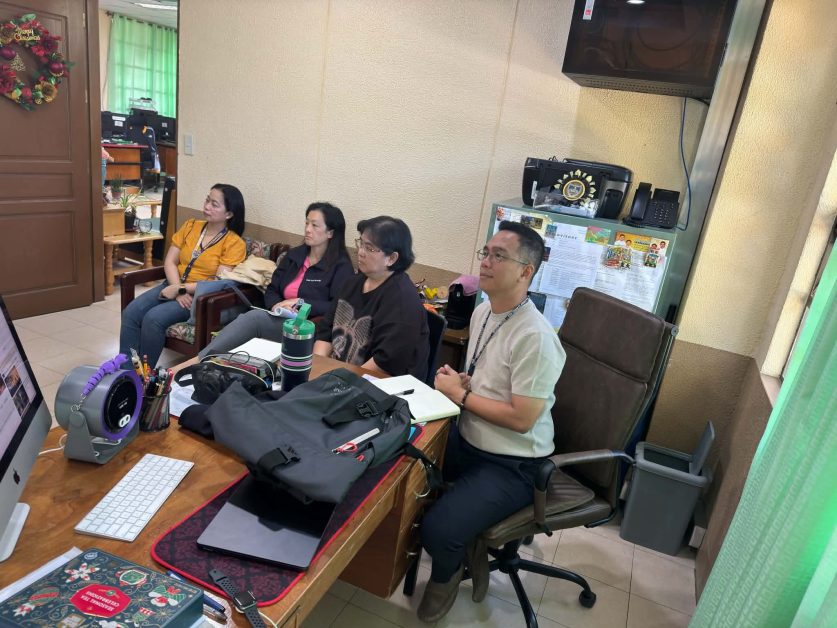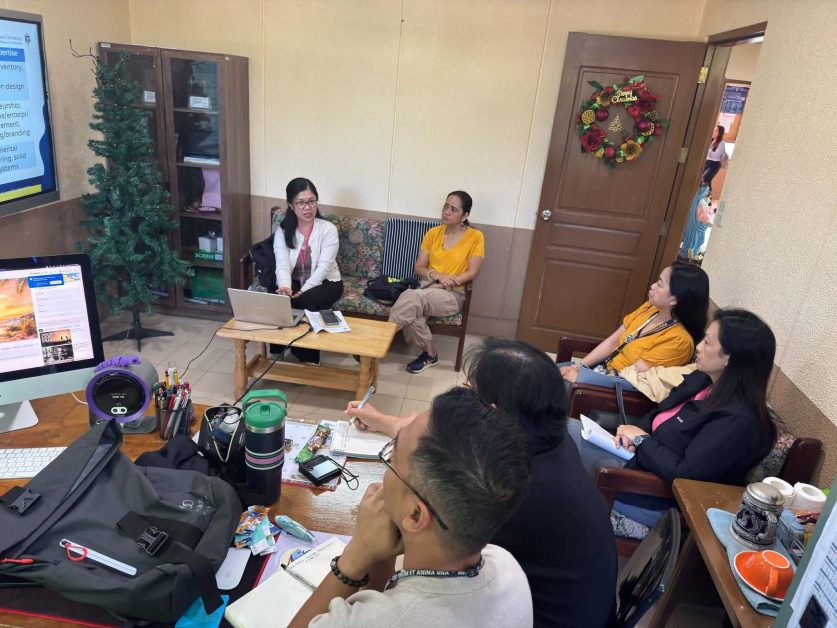
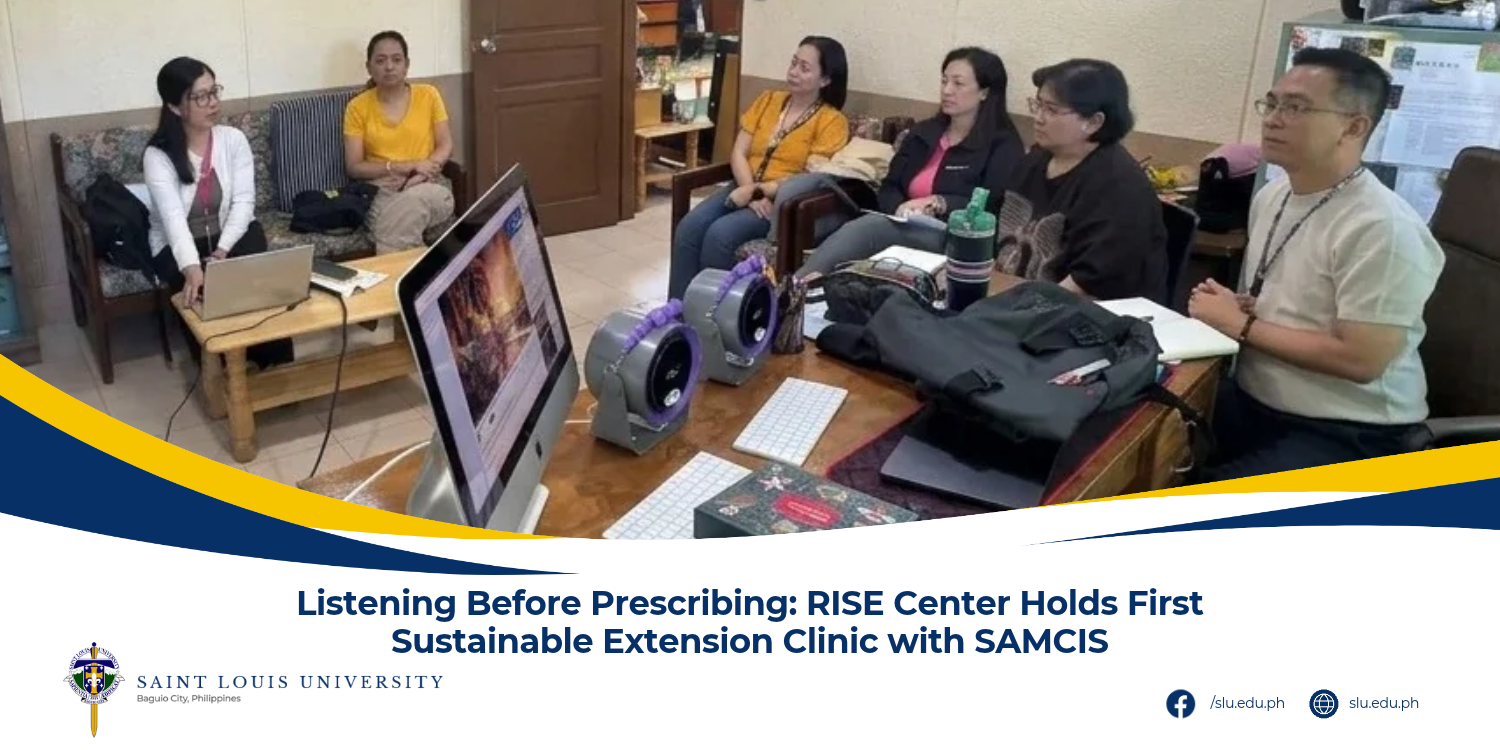
For the first time, a school invited the extension unit of the Research, Innovation, and Sustainable Extension (RISE) Center to orient its department heads on extension work at Saint Louis University (SLU). The request from the School of Accountancy, Management, Computing and Information Studies (SAMCIS) led to the Center’s first Sustainable Extension Clinic, a milestone in how extension is shared across the University.
The clinic was held on 29 October 2026 at the Maryheights Campus, Bakakeng. The invitation came from SAMCIS Associate Dean Conrado B. Chan Jr., PhD, with the blessing of Dean Gloria Dela Peña, PhD, and Department Heads Noreen M. Lab-as (Accountancy), Zenedith Monang, PhD (BAE), and Gwendolyn Tadeo, PhD (Mathematics) joined the conversation. Their shared hope was clear: that departments without an extension program may begin one, and begin it well.
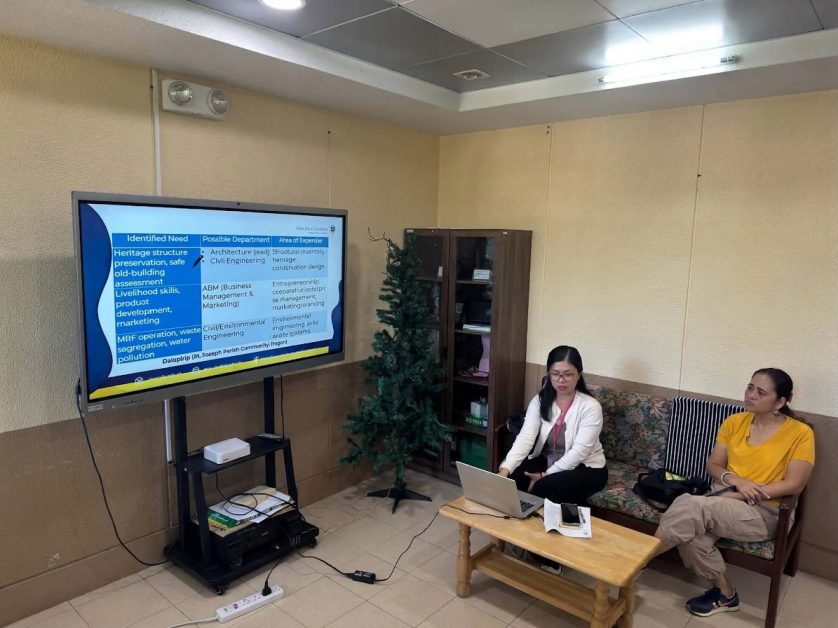
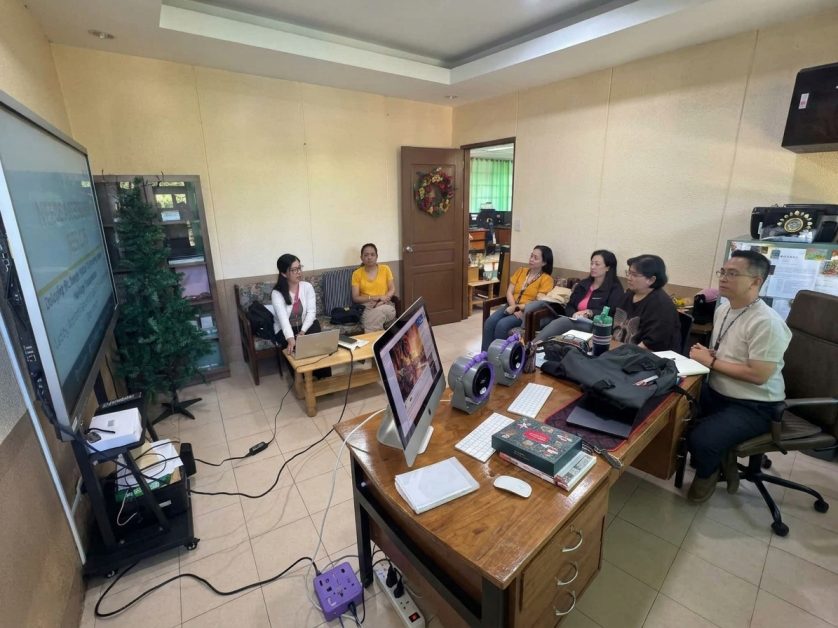
What is a Sustainable Extension Clinic?
Like a clinic that listens before it prescribes, the Sustainable Extension Clinic is a guided consultation. Faculty members bring their questions, ideas, and hopes, and the RISE Center walks with them through the entire extension journey. It is not a one-way lecture but a working conversation, covering how to listen to a community through needs assessments, determine whether an initiative qualifies as an extension program, write a sound proposal, and carry it out responsibly.
Its importance lies in three things: it makes the process understandable, so unfamiliar steps and forms never stop the desire to serve; it keeps programs grounded in real community needs rather than assumptions; and it builds sustainability from the start, since a well-planned, documented, and ethical program can continue and be assessed for impact.
A Serious Conversation about a Shared Mission
The session was candid and substantive, centering on how departments without an extension program can take their first steps, what expertise their disciplines can offer, and what support the RISE Center can provide along the way. Accountancy, marketing, and mathematics hold real promise for communities and partner schools seeking practical help.
The discussion also echoed the University’s five-year strategic plan, which sees extension as a shared mission of the University and a living expression of its missionary and Christian identity. When more departments take part, that vision moves from a statement on paper to service in the field.
Contribution to the Sustainable Development Goals
Extension programs that grow out of this clinic can advance three goals. Under SDG 4 (Quality Education), training and workshops by SAMCIS faculty support Target 4.7 (learning for sustainable development) and Target 4.4 (skills for decent work and entrepreneurship). Under SDG 8 (Decent Work and Economic Growth), expertise in accounting, marketing, and mathematics can support the livelihoods and small enterprises of partner communities, in line with Target 8.2 on productivity through innovation. Under SDG 17 (Partnerships for the Goals), the clinic itself, a partnership between a school and the RISE Center, shows Target 17.17 in practice. As developments to track, the University can monitor the number of departments newly engaged in extension, the number of coordinators oriented, the number of proposals submitted, and the number of communities and schools eventually served.
Moving Forward with Hope
The clinic was warmly received and left participants encouraged. Questions were raised, ideas were shared, and a sense of readiness filled the room. As the participants and the RISE Center parted ways, they carried the hope that the participating departments will soon begin programs for those who need them most.
The Sustainable Extension Clinic shows that extension grows best when it begins with an invitation, a conversation, and a willingness to listen, and the RISE Center remains ready to journey with every department that wishes to serve. (Article by Jeramie N. Molino, PhD, Sustainable Research Extension Officer, RISE Center | Photos by Conrado B. Chan, Jr., CPA, PhD, Associate Dean, SAMCIS)