The Industrial Engineering (IE) Department of Saint Louis University’s (SLU) School of Engineering and Architecture (SEA) continues to implement its Comprehensive 5S-LIFE Extension Program (Layout, Information, 5S, Evacuation Strategies) at Barangay Happy Hollow, Baguio City, now in partnership with the Architecture Department (Arch). As a community extension program, it puts the university’s engineering expertise to work for the barangay’s safety and information needs, promoting efficient governance, community engagement, and sustainable development. The program has reached its fourth “S”, Standardize, where the work done with the barangay becomes systems the community can keep using.
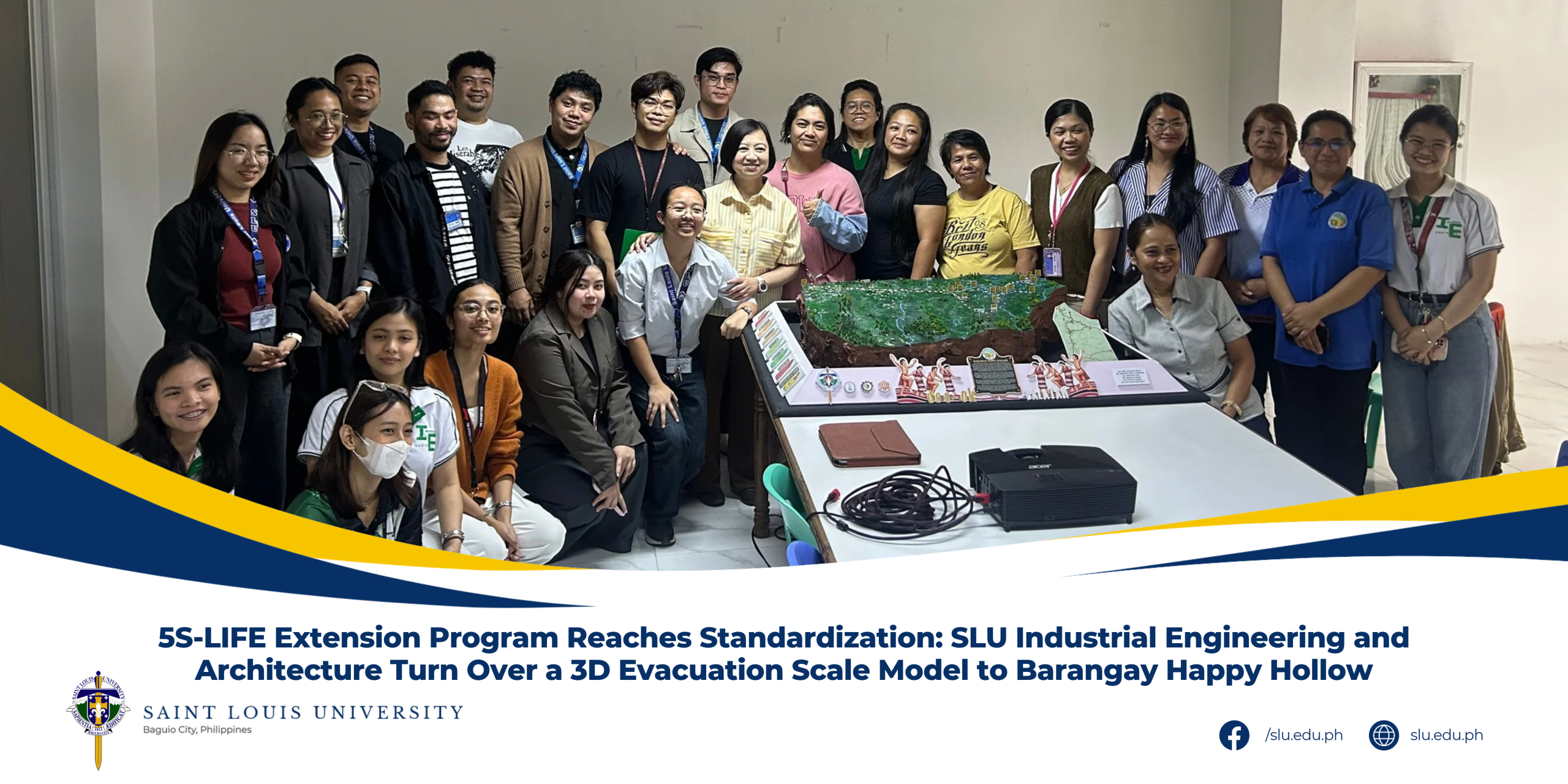
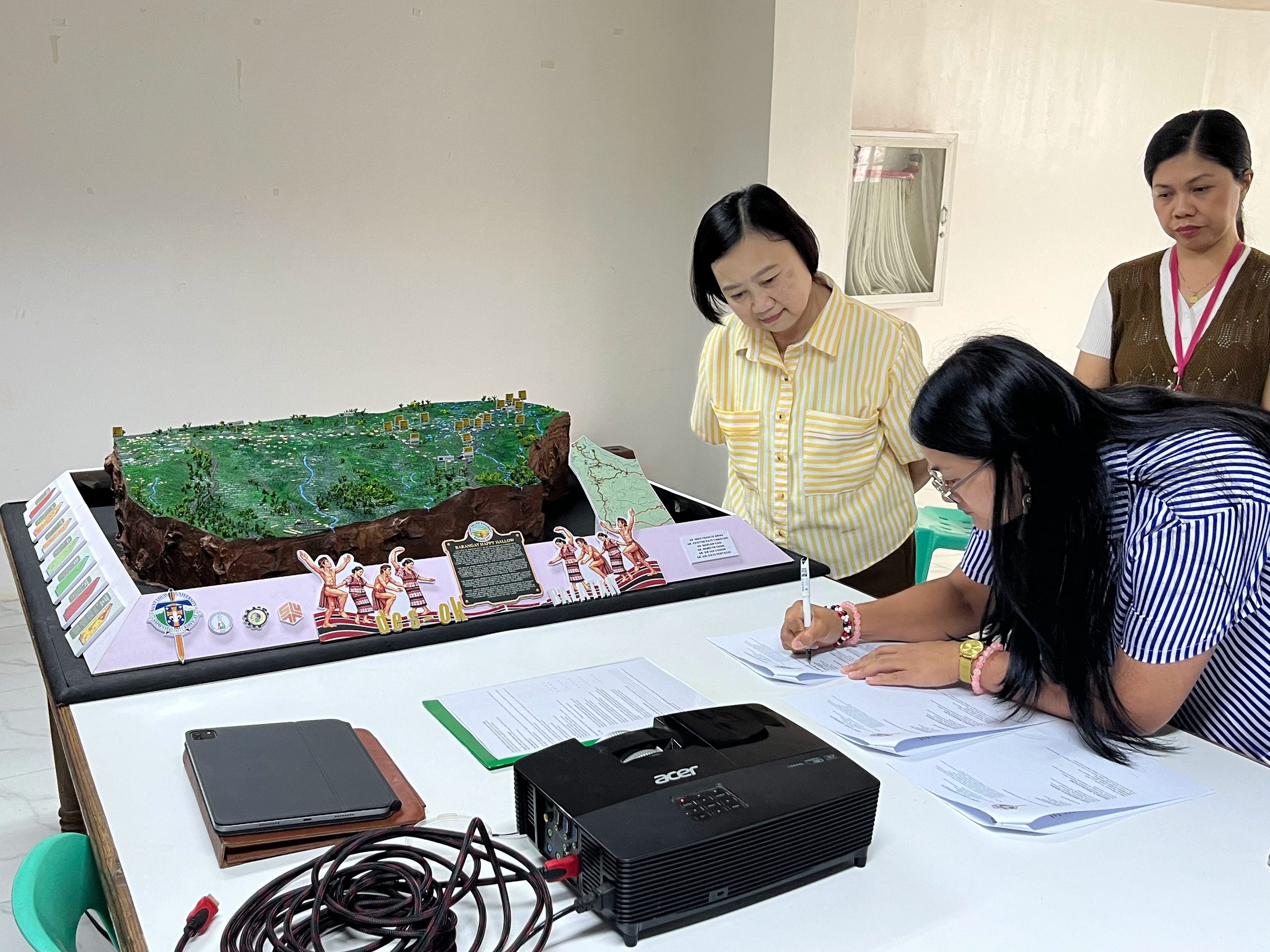
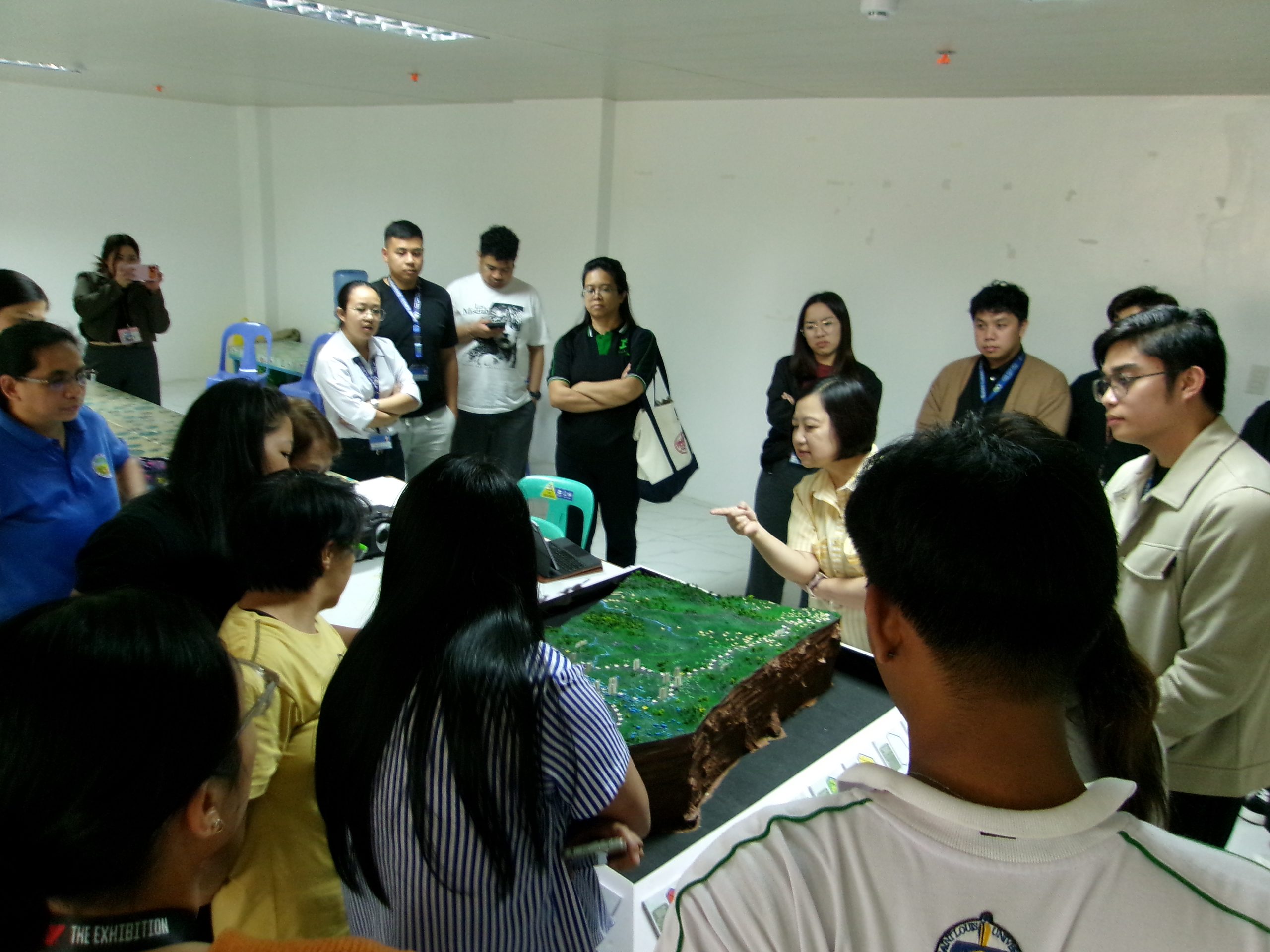
On 9 November 2026, Engr. Geraldine Nerona led the extension team in proposing strategies and turning over a 3D scale model related to the “I” (Information) and “E” (Evacuation Strategies) components of the program. The presentation and turnover were graced by the presence of Richel Lamadrid, DAES, Director of the Research, Innovation, and Sustainable Extension (RISE) Center, and Jeramie N. Molino, PhD, Sustainable Research Extension Officer (SREO), Rise Center. The model was a joint effort of the IE and Arch Departments.
Project 4A: Where We Are on Information
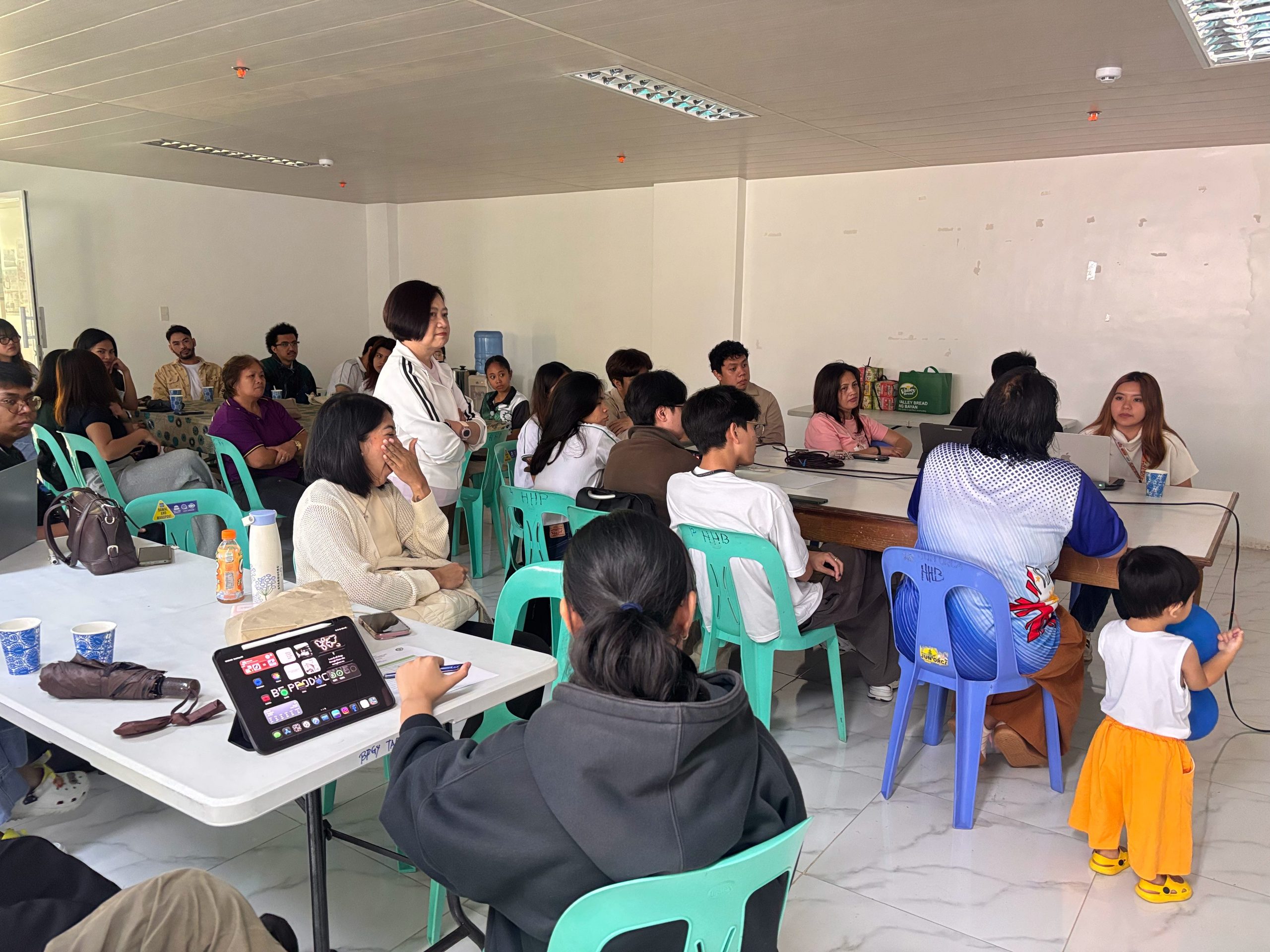
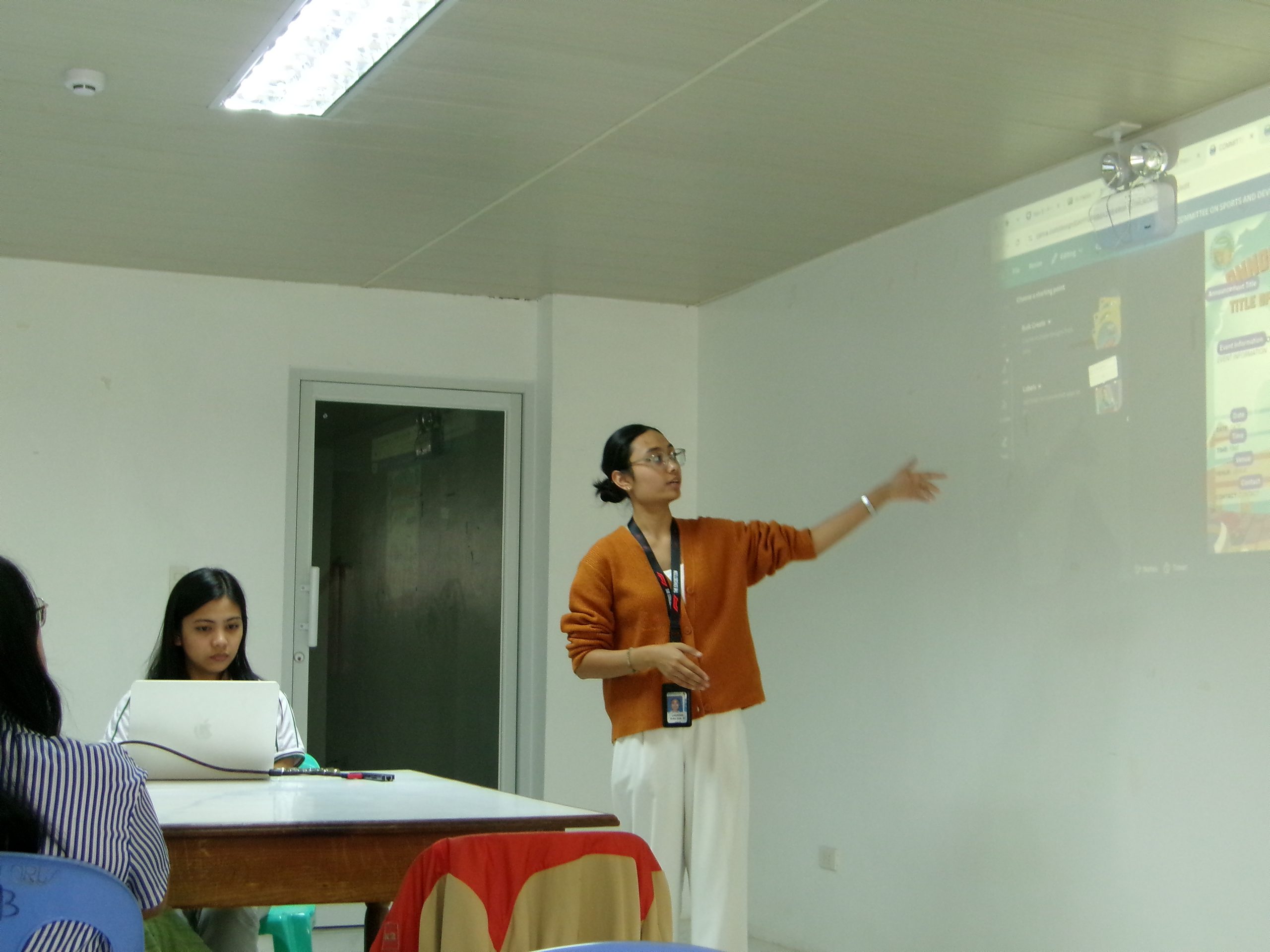
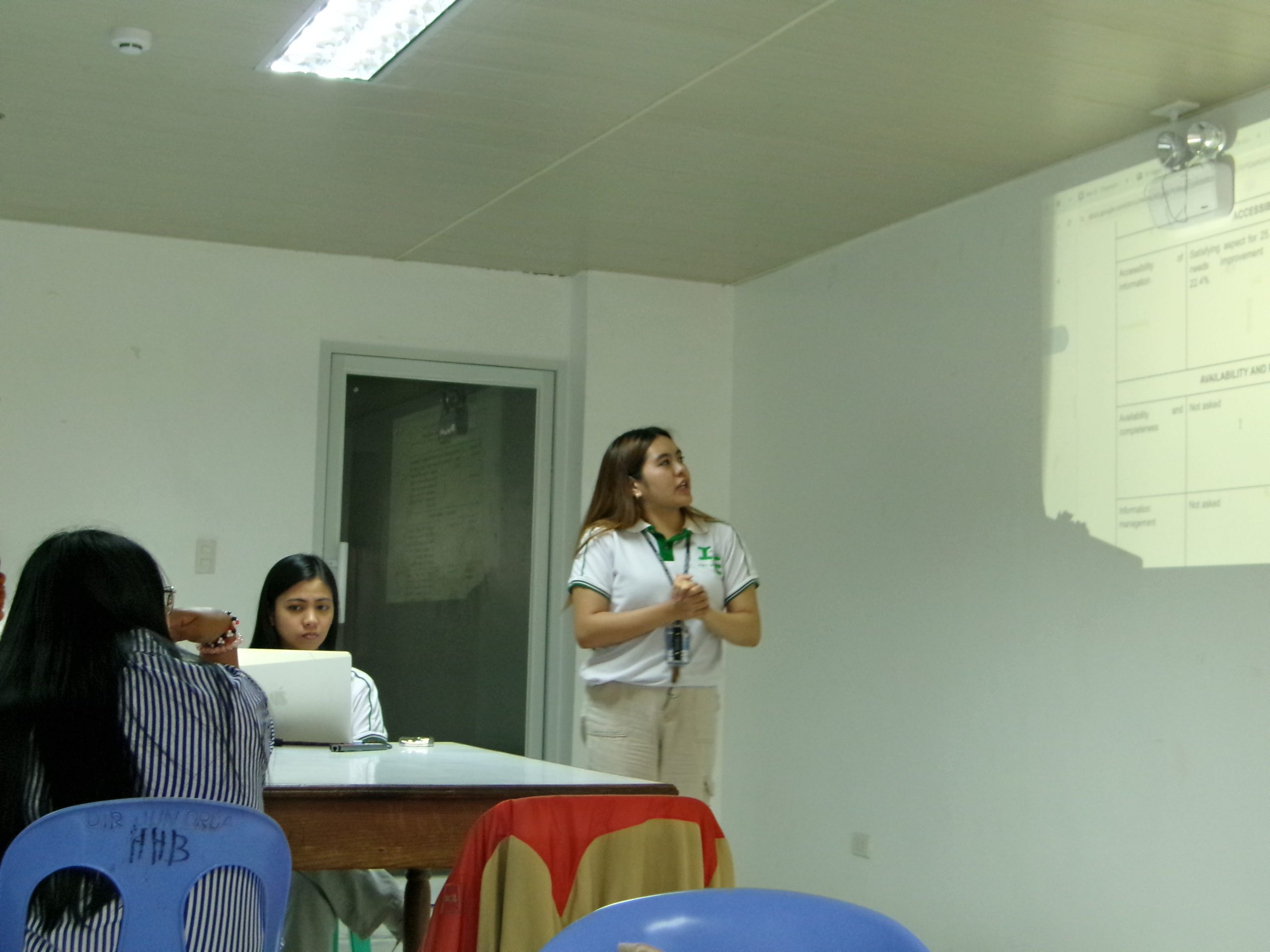
Under the Information component, the IE Department presented the results of a mid-assessment survey on how barangay constituents view the barangay’s information dissemination activities. The 2026 survey showed that timeliness and clarity of information have improved since 2024, but meeting attendance, volunteering, and online sharing still need work. To address all three, the IE student extension team, led by Nissi Cabading, proposed a project management system that includes a Quick Publication Material Creation component.
The first session, on 19 September 2026 at the SLU IE Laboratory, brought together perspectives from each generation of the department. Using Root Cause Analysis and the Design Thinking Framework, participants identified the likely root causes of Barangay Happy Hollow’s information dissemination problems, which point to the direction of the extension initiatives. In the second session, on 23 September 2026 at the barangay, the students and faculty presented their findings and asked for suggestions.

Project 3C: A First for the Barangay, the 3D Scale Model
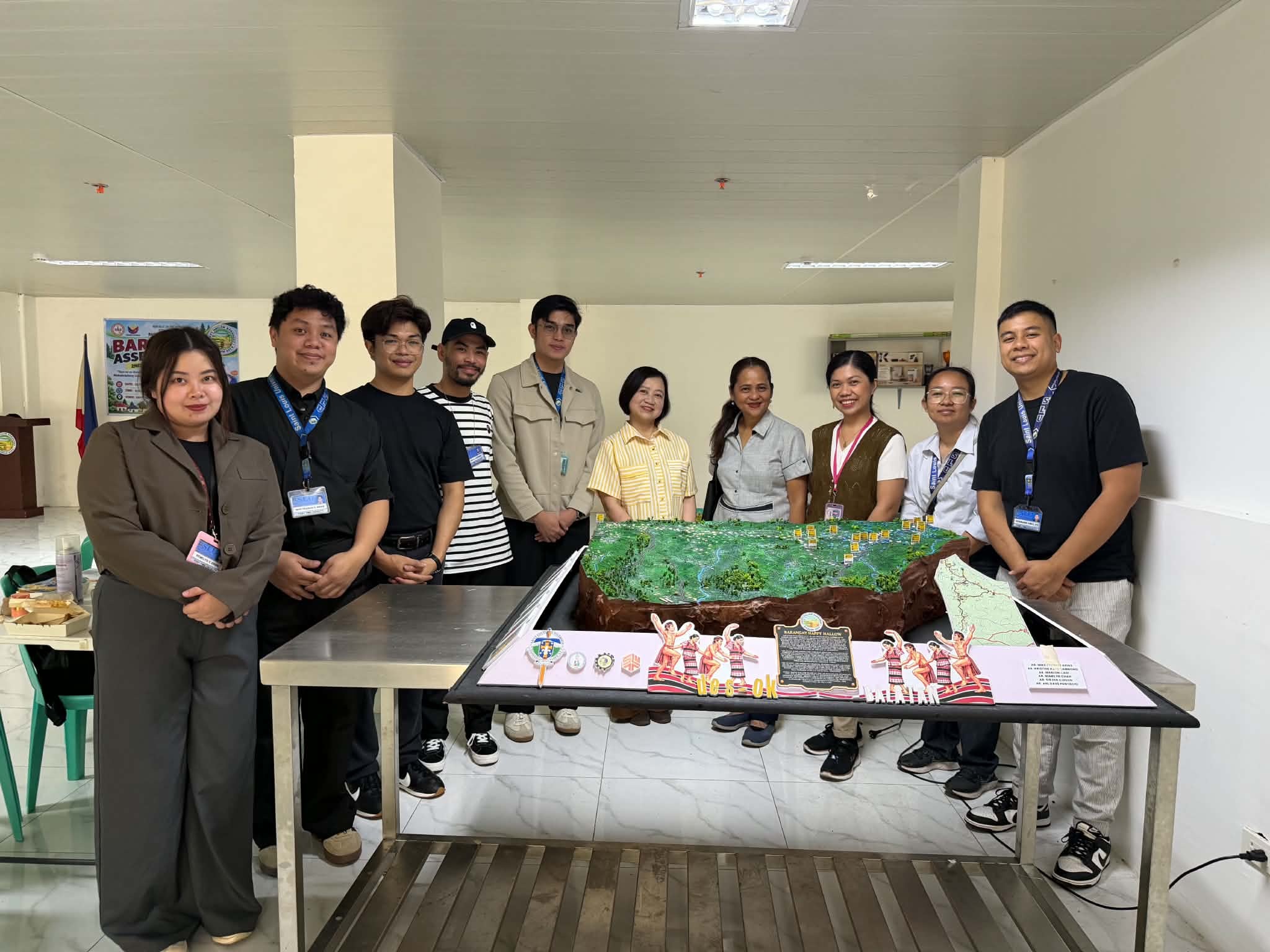
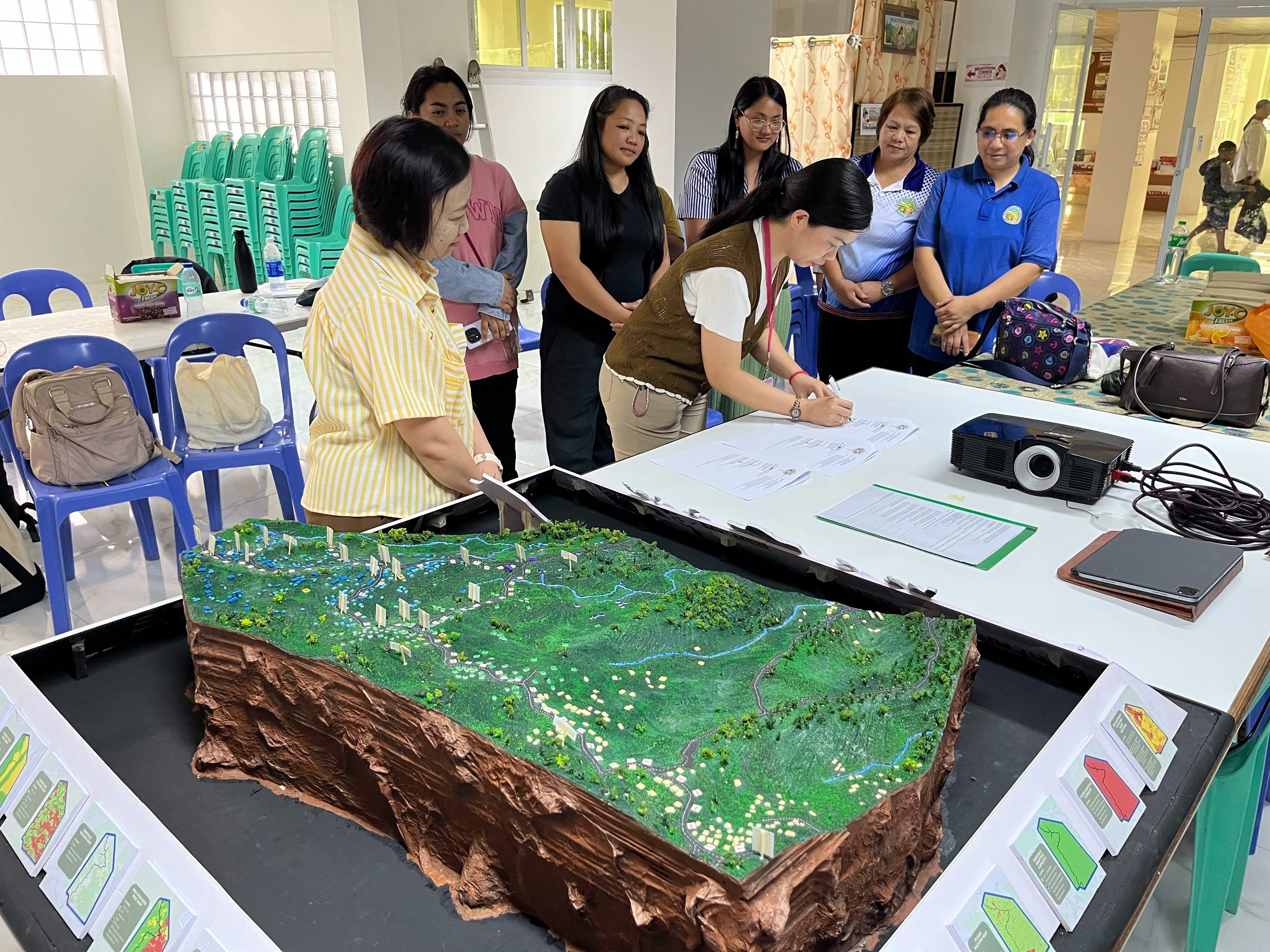
The scale model is a collaboration of the IE and Arch Departments under the “E,” or Evacuation Strategies, component of the 5S-LIFE Extension Program. It is a 3D version of the Barangay Maps (BMAPS) completed earlier under Project 3A by the IE Department. The model measures approximately 122 cm x 113 cm x 25 cm and is built at a scale of 1:2600.
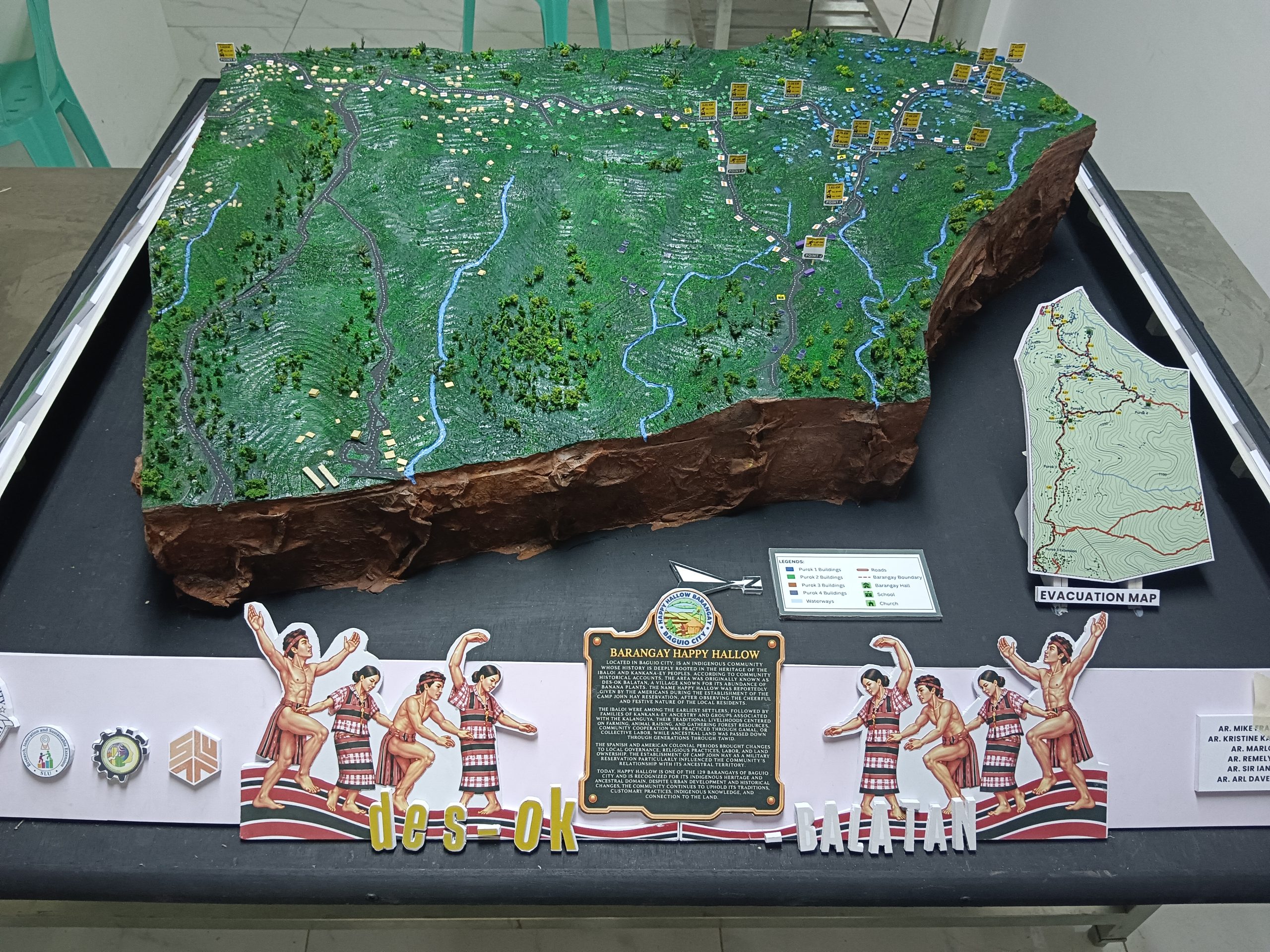
The model was produced by the Arch Department team of Ar. Mike Francis Arias, Ar. Kristine Kate Camacho, Ar. Marlon Casi, Ar. Remelyn Chan, Ar. Ian Cuison, and Ar. Arl Dave Portacio. The team members are also graduate students at Benguet State University, and the project drew its inspiration from their subject on Community Development Policies, Analysis, and Governance.
The model shows the barangay’s geographical and physical features; evacuation maps and routes; a location map; hazard and risk maps for floods, landslides, forest fires, earthquakes, and sinkholes; a multi-hazard map; the road network; and emergency response information. With it, Barangay Happy Hollow has potentially become the first barangay in Baguio City to have a scale model of this kind.
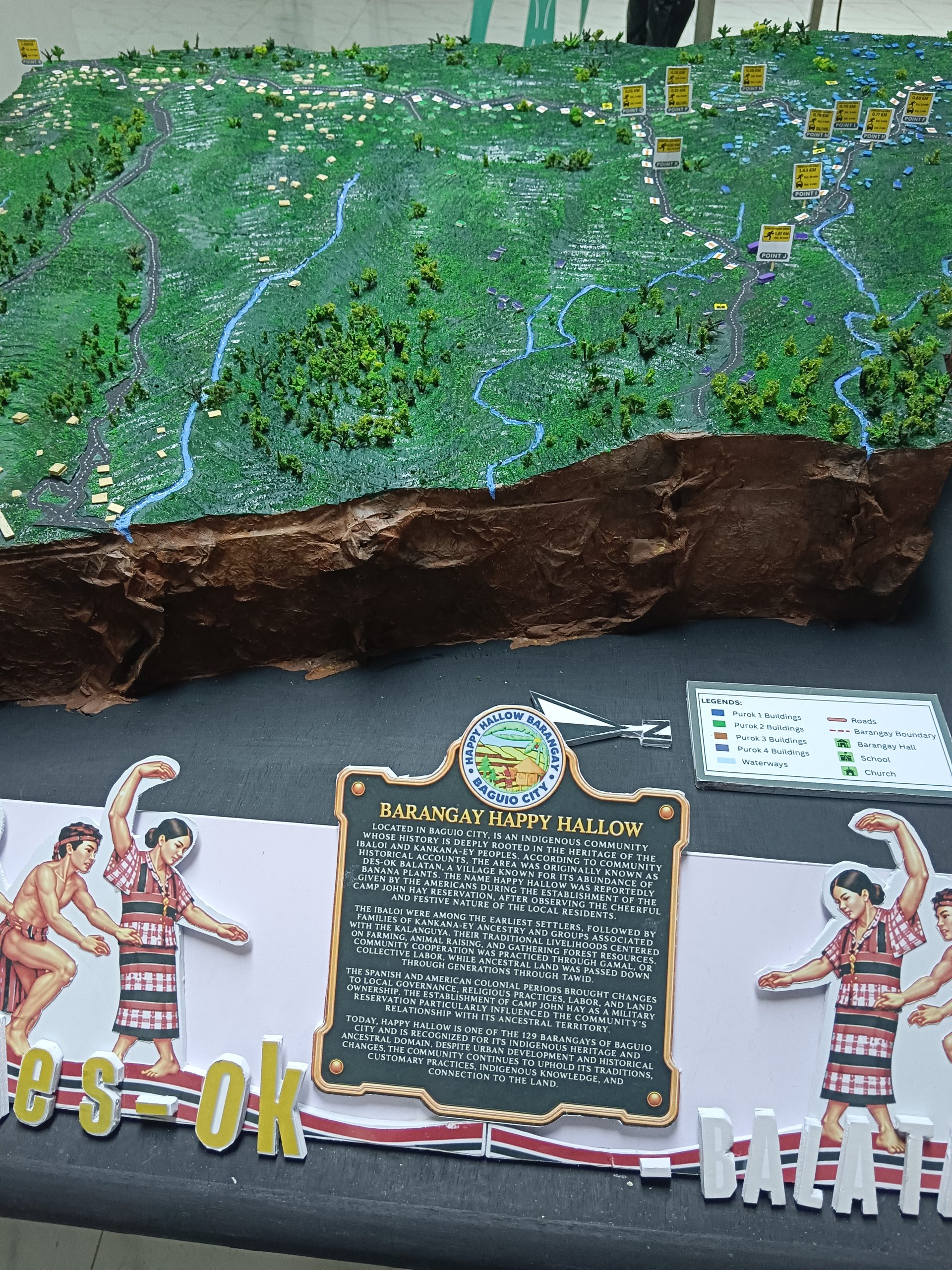
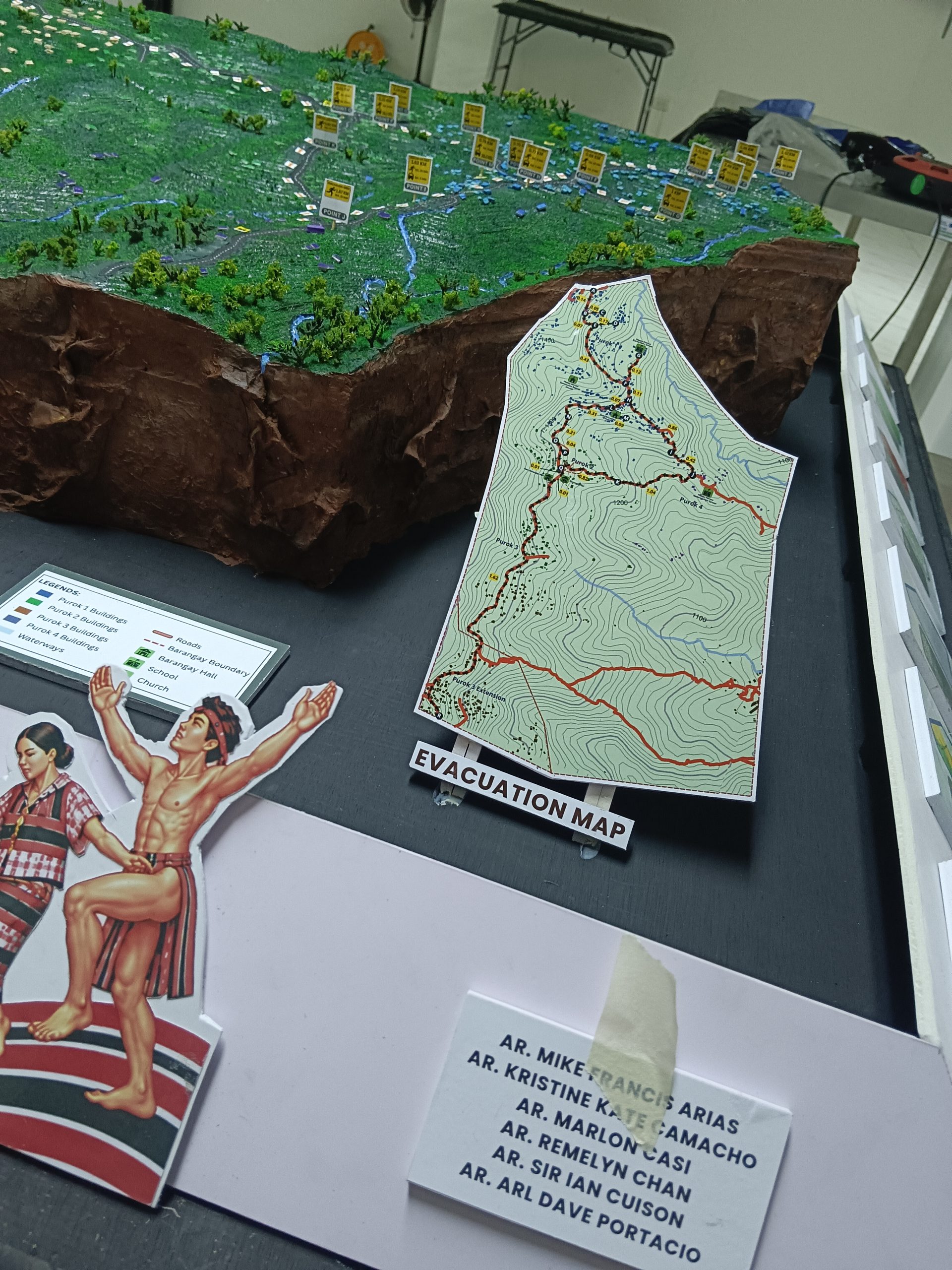
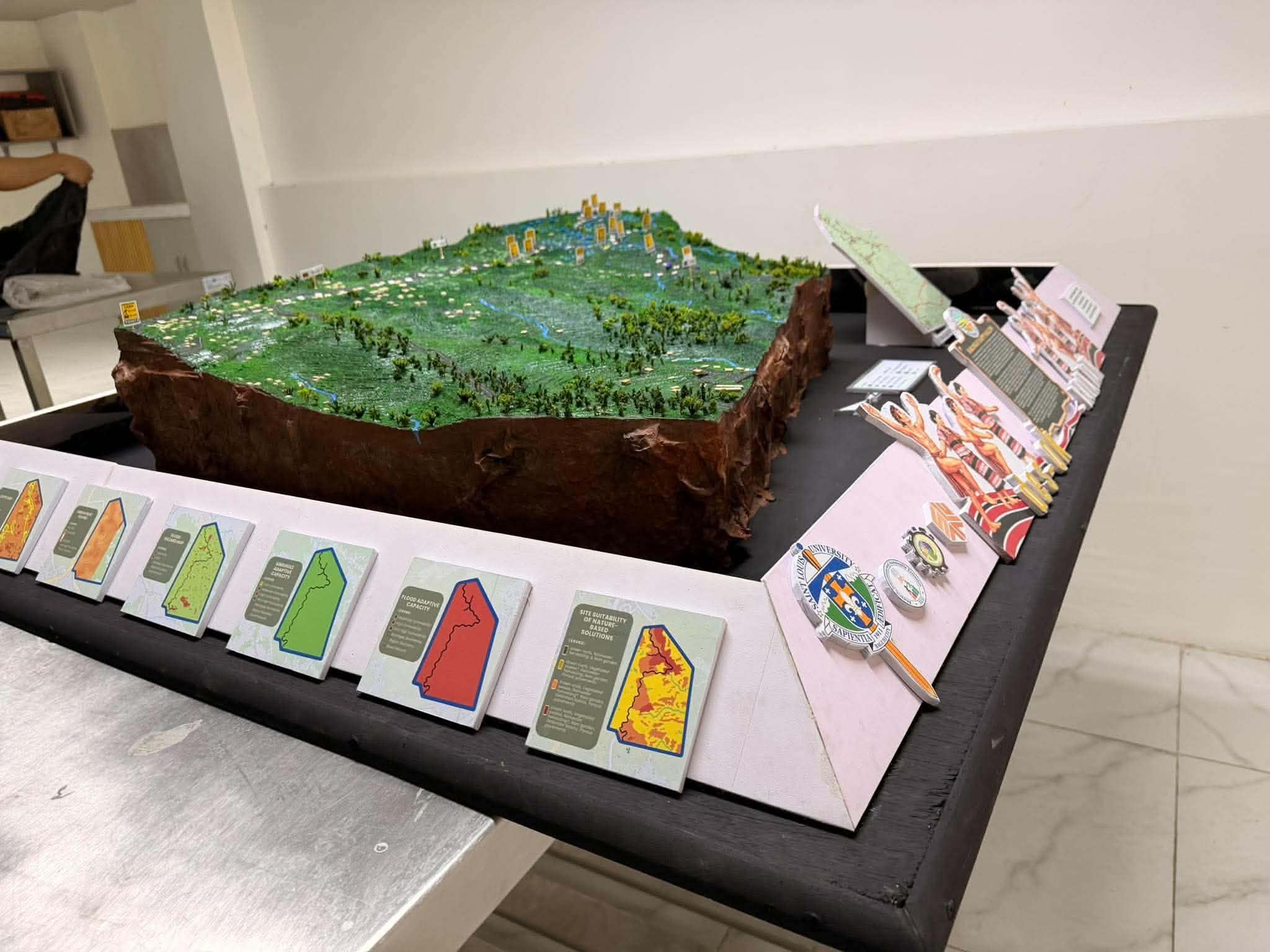
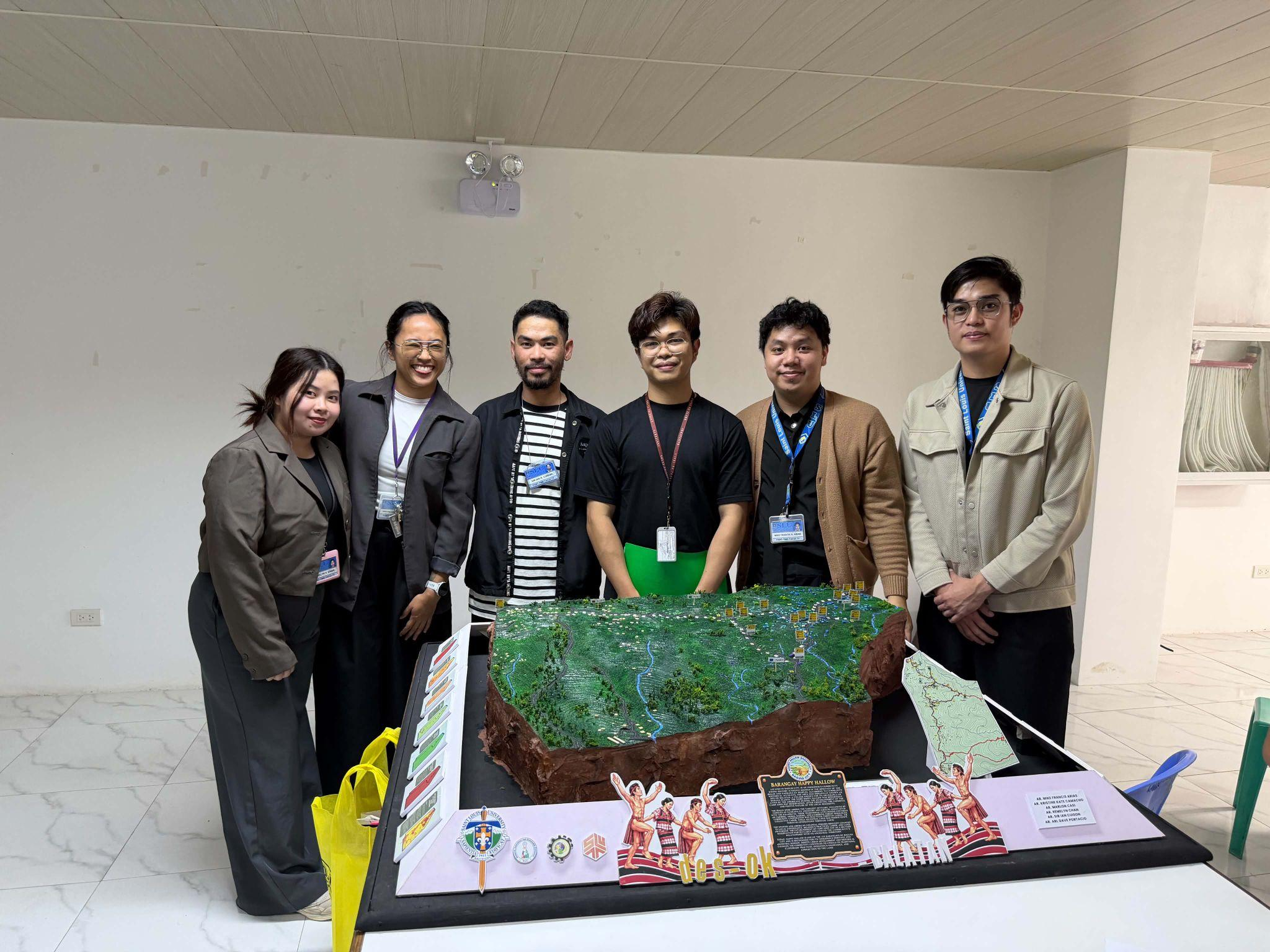
At the end of the program, the turnover documents for the 3D scale model were signed by Engr. Geraldine Nerona, Extension Program Coordinator, for SLU; Dr. Molino, for the RISE Center’s Sustainable Research Extension Unit; and Kagawad Jennifer Aquision, Indigenous Peoples Mandatory Representative, for Barangay Happy Hollow. Dr. Lamadrid witnessed the turnover.
Highlights and Impact
This phase of the extension program shows what collaboration between departments can produce. The IE Department supplied the data and maps, and the Arch Department turned them into a model that residents can see and use for evacuation and future planning. The turnover also means that the community now owns the outputs of the extension work and can keep using them.
Aligned with the Sustainable Development Goals
The extension program supports SDG 4 (Quality Education), Target 4.7, through learning and awareness on disaster preparedness and information sharing, and SDG 9 (Industry, Innovation, and Infrastructure), Target 9.5, through innovation and technological capability applied to community needs. It also supports SDG 11 (Sustainable Cities and Communities), Target 11.5, which seeks to reduce the number of people affected by disasters, and SDG 17 (Partnerships for the Goals), Target 17.17, through a partnership between two university departments and the barangay.
The Barangay’s Feedback
The Barangay Council expressed its deep appreciation and gratitude for the 3D model built by the skilled and patient hands of the Architecture team. Their full feedback can be read on the Barangay Happy Hollow Facebook page, under “Happy Hollow Barangay Feedback – Project 3C.” (Article and photos by Cristelle Marie O. Bernales (PIIE-SLU SC President), Ar. Marlon B. Casi (Faculty, Architecture Department), Engr. Geraldine G. Nerona, Faculty and EPC, IE Department) and Jeramie N. Molino, PhD, SREO, RISE Center)
The program is carried out with the guidance and approval of the Sustainable Research Extension Unit under the Research, Innovation, and Sustainable Extension (RISE) Center of Saint Louis University.