On 20 September 2026, more than 400 student researchers from the Saint Louis University’s (SLU) School of Engineering and Architecture (SEA) attended the first session of the Research Orientation lecture series via Google Meet organized by by the SLU Research, Innovation, and Sustainable Extension (RISE) Center).
Facilitated by Engr. Emerson Gapuz and Engr. Joey Mallillin, SEA Undergraduate Research and Innovation Coordinators (UGRICs), the SEA-lecture series focused on the presentation of resource speaker, Laarni Natividad, PhD, RISE Center’s Research Capacitation and Services Officer.
Dr. Natividad began her presentation by saying, “Research is more than simply looking for information; it is purposive and an organized inquiry.” It is an advanced intellectual effort in the pursuit of knowledge. She stated that a researcher’s goal is to find solutions and explain phenomena, as studies are scholarly works. At its core, research is an applied science for practical outcomes. Scientific principles, such as theories and laws, are used to translate them into real-world solutions. She continued by discussing how engineering research involves translational science, functional focus, and societal impact.
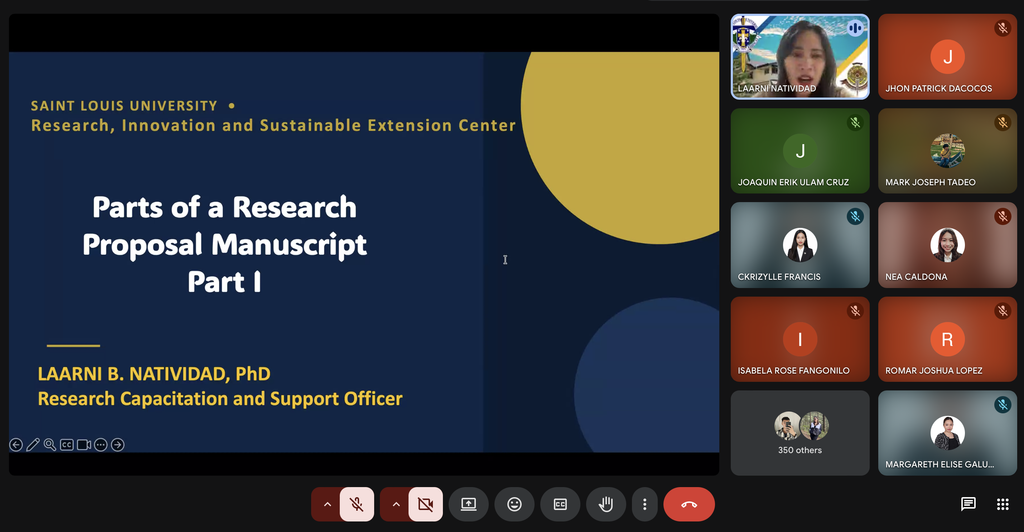
In the context of engineering, Dr. Natividad explained the six core objectives. The first objective is the human system that entails that researchers consider real human necessities and real-world problems when designing systems and technologies. Its focus is not only on building but also on how these systems will function within a community. The second is practical outcomes; engineering research may produce actionable, functional implementations. She said that research would lead to products that would actually be useful, whether devices, systems, technologies, or services. Research findings should be practical. The third objective is human benefit: engineering solutions should achieve measurable societal improvement in efficiency, health, or quality of life. The fourth objective is to consider ethical foundations. Student researchers are responsible for considering safety, reliability, and fairness. The fifth objective is environmental care; engineering research should prioritize ecological sustainability. The student researchers must consider the impact of their solutions on natural resources and the environment, which involves reducing waste and minimizing energy consumption. The sixth and final objective is industry testing, as engineering research relies on standardized physical testing methods to determine whether a product, material, component, or system is functioning effectively.
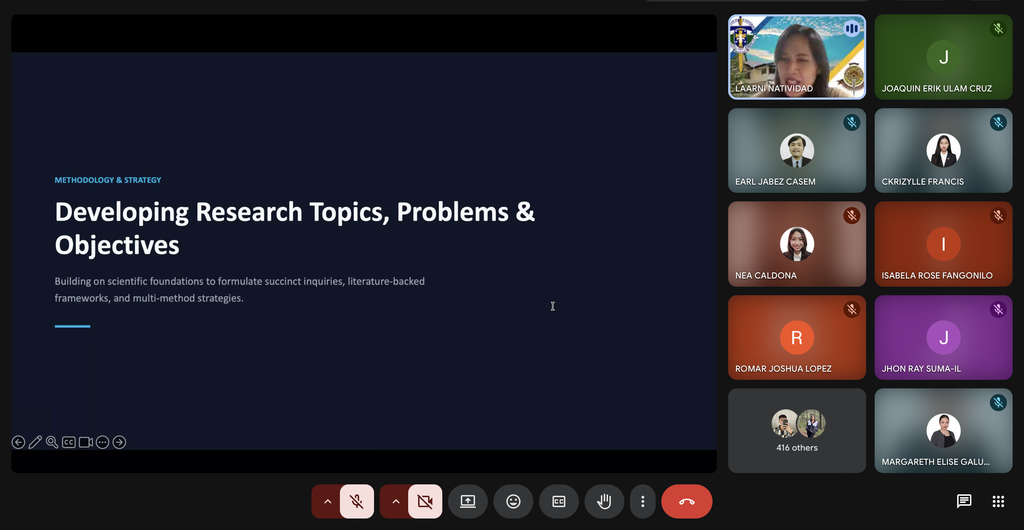
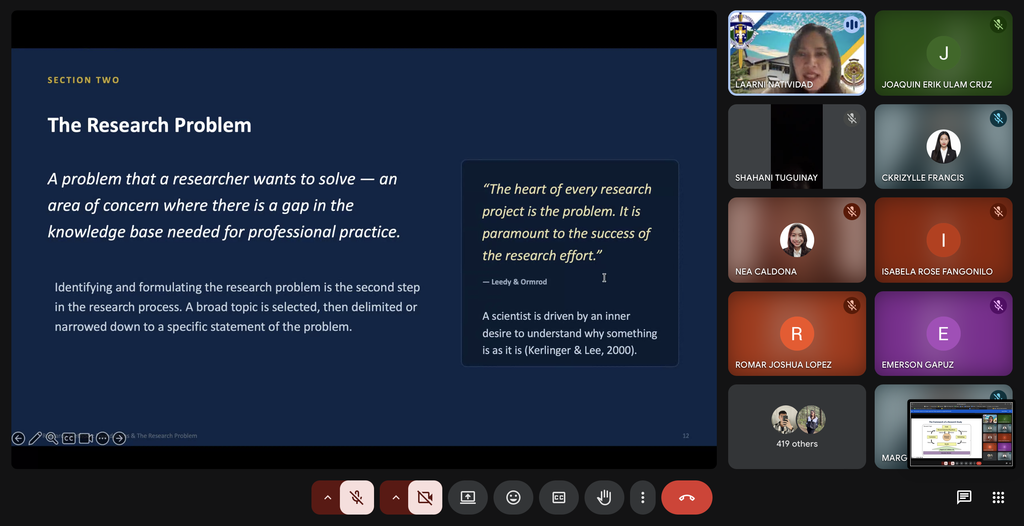
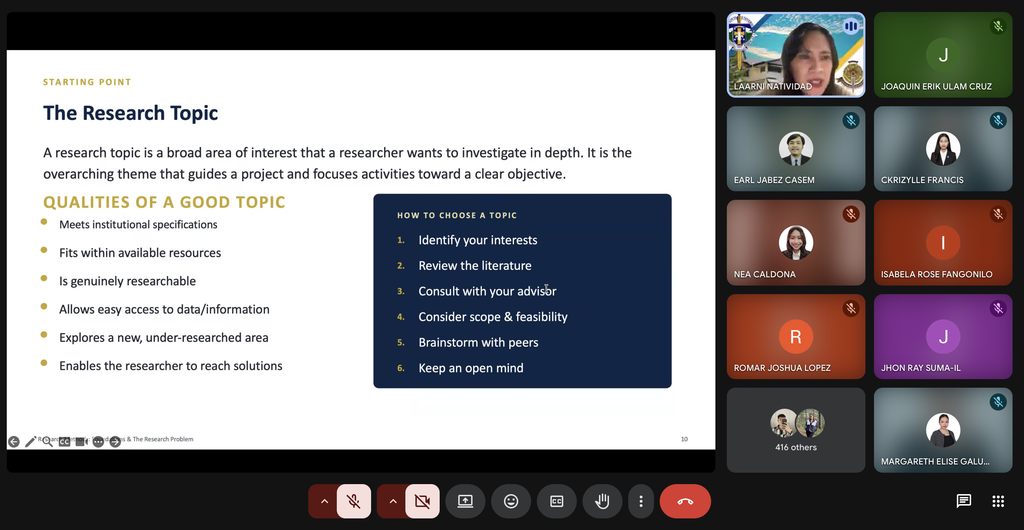
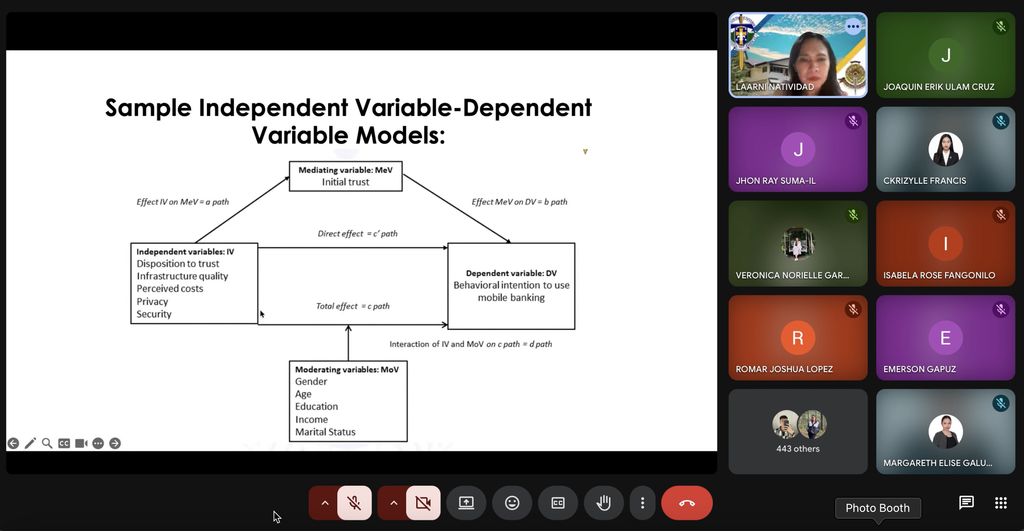
In the second part of her presentation, Dr. Natividad discussed the research article, journal selection, and the review of related literature. On article and journal selection, she underscored the importance of identifying reputable sources. Among the reputable sources are Scopus, Web of Science, ScienceDirect, PubMed, and IEEE Xplore. EBSCO-Host was also a recommended platform for document searching, as well as the ASEAN Citation Index. To ensure the reliability of articles, Dr. Laarni then explained how to use the Directory of Open Access Journals.
The lecture series on research directly aligned with Sustainable Development Goal 4 (Quality Education) by providing engineering and architecture students with advanced research training, critical thinking skills, and academic rigor. Additionally, by focusing on human-centered design, practical technological solutions, and environmental sustainability, the program supports SDG 9 (Industry, Innovation, and Infrastructure), SDG 11 (Sustainable Cities and Communities), and SDG 12 (Responsible Consumption and Production). (Article and Photos by Margareth Galuba, SLU RISE Center Intern)