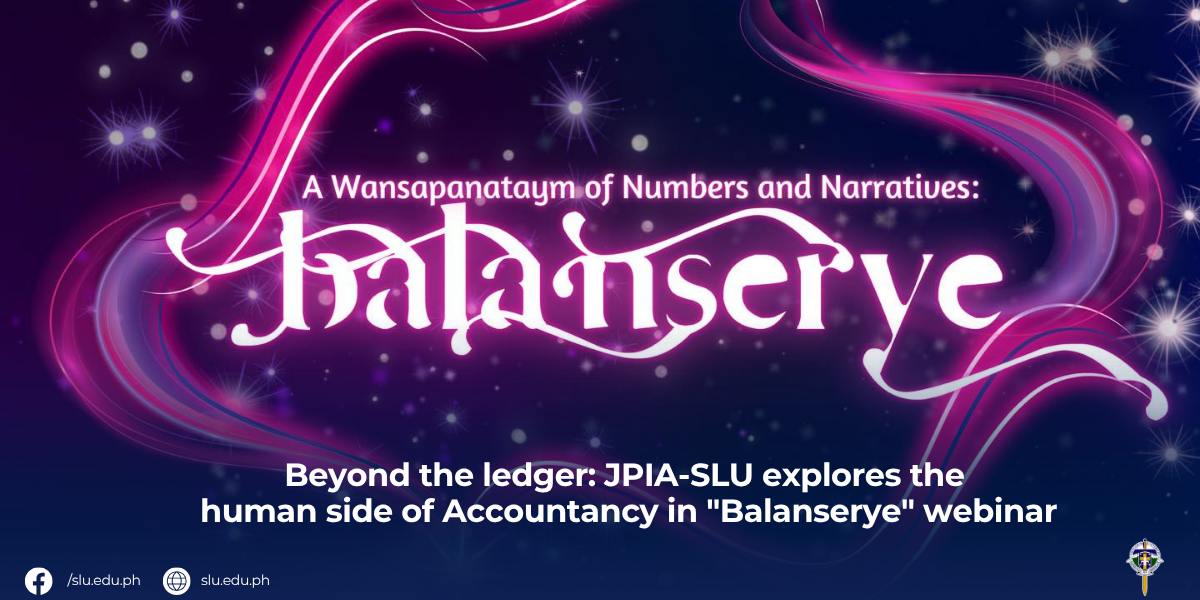
As part of the “Balanserye: A Wansapanataym of Numbers and Narratives” webinar series held throughout March 2026, the session titled “CPA Chronicles: Crafting Stories of Growth and Compliance” was held via Zoom on 28 March 2026. The event was organized by the National Federation of Junior Philippine Institute of Accountants (NFJPIA) Region XII, with the goal of connecting what we learn in school to what actually happens in the real world by highlighting both the technical and personal sides of being an accountant.
This session featured a panel of Certified Public Accountants (CPAs) from various sectors, including the academe, the private sector, the public sector, and government. They shared their personal journeys, experiences, and advice based on their respective fields. This report reflects my experience during the webinar, the key insights shared by the panelists, and my own realizations as a future accountant.
The program began with an opening prayer, followed by a short but meaningful welcome message from a representative of the NFJPIA regional council. After that, participants were reminded about proper online etiquette, how to send questions through the chat box, and the flow of the open forum. The panelists were then introduced, which enriched the discussion and made it more diverse and insightful.
The panelists were:
- Michelle F. Capistrano, CPA, DBMIS (Academe)
- Ramon D. Muñoz Jr., CPA, CHRP (Private Sector)
- Maria Thessa Roa Flores, CPA, ACPA (Public Sector)
- Jack Ronan O. Bravante, CPA (Government Sector)
The discussion followed a Q&A format, with all panelists answering the same set of questions, , making it easier to compare their perspectives and see how their experiences differ depending on their chosen career path.
They were asked about their current roles and how they would describe their present situation, their proudest career achievements, and how they would summarize their roles in just three words. They also shared stories from their student days, including whether becoming a CPA was always their dream or something they realized along the way. One of the most interesting parts was when they talked about their first day at work and the “culture shock” they experienced after leaving the classroom. They also discussed misconceptions from accounting textbooks that did not fully reflect real-life practice.
After the panel discussion, an open forum was held, during which students from different universities in Region XII asked questions. Some asked for tips on passing the CPA board exam, while others sought advice on choosing between the public and private sectors. The webinar ended with a closing prayer, followed by closing remarks from an NFJPIA representative. Gratitude was expressed to the panelists, participants, and organizing team.
This event aligned with several United Nations’ SDGs and with CICM’s advocacy for the Integrity of Creation. It advanced SDG 4 (Quality Education) by bridging classroom learning with real-world practice. It supported SDG 8 (Decent Work and Economic Growth) by highlighting resilience and ethical accounting. It upheld SDG 16 (Peace, Justice and Strong Institutions) through stories of transparency and accountability. The partnership behind the event reflected SDG 17 (Partnerships for the Goals). Finally, the CICM call to protect the Integrity of Creation reminds us that accounting is a form of stewardship of resources, people, and the environment. An integral accountant balances not just ledgers but also justice and care for our common home.
To conclude the event, the webinar made it clear that accounting is more than just numbers and technical skills. The panelists demonstrated that qualities such as resilience, adaptability, and communication are equally important. One idea that stood out was viewing accounting as a form of storytelling. Numbers only make sense when they are properly explained and given context. The different career paths presented also showed that there is no single “right” direction in this profession. Success depends on finding a path that aligns with one’s strengths and values. In the end, the session successfully connected what was learned in school to real-life practice and reminded everyone that every financial report represents not just data, but the experiences and growth of the professional behind it. (Article and Photos by: JPIA-SLU)